Laser sensors are pivotal components in modern industrial automation, offering unparalleled precision in measurement, detection, and positioning tasks. Understanding the principles behind their configuration is essential for optimizing performance in diverse applications, from manufacturing assembly lines to robotics and quality control systems. This article delves into the fundamental setup principles of laser sensors, covering key aspects such as alignment, sensitivity adjustment, environmental considerations, and integration with control systems.
The core of laser sensor operation lies in the emission of a focused light beam, typically in the visible or infrared spectrum, which is reflected off a target object and detected by a receiver. The configuration process begins with proper alignment. Misalignment can lead to inaccurate readings or complete failure. Engineers must ensure the sensor is perpendicular to the target surface, as angular deviations can cause beam dispersion or reflection errors. Using alignment tools, such as built-in indicators or external lasers, helps achieve optimal positioning. For through-beam sensors, where the emitter and receiver are separate units, precise coaxial alignment is critical to maintain a stable beam path.
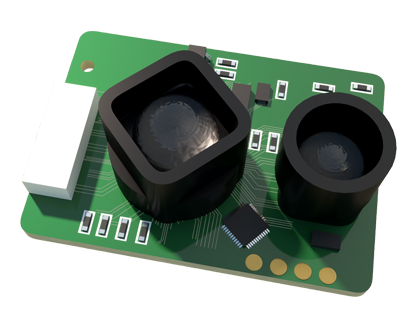
Sensitivity adjustment is another crucial principle. Laser sensors often feature adjustable sensitivity settings to accommodate varying surface properties, colors, and distances. For instance, a highly reflective surface may require lower sensitivity to avoid oversaturation, while a dark, absorbent material might need higher sensitivity to ensure reliable detection. Modern sensors include automatic calibration functions that adapt to environmental conditions, but manual fine-tuning is often necessary for specialized applications. Engineers should refer to datasheets for specific thresholds and use test samples to validate settings under real-world conditions.
Environmental factors significantly impact sensor performance. Contaminants like dust, oil, or moisture can scatter or absorb the laser beam, leading to false triggers or reduced range. Selecting sensors with appropriate ingress protection (IP) ratings is vital for harsh environments. Additionally, ambient light interference, especially from strong industrial lighting or sunlight, can disrupt operation. Using sensors with modulated light sources or spectral filters minimizes this risk. Temperature fluctuations also affect laser wavelength and detector response; thus, operating within specified temperature ranges ensures long-term stability.
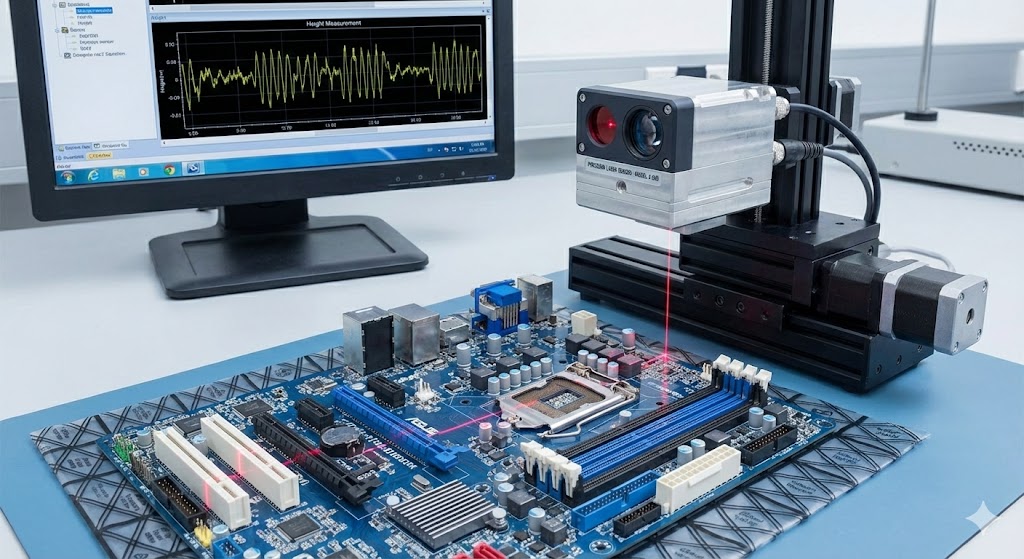
Integration with control systems involves configuring output signals and communication protocols. Laser sensors typically provide digital (e.g., PNP/NPN) or analog outputs (e.g., 4-20 mA, 0-10 V) to interface with PLCs, PCs, or robotic controllers. Setting the correct output type and delay times prevents signal jitter and ensures synchronized operations. For networked systems, protocols like IO-Link, Ethernet/IP, or Profinet enable real-time data exchange and remote configuration, enhancing flexibility in smart factories. Engineers must program threshold values and hysteresis bands to define detection limits, avoiding unnecessary toggling due to minor target variations.
Safety considerations cannot be overlooked. Classifying lasers based on power output (e.g., Class 1, 2, or 3R) guides safe usage, with higher classes requiring protective measures like enclosures or interlocks. Always adhere to international standards such as IEC 60825 to prevent eye or skin hazards. Regular maintenance, including lens cleaning and output verification, sustains accuracy over time.
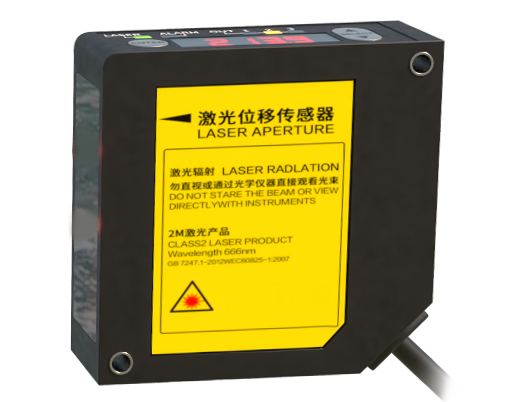
In summary, effective laser sensor setup hinges on meticulous alignment, tailored sensitivity, environmental resilience, and seamless integration. By mastering these principles, engineers can harness the full potential of laser technology, driving efficiency and reliability in automated processes. As industries evolve toward Industry 4.0, advanced features like AI-based calibration and predictive diagnostics will further simplify configuration, but foundational principles will remain integral to successful implementation.