In the realm of industrial automation, motion control, and scientific research, the precise measurement of speed is paramount. Laser speed sensors, also known as laser Doppler velocimeters (LDVs), have emerged as a premier non-contact technology for this purpose. Their operation is based on the Doppler effect, where the frequency of light scattered by a moving object shifts proportionally to its velocity. While these sensors are renowned for their high precision, their ultimate accuracy is not a fixed specification but a result of a complex interplay of several critical factors. Understanding and managing these factors is essential for engineers and technicians to achieve reliable and repeatable measurements.
The foundational principle of a laser speed sensor involves projecting a coherent laser beam onto a target surface. The backscattered light, with its shifted frequency, is then collected and interfered with a reference beam. The resulting beat frequency is analyzed to calculate the target's velocity. The inherent accuracy of this method is high, but it can be compromised by both systemic and environmental influences.
One of the most significant factors is the quality and characteristics of the target surface. A laser speed sensor requires a surface with sufficient optical roughness or natural particulates (like dust or paint texture) to generate a measurable Doppler signal. Perfectly smooth, mirror-like surfaces can cause specular reflection, leading to signal loss or erroneous readings. The material's color and reflectivity also play a role; very dark or highly absorptive materials may return a weak signal, increasing noise and reducing measurement confidence. For consistent results, applying a specialized retro-reflective tape or ensuring a naturally matte, light-scattering surface is often recommended.
The alignment and setup of the sensor are equally crucial. The laser beam must be positioned precisely perpendicular to the direction of motion. Any angular misalignment introduces a cosine error, where the measured velocity is the actual velocity multiplied by the cosine of the misalignment angle. Even a small angle can lead to a significant systematic error. Furthermore, the focal point of the laser must be correctly set on the target. A defocused beam reduces signal strength and spatial resolution, potentially capturing velocity data from an unintended area or background.

Environmental conditions present another layer of challenge. Airborne contaminants such as dust, oil mist, or steam can attenuate the laser beam, scatter light, and introduce noise. Vibrations transmitted to the sensor mounting can cause micro-movements, distorting the optical path and the measured signal. Temperature fluctuations can affect the laser's wavelength and the electronic components within the signal processor, leading to drift over time. High-quality sensors incorporate compensation mechanisms, but for ultra-high-precision applications, controlling the operating environment is necessary.
The electronic signal processing chain is the brain of the sensor. The accuracy of the frequency analysis—typically performed by fast Fourier transform (FFT) algorithms or digital signal processors (DSPs)—directly determines the velocity output. Key parameters here include sampling rate, bandwidth, and filter settings. A sampling rate too low for a high-speed target will violate the Nyquist theorem and cause aliasing. Incorrect bandwidth settings might filter out the actual signal or include excessive noise. Engineers must configure these parameters to match the expected velocity range and dynamic behavior of the target.
Finally, the inherent specifications of the sensor itself set the baseline. These include the wavelength stability of the laser diode, the quality of the optical components (lenses, beam splitters), and the resolution of the photodetector. The manufacturer's stated accuracy (e.g., ±0.05% of reading) is typically valid under ideal laboratory conditions. In the field, the combined effect of all aforementioned factors will determine the real-world accuracy.
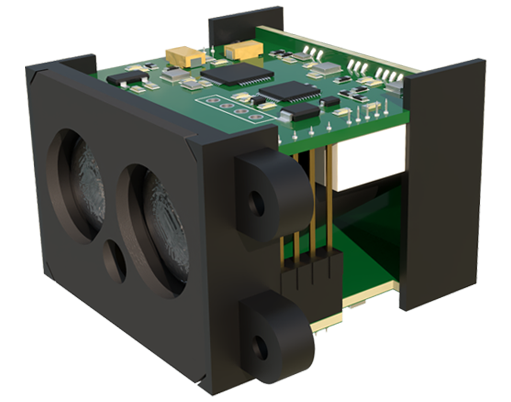
Therefore, achieving optimal laser speed sensor accuracy is an exercise in systems engineering. It requires careful selection of the sensor model for the application, meticulous installation and alignment, preparation of the target surface, consideration of the operating environment, and precise configuration of the signal processing electronics. Regular calibration against a traceable standard is also a best practice to maintain long-term accuracy. By rigorously addressing these factors, engineers can fully leverage the non-contact, high-resolution capabilities of laser Doppler technology, ensuring that speed measurements are not just precise, but truly accurate and dependable for critical control and analysis tasks.