In today's rapidly evolving industrial landscape, the demand for precision, reliability, and adaptability in automation systems has never been higher. Proximity sensors, as critical components in detecting the presence or absence of objects without physical contact, play a pivotal role in optimizing operational workflows. Traditional off-the-shelf sensors often fall short when faced with unique environmental challenges or specific application requirements. This is where customized solutions for new proximity sensors come into play, offering tailored designs that enhance performance, durability, and integration capabilities.
The development of new proximity sensors leverages advanced technologies such as inductive, capacitive, ultrasonic, and magnetic sensing principles. Each technology has its strengths, making it suitable for different industrial scenarios. For instance, inductive sensors excel in detecting metallic objects in harsh environments, while capacitive sensors are ideal for non-metallic materials like plastics or liquids. Customization allows engineers to select the optimal sensing technology based on factors like target material, operating temperature, and required sensing range. By fine-tuning parameters such as sensitivity, response time, and output signals, customized sensors can achieve higher accuracy and reduce false triggers, thereby minimizing downtime and maintenance costs.
One key aspect of customizing proximity sensors is addressing environmental constraints. Industrial settings often involve extreme conditions, including high temperatures, moisture, dust, or corrosive substances. Standard sensors may degrade quickly under such stress, leading to frequent replacements and operational disruptions. Customized solutions incorporate robust housing materials, specialized coatings, and enhanced sealing techniques to ensure longevity. For example, sensors designed for automotive manufacturing lines might feature stainless steel casings and IP67-rated protection to withstand coolant splashes and metal shavings. This level of customization not only extends sensor lifespan but also maintains consistent performance in demanding applications.
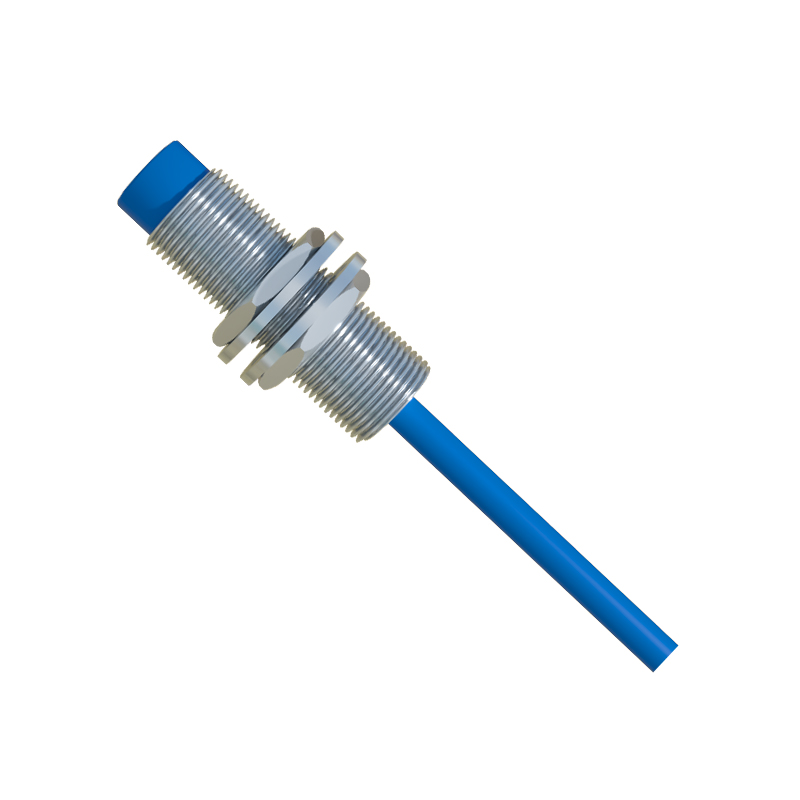
Integration with existing automation systems is another critical consideration. Modern factories rely on interconnected networks where sensors communicate with programmable logic controllers (PLCs), human-machine interfaces (HMIs), and data analytics platforms. Customized proximity sensors can be engineered with compatible communication protocols, such as IO-Link, Ethernet/IP, or Profinet, enabling seamless data exchange and real-time monitoring. Additionally, output options like analog signals, digital switches, or wireless transmissions can be tailored to match system requirements. This flexibility simplifies installation, reduces wiring complexity, and supports Industry 4.0 initiatives by facilitating predictive maintenance and smart diagnostics.
The customization process typically begins with a thorough assessment of the client's needs. Engineers collaborate with end-users to identify specific challenges, such as detecting small or irregularly shaped objects, operating in high-vibration zones, or achieving ultra-fast response times. Prototyping and testing phases follow, where sensor designs are validated in simulated or real-world conditions. Advanced simulation tools and 3D modeling help optimize form factors and mounting configurations, ensuring that sensors fit into constrained spaces without compromising functionality. Feedback loops during testing allow for iterative improvements, resulting in a final product that meets exact specifications.
Case studies highlight the benefits of customized proximity sensors. In the packaging industry, a company faced issues with misaligned labels on conveyor belts due to inconsistent sensor detection. A tailored capacitive sensor with adjustable sensitivity was developed, capable of identifying thin plastic films at high speeds. This solution reduced waste by 30% and increased production efficiency. Similarly, in renewable energy applications, custom magnetic sensors were designed to monitor turbine blade positions in offshore wind farms, withstanding saltwater exposure and providing reliable data for maintenance scheduling.
Looking ahead, trends in proximity sensor customization are driven by innovations in materials science, miniaturization, and artificial intelligence. Smart sensors with embedded AI algorithms can self-calibrate and adapt to changing environments, further reducing human intervention. Additionally, the rise of additive manufacturing allows for rapid prototyping of custom housings and components, accelerating development cycles. As industries continue to embrace automation and digital transformation, the role of customized proximity sensors will expand, enabling more agile and resilient operations.
In conclusion, investing in customized solutions for new proximity sensors is not merely a technical upgrade but a strategic move toward enhanced industrial efficiency. By addressing unique application needs, environmental factors, and integration challenges, these tailored sensors deliver superior performance, reduce operational costs, and support sustainable growth. For engineers and decision-makers, partnering with experienced providers to develop custom sensor solutions can unlock new levels of productivity and innovation in an increasingly competitive market.