In the rapidly evolving landscape of precision manufacturing, laser sensors have emerged as indispensable tools for ensuring the quality and consistency of lens coatings. These advanced optical components, used extensively in industries ranging from consumer electronics to aerospace, require coatings that enhance durability, reduce glare, and improve light transmission. The application of laser sensor technology in this domain represents a significant leap forward, offering unparalleled accuracy in monitoring and controlling the coating process.
Laser sensors operate on the principle of emitting a focused beam of light onto a target surface and analyzing the reflected signal. For lens coating applications, this non-contact measurement technique is crucial, as it prevents any physical interference with the delicate substrates. Key parameters such as coating thickness, uniformity, and adhesion can be monitored in real-time, allowing for immediate adjustments during deposition. This real-time capability minimizes waste and enhances production efficiency, leading to cost savings and higher yield rates.
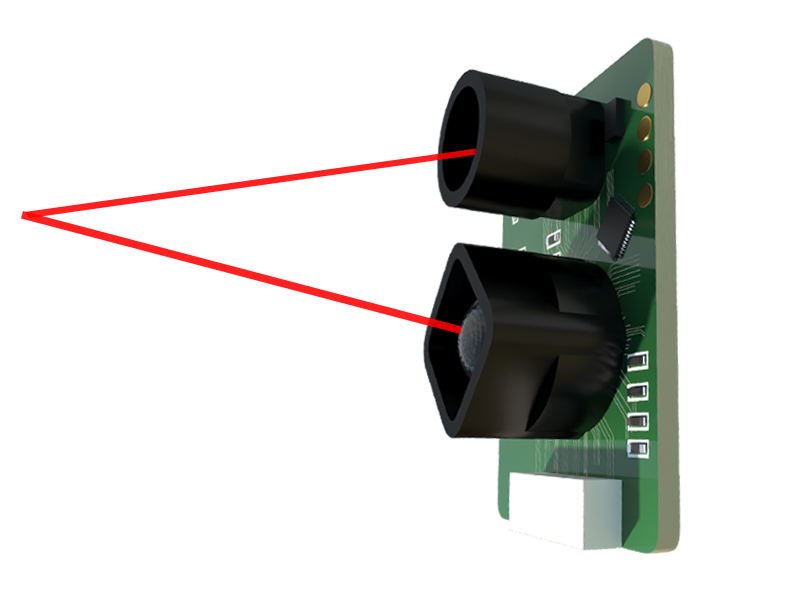
One of the most notable advancements in this field is the integration of high-resolution laser displacement sensors. These sensors can detect minute variations in coating thickness, often down to the nanometer level. By employing techniques like confocal microscopy or interferometry, they provide detailed topographical maps of the coated surface. This data is invaluable for identifying defects such as pinholes, streaks, or uneven layers that could compromise optical performance. Moreover, the ability to perform in-situ measurements eliminates the need for destructive testing, preserving the integrity of each lens.
The synergy between laser sensors and automated coating systems has further revolutionized production lines. Modern systems utilize feedback loops where sensor data directly controls parameters like spray nozzle positioning, deposition rate, and curing time. This closed-loop control ensures consistent quality across large batches, even when dealing with complex lens geometries. For instance, in the production of anti-reflective coatings for camera lenses, laser sensors help maintain precise layer stacks that optimize light transmission across different wavelengths.
Environmental factors such as temperature fluctuations and vibrations can affect coating processes. Advanced laser sensors now incorporate compensation algorithms to account for these variables, ensuring reliable measurements under varying conditions. Additionally, the development of compact, fiber-optic laser sensors allows for integration into confined spaces within coating chambers, enabling comprehensive monitoring without disrupting the workflow.

Looking ahead, the future of laser sensor technology in lens coating appears promising, with trends pointing toward increased automation and data analytics integration. Machine learning algorithms are being developed to predict coating outcomes based on sensor inputs, facilitating proactive quality control. Furthermore, the advent of ultrafast laser sensors may enable real-time monitoring of dynamic processes like plasma-enhanced chemical vapor deposition (PECVD), opening new avenues for innovation.
In conclusion, laser sensors have become a cornerstone of modern lens coating applications, driving improvements in precision, efficiency, and quality. As technology continues to advance, their role is set to expand, empowering manufacturers to meet the growing demands for high-performance optical components in an increasingly competitive market.
