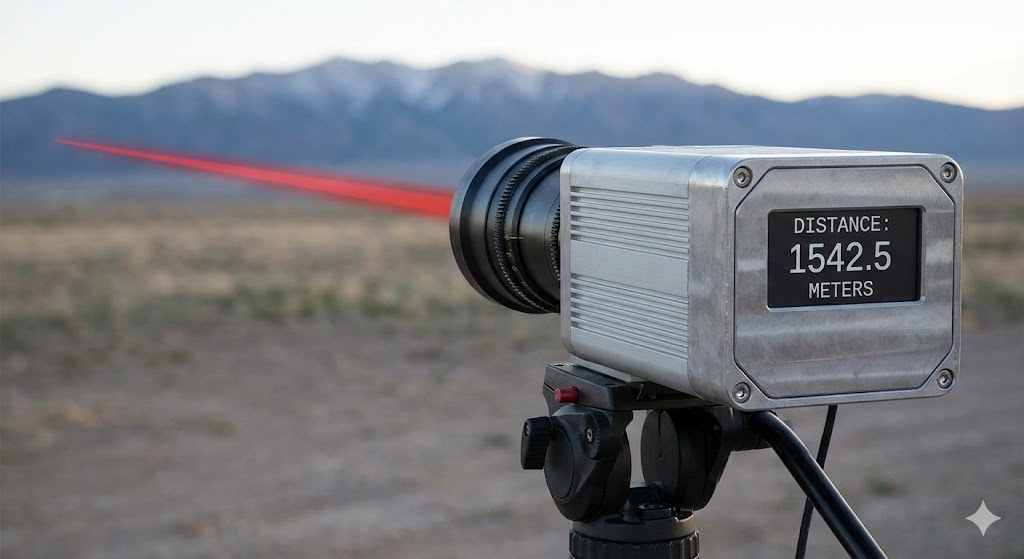
Laser sensors have become indispensable tools across a wide spectrum of industrial applications, from precision manufacturing and robotics to quality control and autonomous systems. Their ability to provide non-contact, high-accuracy measurements makes them superior to many traditional sensing methods. However, selecting the right laser sensor for a specific task requires a deep understanding of its key performance indicators (KPIs). These metrics define the sensor's capabilities and limitations, directly impacting the success of an application. This article delves into the critical KPIs that engineers and system integrators must evaluate.
The most fundamental and often first-considered KPI is measurement range. This specifies the minimum and maximum distances from the sensor's reference point within which it can reliably perform measurements. It is crucial to select a sensor whose range comfortably encompasses the expected working distance, with some margin for process variations. Operating a sensor too close to its minimum or maximum limit can degrade other performance aspects, such as accuracy. Closely related is the standoff distance, which is the distance from the sensor housing to the beginning of the measurement range. Proper integration planning must account for this physical offset.
At the heart of performance lies accuracy and resolution. Accuracy refers to the closeness of a measured value to the target's true value. It is typically expressed as a percentage of the full-scale reading or as an absolute value (e.g., ±0.1% of range or ±10 µm). Resolution, sometimes confused with accuracy, is the smallest change in distance the sensor can detect and display. A sensor might have a high resolution (detecting 1 µm changes) but poor accuracy if those readings are consistently offset from the true value. Both specifications are vital for applications like thickness gauging or part profiling.
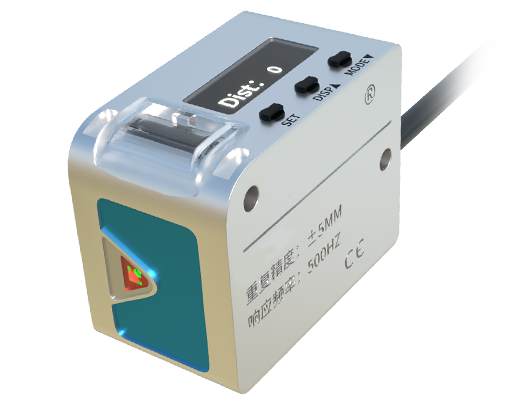
The repeatability of a laser sensor is arguably as important as its accuracy in industrial settings. It defines the sensor's ability to produce the same measurement result under unchanged conditions—the same target, same distance, same environment—over multiple trials. High repeatability ensures process consistency and reliability, even if there is a known, stable offset (which can often be calibrated out). For dynamic measurements, response time or sampling rate is critical. This indicates how quickly the sensor can take and output a measurement, usually listed in milliseconds or as a frequency in Hertz (Hz). A fast response time is essential for measuring moving objects or for high-speed production lines.
The performance of a laser sensor is not isolated from its operating environment. Temperature stability is a key KPI, quantifying how much the sensor's output drifts with changes in ambient temperature, expressed as a coefficient (e.g., 0.02% of reading/°C). Industrial environments can experience significant thermal fluctuations, making high temperature stability necessary for maintaining long-term accuracy. Furthermore, the laser spot size influences measurement capability. A smaller spot allows for higher lateral resolution, enabling measurements on small features or edges. However, on rough or diffusely reflecting surfaces, a slightly larger spot can provide a more stable signal by averaging over surface irregularities.
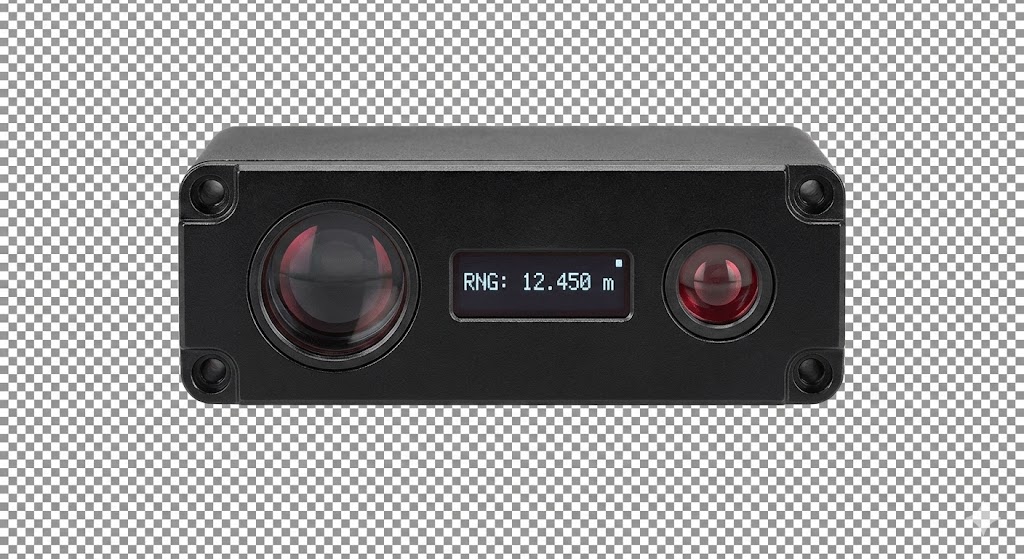
The type of measurement output and interface are practical KPIs affecting system integration. Common outputs include analog (4-20 mA, 0-10 V), digital (RS-232, RS-485), and modern industrial Ethernet protocols (EtherCAT, PROFINET). The choice depends on the controller or data acquisition system in use. Finally, the robustness of the sensor, indicated by its Ingress Protection (IP) rating and construction materials, is a vital KPI for harsh environments involving dust, moisture, or mechanical shock.
In conclusion, a holistic evaluation of these key performance indicators—range, accuracy, resolution, repeatability, response time, temperature stability, spot size, and interface—is essential. There is always a trade-off; a sensor with extremely high accuracy and resolution may have a limited measurement range or a slower response time. Therefore, understanding the precise requirements of the application is the first step in selecting the optimal laser sensor, ensuring it delivers reliable, precise data to drive efficiency and quality in industrial operations.