In the rapidly evolving landscape of automotive technology, Light Detection and Ranging (LiDAR) sensors have emerged as a cornerstone for advanced driver-assistance systems (ADAS) and autonomous driving. This sophisticated laser-based remote sensing technology provides high-resolution, three-dimensional mapping of a vehicle's surroundings, offering a critical layer of perception that complements cameras and radar. Unlike radar, which uses radio waves, LiDAR employs pulsed laser light to measure distances with exceptional accuracy. Each laser pulse reflects off objects—such as other vehicles, pedestrians, cyclists, and road infrastructure—and the sensor calculates the time-of-flight (ToF) for the return signal. This data generates a precise point cloud, a detailed 3D representation of the environment, enabling real-time object detection, classification, and tracking.
The core architecture of an automotive LiDAR sensor comprises several key components. The laser emitter, typically using wavelengths in the near-infrared spectrum (e.g., 905nm or 1550nm), fires rapid pulses of light. The choice of wavelength is crucial; 1550nm lasers are considered safer for human eyes at higher power levels, allowing for longer detection ranges. The scanning mechanism is another critical differentiator. Early systems relied on mechanical spinning assemblies with rotating mirrors, providing a wide field of view but posing challenges for durability, size, and cost. The industry is now aggressively moving towards solid-state or hybrid solid-state LiDAR. These systems use micro-electromechanical systems (MEMS) mirrors, optical phased arrays, or flash LiDAR technology to steer the laser beam without major moving parts. This shift enhances reliability, reduces form factors, and is essential for scalable integration into vehicle designs, from sleek rooflines to grilles.
Performance specifications define a LiDAR's capability. Key metrics include detection range, which can exceed 200 meters for long-range sensors; angular resolution, determining the density of points in the point cloud; frame rate, affecting how quickly the scene updates; and field of view, both horizontal and vertical. Automotive-grade LiDAR must also meet stringent requirements for operational reliability across extreme temperatures, vibration, and weather conditions like rain, fog, and direct sunlight. Sensor fusion is paramount; LiDAR data is rarely used in isolation. It is algorithmically fused with data from high-resolution cameras, millimeter-wave radar, and ultrasonic sensors. This fusion creates a robust, redundant perception system. For instance, while cameras excel at color and texture recognition (like reading traffic signs), LiDAR provides unambiguous depth and geometric information, crucial for understanding the exact position and velocity of objects.
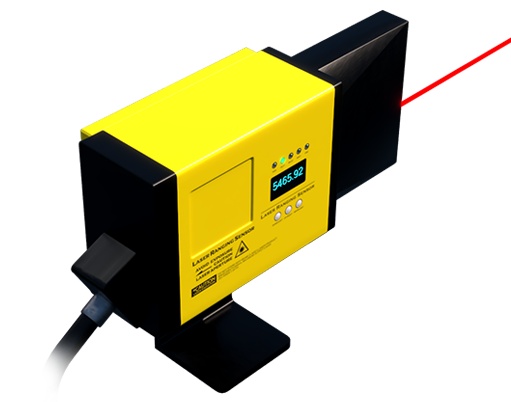
The applications within the automotive sector are profound. For ADAS features like adaptive cruise control, automatic emergency braking, and lane-keeping assistance, LiDAR adds a layer of long-range, high-fidelity depth perception that improves system confidence and performance, especially in complex urban scenarios. For higher levels of autonomy (SAE Levels 3-5), LiDAR is often considered indispensable. It enables detailed localization and mapping (simultaneous localization and mapping - SLAM), allowing the vehicle to navigate precisely even in GPS-denied environments like tunnels. Furthermore, it is vital for identifying low-reflectivity or non-standard objects that might challenge other sensors.
Looking ahead, the future of automotive LiDAR is focused on cost reduction, miniaturization, and performance enhancement. The development of chip-scale LiDAR using silicon photonics promises to dramatically lower costs and size, moving towards true solid-state solutions that can be mass-produced. Another trend is the move to higher-resolution 4D LiDAR, which adds velocity information (Doppler effect) to each point in the point cloud, providing instantaneous insight into object motion. Standardization of data interfaces and safety validation protocols will also be critical as LiDAR becomes ubiquitous. As the technology matures, we can expect its integration to expand beyond premium vehicles into mainstream models, fundamentally reshaping vehicle safety, autonomy, and our overall transportation ecosystem. The journey from a bulky, expensive component to a compact, reliable, and affordable automotive-grade sensor is well underway, solidifying LiDAR's role as the eyes of the autonomous future.