Proximity limit switches, often referred to as origin or home position sensors, are fundamental components in modern industrial automation and motion control systems. These non-contact sensors play a critical role in establishing a known reference point for machinery, ensuring repeatable accuracy, and safeguarding equipment by defining operational boundaries. Unlike mechanical limit switches that require physical contact, proximity sensors detect the presence of a metallic target (usually a ferrous metal like steel or iron) through an electromagnetic field, offering higher reliability, longer service life, and faster response times.
The core technology behind inductive proximity limit switches is electromagnetic induction. The sensor's oscillator generates a high-frequency alternating magnetic field at its active face. When a conductive metal target enters this field, eddy currents are induced within the target. This causes a change in the oscillation amplitude, which is detected by the sensor's circuitry. This detection triggers a solid-state output signal, typically in the form of a PNP or NPN transistor switch, signaling the control system (like a PLC) that the target—and by extension, the machine component—has reached its predefined origin or limit position.
Key specifications define a sensor's suitability for an application. Sensing distance, or the nominal range at which a standard target can be reliably detected, is paramount. For origin sensing, repeatability—the sensor's ability to consistently detect the target at the same position—is often more critical than a long range. Environmental factors are also crucial; sensors are rated with an Ingress Protection (IP) code (e.g., IP67) for dust and water resistance and are built to withstand industrial vibrations, temperature fluctuations, and electromagnetic interference. Output types must be compatible with the controller's input module, with 3-wire DC models being most common.
The application of these sensors is vast. In linear actuators and ball screw drives, an origin proximity switch defines the "home" position, from which all other movements are referenced. In rotary applications, such as indexing tables or robotic arms, they establish the zero-degree rotational reference. On conveyor systems, they can act as limit stops or product presence detectors. Their non-contact nature makes them ideal for high-speed machinery where mechanical wear from repeated impacts would be unacceptable. Proper installation is critical: the sensor must be securely mounted to avoid misalignment, and the target must be of the correct material and size, positioned parallel to the sensing face for optimal performance.
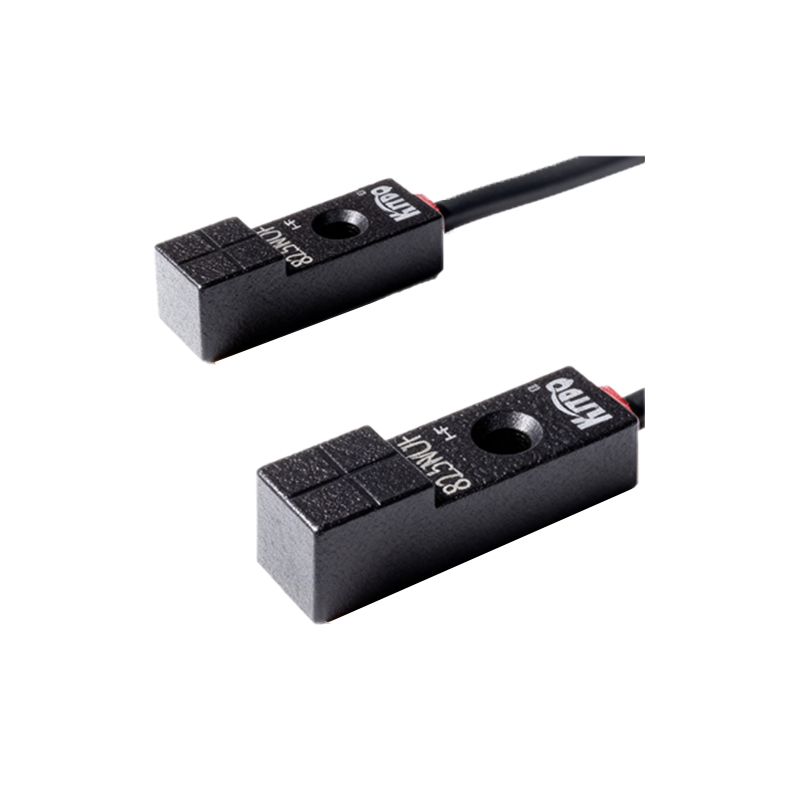
Selecting the right proximity switch involves a careful analysis of the operating environment, required sensing distance, target material, output configuration, and electrical requirements. Engineers must also consider housing style (cylindrical, rectangular, or slot-type) and connection method (pre-wired cable or quick-disconnect). Regular maintenance, though minimal, involves checking for physical damage, ensuring clean sensing surfaces free from metal chips or debris, and verifying electrical connections and signal integrity.
In summary, the proximity limit switch is a deceptively simple yet indispensable device in automation. It provides the foundational "eye" for a machine to know its starting point, enabling precise, reliable, and safe operation. As industries continue to push for higher precision and efficiency, the evolution of these sensors—with features like longer ranges, enhanced noise immunity, and IO-Link digital communication for diagnostics—will continue to support advancements in smart manufacturing and Industry 4.0 initiatives.