Proximity sensors are indispensable components in modern industrial automation, offering non-contact detection of metallic and, in some cases, non-metallic objects. Selecting the correct model is critical for ensuring system reliability, precision, and efficiency. This comprehensive guide details the primary types, key specifications, and common model series from leading manufacturers to assist engineers and procurement specialists in making informed decisions.
The fundamental categorization of proximity sensors is based on their detection principle. Inductive proximity sensors are the most prevalent, designed to detect ferrous and non-ferrous metals without physical contact. They generate an electromagnetic field, and a change in this field caused by a metallic target triggers the output. Common housing styles include cylindrical (e.g., M8, M12, M18, M30 threaded barrels) and rectangular or block-style housings. Key specifications include sensing distance (ranging from 1mm to 60mm typically), output type (PNP/NPN, NO/NC), and supply voltage (commonly 10-30V DC). Models like the Turck BI5-M18-AP6X-H1141 or Sick IME18-08NNS-ZW1 exemplify robust, standard-range inductive sensors.
Capacitive proximity sensors can detect both metallic and non-metallic materials such as plastics, glass, wood, and liquids. They operate by measuring changes in capacitance. These are ideal for level detection, material handling, and presence checking of non-metals. Models often feature sensitivity adjustment potentiometers to tune for different materials. An example is the Pepperl+Fuchs CBN15-A4-VP4X, a cylindrical capacitive sensor with a 15mm range.
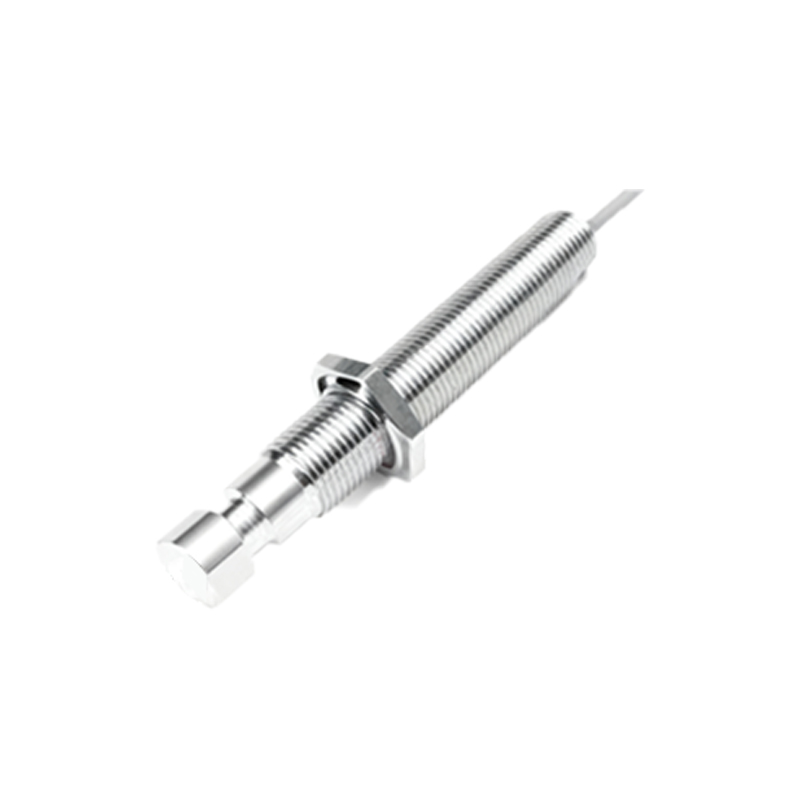
Magnetic proximity sensors, often called reed switches or solid-state Hall effect sensors, detect permanent magnets. They are widely used in cylinder position sensing due to their small size and reliability in harsh environments. A typical model is the SMC D-M9N, a compact magnetic sensor designed for pneumatic cylinders.
Ultrasonic sensors use sound waves to detect objects and measure distance, suitable for a wide variety of materials and challenging conditions like dust or fog. While not always classified strictly as "proximity" switches, their proximity versions provide a simple on/off output. The Banner Q45UR series is a notable example.
Photoelectric sensors, though a broad category, include proximity-mode versions (diffuse reflective) that detect objects at a fixed distance without a separate reflector. They are excellent for detecting non-metallic objects at longer ranges than capacitive sensors. The Omron E3Z-T81 is a standard miniature photoelectric sensor.
When selecting a model, engineers must scrutinize several parameters beyond type. The sensing distance (Sn) is nominal; a safety factor (typically 0.7-0.8) is applied for reliable operation. Hysteresis prevents output chatter. The switching frequency determines how fast an object can pass the sensor. Environmental protection ratings are crucial; an IP67 rating guarantees protection against dust and temporary immersion, essential for washdown areas. Output configuration must match the PLC input card (e.g., PNP sourcing for sinking PLC inputs). Connection methods include pre-wired cables, quick-disconnect (M12 connectors), or terminal compartments.
Leading manufacturers offer extensive series with consistent naming conventions. For instance:
Sick: IME (Inductive), IMG (Cylindrical), IMR (Ring-style).
Pepperl+Fuchs: NJ (Cylindrical Inductive), NCB (Cylindrical Capacitive).
Omron: E2E (Inductive Cylindrical), E2K (Capacitive).
Allen-Bradley (Rockwell Automation): 871T (Inductive), 872C (Capacitive).
IFM Electronic: IM (Inductive), IQ (Capacitive).
For specialized applications, consider factors like weld-field immunity (for sensors near welding equipment), high-temperature models (for foundries), or factor 1 cylindrical sensors (flush-mounted for metal surrounds). Always consult the manufacturer's datasheet for precise mechanical dimensions, electrical diagrams, and performance curves. Proper selection, considering all electrical, mechanical, and environmental factors, ensures optimal performance and longevity in demanding industrial automation systems, minimizing downtime and maintenance costs.