Inductive proximity sensors are fundamental components in modern industrial automation, offering non-contact detection of metallic objects. Their robust design, reliability, and versatility make them indispensable in countless applications, from manufacturing assembly lines to heavy machinery. Unlike mechanical limit switches, they have no moving parts to wear out, leading to longer service life and reduced maintenance. This article delves into the operating principles, key characteristics, application considerations, and selection criteria for these essential devices.
The core principle of an inductive proximity sensor is electromagnetic induction. The sensor contains a coil wound around a ferrite core, which is part of an oscillator circuit. When an alternating current is applied, it generates a high-frequency electromagnetic field at the active face of the sensor. When a metallic object enters this field, eddy currents are induced on the surface of the target. These eddy currents draw energy from the oscillator, causing a reduction in its amplitude. This change is detected by a threshold circuit, which subsequently triggers a change in the sensor's output state (e.g., from OFF to ON). Once the target moves away, the oscillator regenerates, and the output returns to its original state.
Key specifications define a sensor's performance and suitability for an application. The sensing distance is a critical parameter, typically specified for a standard target (often mild steel). It is important to note that this nominal sensing distance (Sn) is a theoretical value under ideal conditions. The effective operating distance (Sr) is reduced, usually to 70-80% of Sn, to account for temperature fluctuations and supply voltage tolerances. Furthermore, different metals affect the sensing range due to their varying electrical conductivity and magnetic permeability. For instance, the sensing distance for stainless steel is often 70-90% of that for mild steel, while for copper or aluminum, it can be as low as 30-50%. The hysteresis is the difference between the switch-on and switch-off points, expressed as a percentage of the sensing distance. This feature prevents output chatter when a target is positioned at the exact switching threshold.
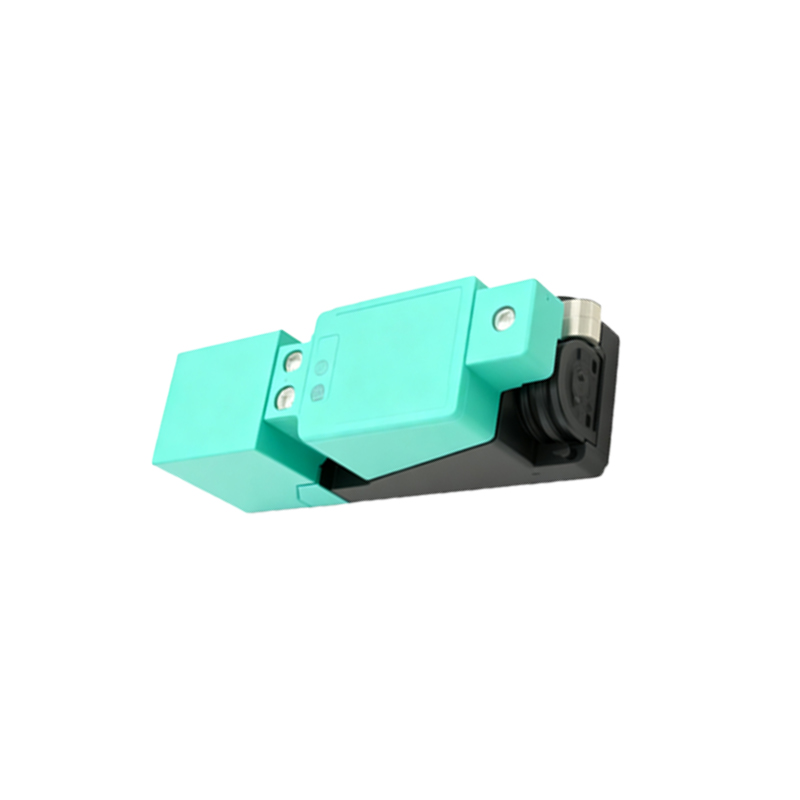
Output configurations are another major differentiator. Two-wire sensors are directly connected in series with the load, simplifying wiring but requiring a minimum load current to operate. Three-wire sensors, the most common type, have separate power, ground, and signal wires and offer both PNP (sourcing) and NPN (sinking) output types. The choice between PNP and NPN depends on the control system's input module (sinking vs. sourcing). Four-wire sensors combine both a normally open (NO) and a normally closed (NC) contact in one device. Outputs can be solid-state (transistor) or electromechanical (relay), with transistors offering faster switching speeds and longer life.
Selecting the right inductive sensor requires a thorough analysis of the application environment. For harsh conditions, sensors with high Ingress Protection (IP) ratings (e.g., IP67, IP69K) are necessary to withstand dust, water jets, and washdowns. Temperature range must be compatible with the operating environment. The sensor's housing material is also vital; nickel-plated brass or stainless steel housings offer superior corrosion resistance compared to plastic. In applications with strong electromagnetic interference (EMI) or where multiple sensors are mounted close together, models with built-in immunity to interference and short-circuit protection are essential to prevent false triggering and damage.
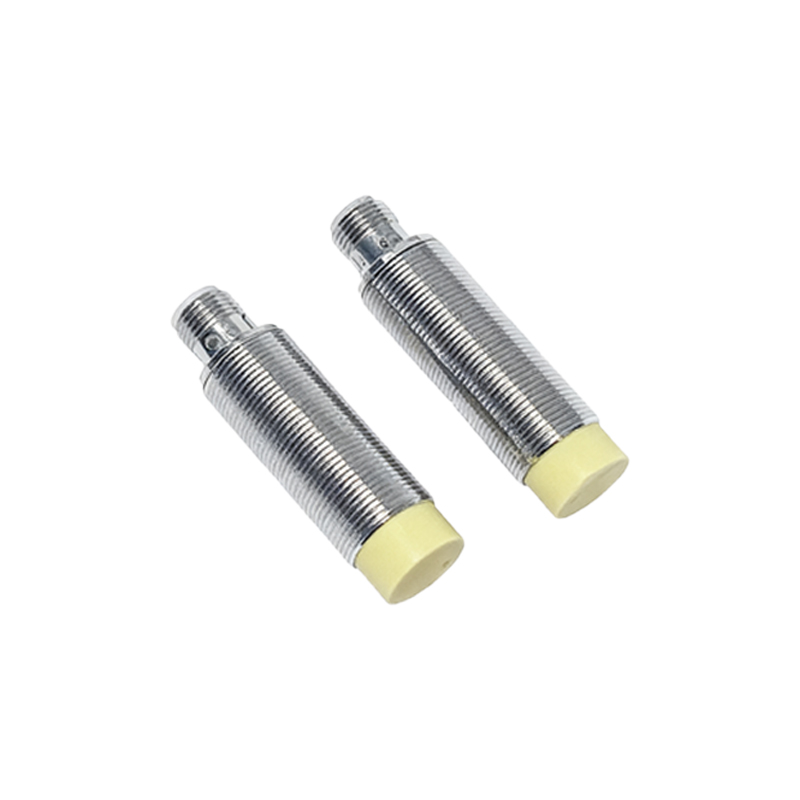
Applications are vast. They are used for position detection (e.g., verifying a cylinder is fully extended or retracted), end-of-travel sensing on linear actuators, part presence verification on conveyor belts, counting metallic objects, and speed monitoring via tooth or gear detection. Specialized variants include cylindrical threaded barrels (M8, M12, M18, M30), rectangular "block" styles, and sensors with extended sensing ranges or high-temperature tolerance for foundries.
In conclusion, inductive proximity sensors are a mature yet continually evolving technology. Understanding their operating principle, key specifications like sensing distance correction factors and output types, and environmental requirements is crucial for optimal system integration. Proper selection ensures reliable operation, minimizes downtime, and enhances the overall efficiency and safety of automated industrial processes. Engineers must always consult manufacturer datasheets for precise performance data and consider real-world application factors beyond the nominal specifications.