In the realm of industrial automation and process control, accurate and reliable level measurement is paramount. Among the diverse technologies available, proximity level sensors stand out for their non-contact operation, durability, and versatility. These sensors detect the presence or absence of a target material—typically a liquid, slurry, or granular solid—without physical contact, making them ideal for harsh, corrosive, or sterile environments. This article delves into the operational principles, primary types, key applications, and critical selection factors for proximity level sensors.
At their core, proximity level sensors operate by emitting a field or beam and detecting changes in that field caused by the target material. The absence of moving parts and the lack of direct contact with the process media significantly reduce maintenance needs and prevent contamination. This fundamental principle is implemented through several distinct technologies, each with its own strengths.
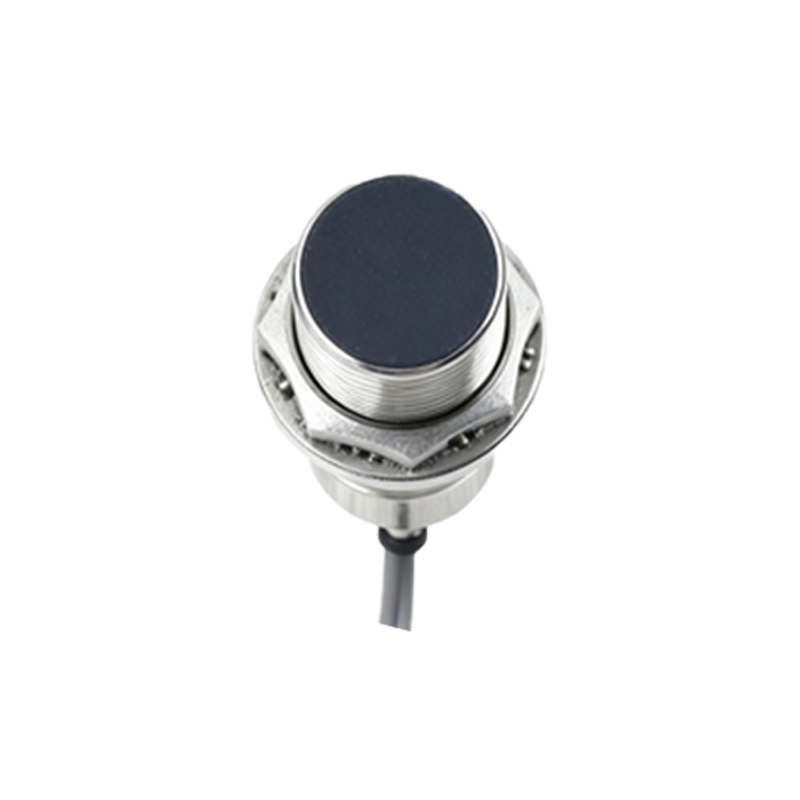
Capacitive proximity sensors are widely used for both conductive and non-conductive liquids and solids. They function by generating an electrostatic field. When a material enters this field, it alters the sensor's capacitance, triggering a switching action. These sensors are excellent for detecting materials through non-metallic container walls, allowing for installation outside tanks. They are particularly effective with non-conductive materials like plastics, oils, and certain granules. However, their sensitivity can be affected by material buildup or changes in the dielectric constant of the medium.
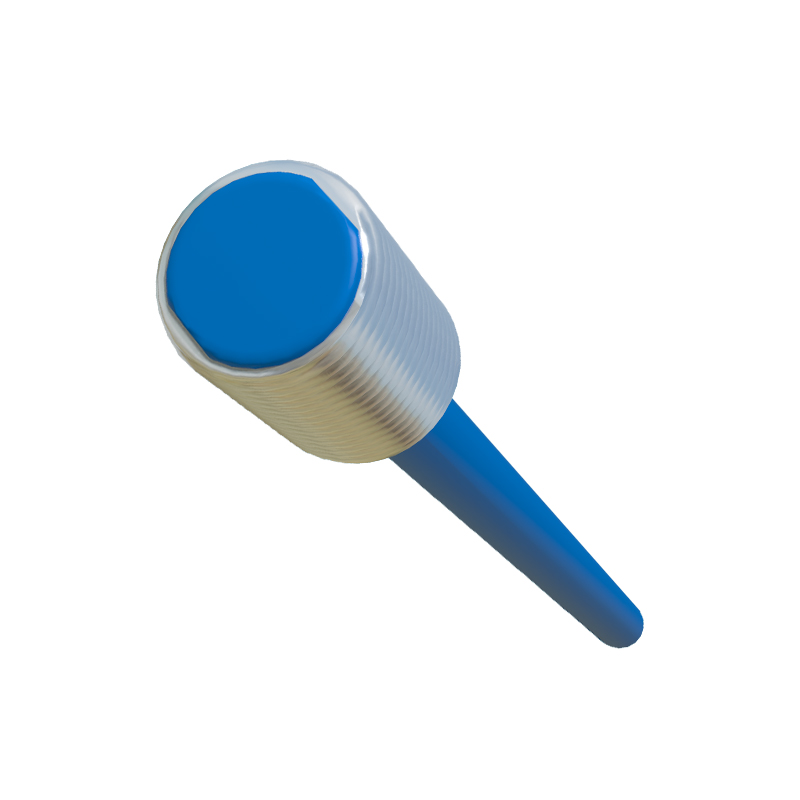
Inductive proximity sensors, conversely, are designed specifically for detecting conductive metallic targets. They generate an electromagnetic field. When a conductive metal object enters this field, eddy currents are induced, causing a change in the sensor's oscillation amplitude, which is detected. While not typically used for direct liquid level sensing, they are indispensable for detecting float positions (where a float contains a metallic element) or for interface detection in systems with metallic components. Their robustness makes them suitable for heavy industrial settings.
Ultrasonic proximity sensors represent another major category. They operate by emitting high-frequency sound waves and measuring the time it takes for the echo to return from the target surface. The time-of-flight calculation provides a precise distance measurement, which can be used for continuous level monitoring or point-level detection. Ultrasonic sensors are highly effective for a vast range of liquids and bulk solids, including corrosive chemicals and uneven surfaces. Factors like dust, vapor, foam, and extreme temperature gradients can, however, attenuate the sound signal and affect accuracy.
A fourth critical type is the optical proximity sensor, which uses infrared or laser light. These sensors detect the presence of a material by either the reflection of a beam (reflective mode) or the breaking of a beam between a separate transmitter and receiver (through-beam mode). Optical sensors offer very high precision and fast response times. They are ideal for clear liquids, small container applications, and detecting interfaces between immiscible liquids. Their performance can be compromised by coatings on the lens, highly turbid media, or ambient light interference in certain setups.
The application landscape for these sensors is vast. In the water and wastewater industry, capacitive and ultrasonic sensors monitor clarifiers, chemical tanks, and pump control. The food and beverage sector relies heavily on sensors that meet hygienic design standards; capacitive and optical sensors are used for milk, juices, and granular ingredients like sugar or flour. Pharmaceutical and biotechnology processes often employ capacitive sensors for their clean-in-place (CIP) compatibility. In chemical processing, the chemical resistance of the sensor housing and the technology's immunity to process conditions dictate the choice, often leading to the selection of ultrasonic or specialized capacitive sensors.
Selecting the right proximity level sensor requires a systematic evaluation of several parameters. First, the process media characteristics are decisive: Is it conductive or non-conductive? Liquid, solid, or slurry? What are its dielectric constant, density, and viscosity? Does it foam, coat, or agitate? Second, the process conditions must be considered: temperature range, pressure, presence of vapor or dust, and potential for mechanical shock or vibration. Third, the installation constraints are critical: available mounting space, tank material and wall thickness (for external mounting), and required sensing range. Fourth, the output requirement must be defined: Is a simple on/off switch signal sufficient for high/low level alarms, or is continuous 4-20mA or digital output needed for inventory management? Finally, industry-specific certifications (e.g., ATEX/IECEx for hazardous areas, FDA/USP Class VI materials for food/ Pharma, SIL ratings for functional safety) are often non-negotiable.
In conclusion, proximity level sensors are indispensable tools for modern industrial measurement. Their non-contact nature provides a significant advantage in terms of longevity and reduced maintenance. By understanding the distinct operating principles of capacitive, inductive, ultrasonic, and optical technologies, engineers and system integrators can make informed decisions. A thorough analysis of the application's specific media, environmental conditions, and performance requirements is the key to