In the rapidly evolving landscape of industrial automation, machine vision, and precision measurement, structured light laser sensors have emerged as a cornerstone technology. These sophisticated devices project a precisely controlled pattern of light—lines, grids, or other coded shapes—onto a target surface. By analyzing the deformation of this pattern when viewed from a different angle, typically by a camera or detector array, the sensor can extract highly accurate three-dimensional information about the object's shape, dimensions, and surface characteristics. Unlike traditional 2D vision systems or simple point laser triangulation sensors, structured light systems capture a dense cloud of data points in a single snapshot, enabling comprehensive surface profiling.
The core principle hinges on active triangulation. A laser diode or LED source, often coupled with diffractive optical elements (DOEs) or micro-lens arrays, generates the structured light pattern. This pattern is projected onto the target. A camera, positioned at a known baseline distance and angle from the projector, captures the scene. The key to the system's power is the deviation of the projected pattern from its known, undistorted form. Surface height variations cause the lines or dots to shift and bend. Sophisticated algorithms, often based on phase-shifting or Gray code techniques, correlate each point in the captured image with its original position in the projected pattern. This correlation allows for the precise calculation of depth (Z-axis) coordinates for thousands, or even millions, of points simultaneously, generating a detailed 3D point cloud or depth map.
The advantages of structured light laser sensors are manifold. They offer non-contact measurement, which is critical for delicate, soft, or high-speed objects. They provide high-speed data acquisition, making them suitable for inline inspection on fast-moving production lines. Their resolution and accuracy can be exceptional, reaching micron levels in controlled environments. Furthermore, they are relatively insensitive to ambient lighting conditions because they rely on their own active illumination, enhancing robustness in industrial settings.
Applications span a vast array of industries. In automotive manufacturing, these sensors are used for gap and flush measurement of body panels, weld seam inspection, and robot guidance for assembly. In electronics, they verify component coplanarity, inspect solder paste volume, and measure micro-structures on PCBs. The consumer electronics sector relies on them for quality control of smartphone casings, screen flatness checks, and precise assembly of intricate components. Beyond manufacturing, they are pivotal in reverse engineering, where they digitize physical objects into CAD models, and in logistics for automated package dimensioning and volume calculation.
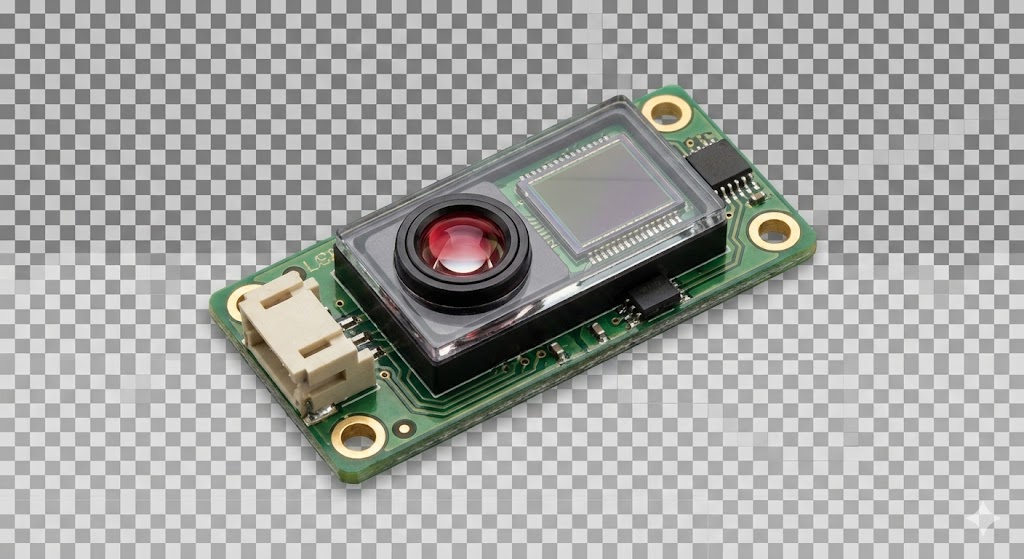
Recent technological advancements are pushing the boundaries further. The integration of blue laser light sources offers improved performance on shiny or reflective surfaces by reducing speckle noise and penetration into certain materials. The development of high-speed, high-resolution global shutter cameras allows for accurate measurement of fast-moving or vibrating objects. Miniaturization of projector and camera modules is enabling their integration into portable devices and tighter robotic end-effectors. Furthermore, the fusion of structured light data with data from other sensor types, like traditional 2D vision or inertial measurement units (IMUs), is creating more intelligent and context-aware inspection systems.
However, challenges persist. Highly specular or transparent surfaces can still pose difficulties, often requiring specialized coatings or alternative sensing modalities. The computational demand for processing high-density point clouds in real-time remains significant, driving the need for powerful embedded processors and optimized algorithms. System calibration is also critical and must be maintained to ensure long-term accuracy.
Looking ahead, the future of structured light laser sensors is intertwined with trends in Industry 4.0 and smart manufacturing. Enhanced connectivity through Industrial IoT protocols will allow sensor data to be seamlessly integrated into digital twins and factory-wide analytics platforms. Advances in artificial intelligence and machine learning will enable these sensors not just to collect 3D data, but to autonomously interpret it—identifying complex defects, predicting wear, and making real-time process adjustments. As the demand for higher quality, zero-defect production, and flexible automation grows, structured light laser sensors will continue to be an indispensable tool, providing the eyes for the increasingly intelligent factory floor.
