In the intricate world of automation and smart devices, a silent sentinel often goes unnoticed, yet its function is critical. This is the front-mounted proximity sensor, a non-contact detection device that has become indispensable across countless industries. Unlike mechanical switches or manual detection, these sensors operate on the principle of emitting a field or beam and analyzing the changes in the return signal to detect the presence, absence, or position of an object without any physical contact.
The core technology behind these sensors varies, leading to different types suited for specific applications. Inductive proximity sensors are the workhorses in industrial settings. They generate an electromagnetic field and are exclusively used for detecting metallic objects. When a metal target enters this field, it induces eddy currents, causing a change in the sensor's oscillation amplitude, which triggers the output switch. Their robustness, high switching frequency, and immunity to environmental factors like dust or oil make them perfect for assembly lines, machine tools, and robotic arms.
For non-metallic objects, including liquids, powders, wood, and plastic, capacitive proximity sensors take the lead. They function by generating an electrostatic field. Any object with a dielectric constant different from air (which is nearly all materials) will alter the capacitance of the sensing field, triggering detection. This makes them versatile for level detection in tanks, material handling, and even touch-sensitive interfaces.
In applications requiring longer sensing ranges or precise position detection of any material, photoelectric sensors are deployed. These front-mounted units consist of an emitter (usually an LED or laser diode) and a receiver. They detect objects by either the interruption (through-beam) or reflection (retro-reflective or diffuse) of a light beam. They are essential in packaging, material handling, and safety curtains.
Ultrasonic sensors represent another key technology, using sound waves beyond human hearing. They measure the time taken for an emitted sound pulse to bounce back from an object. Excellent for detecting objects regardless of color, transparency, or material, and effective in challenging environments with dust or vapor, they are widely used for distance measurement, level sensing in harsh conditions, and presence detection of complex shapes.
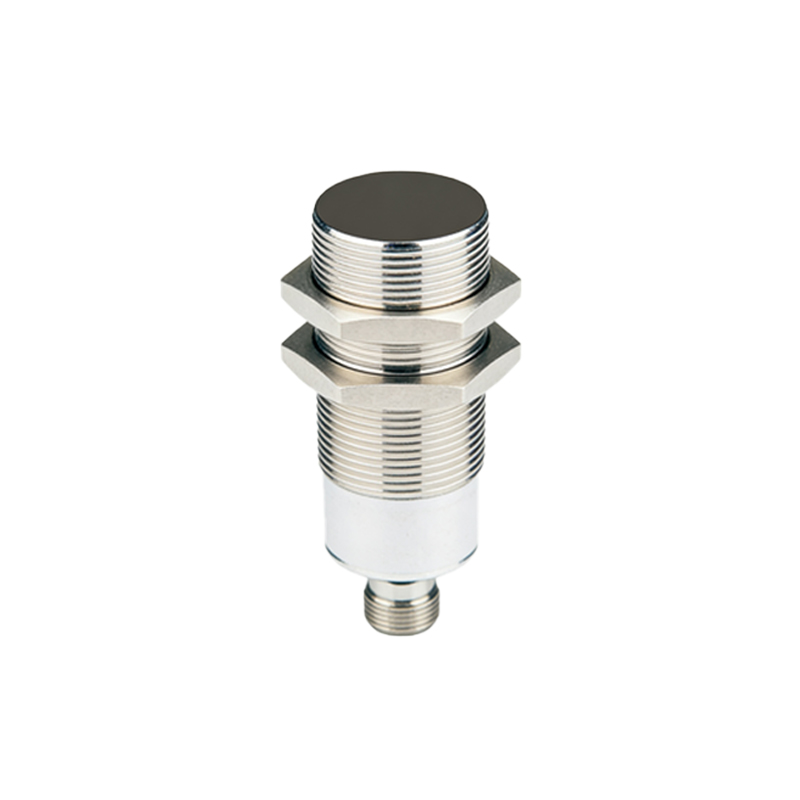
The "front-mounted" or "flush-mounted" design is a crucial feature. These sensors can be installed flush with a metal mounting surface without a loss of sensing range. This is because their field is focused forward, minimizing lateral detection. This design protects the sensor from physical damage, allows for easy cleaning, and enables sleek, integrated installation in machinery and devices, a common requirement in modern automotive assembly or compact consumer electronics.
The applications are vast and growing. In the automotive industry, they are embedded in vehicles for parking assistance, blind-spot monitoring, and automated assembly robots. In consumer electronics, they deactivate touchscreens during phone calls to prevent accidental input. In manufacturing, they ensure precise part positioning, count objects on conveyors, and control robotic movements. In the realm of smart homes and buildings, they enable touchless faucets, automatic doors, and energy-saving lighting controls.
Selecting the right front-mounted proximity sensor involves several considerations. The sensing range, or the maximum distance at which the sensor can reliably detect a standard target, is primary. The target material dictates the sensor type: inductive for metals, capacitive for nearly everything else. Environmental conditions like temperature, pressure, and exposure to chemicals or washdowns determine the required housing material and ingress protection (IP) rating. The output type (e.g., NPN, PNP, analog, IO-Link) must be compatible with the control system, and the physical size and mounting style must fit the application's spatial constraints.
The evolution of Industry 4.0 and the Internet of Things (IoT) is pushing these sensors further. Modern sensors now come with advanced diagnostics, digital communication protocols like IO-Link for parameterization and data exchange, and enhanced intelligence for condition monitoring. This allows for predictive maintenance, reducing downtime and increasing overall equipment effectiveness.
In conclusion, the front-mounted proximity sensor is a foundational component of modern automation. Its ability to provide reliable, non-contact detection in a compact and rugged form factor solves countless engineering challenges. From ensuring the safety and efficiency of heavy industrial machinery to enabling the intuitive interfaces of everyday smart devices, this technology continues to be a key driver of innovation, silently and precisely sensing the world around us.