Diffuse proximity sensors represent a cornerstone technology in modern industrial automation, offering non-contact detection capabilities essential for a wide range of applications. Unlike through-beam or retro-reflective sensors, diffuse sensors house both the emitter and receiver in a single unit, relying on the reflection of emitted light, sound, or electromagnetic waves from the target object itself. This fundamental design principle grants them unique operational characteristics and advantages.
One of the most significant features of diffuse proximity sensors is their simplified installation and alignment. Since they do not require a separate reflector or receiver unit opposite the emitter, mounting is considerably more straightforward. This reduces setup time, minimizes mechanical complexity, and lowers overall system cost. Engineers can position the sensor directly where the detection is needed without worrying about precise optical alignment across a distance, making them ideal for applications with space constraints or where mounting a separate component is impractical.
The sensing range is a critical parameter for diffuse sensors. Typically, these sensors have a shorter effective range compared to through-beam types because the emitted signal must travel to the target and back, suffering attenuation twice. Advanced models, however, incorporate powerful LEDs (often infrared) and sensitive receivers to achieve respectable ranges suitable for most material handling, packaging, and assembly tasks. Many sensors feature background suppression or foreground suppression technology, which allows them to ignore objects beyond or before a specific set distance. This is achieved through triangulation or time-of-flight principles, enabling reliable detection of an object at a precise position while ignoring the conveyor belt or machine parts behind it.
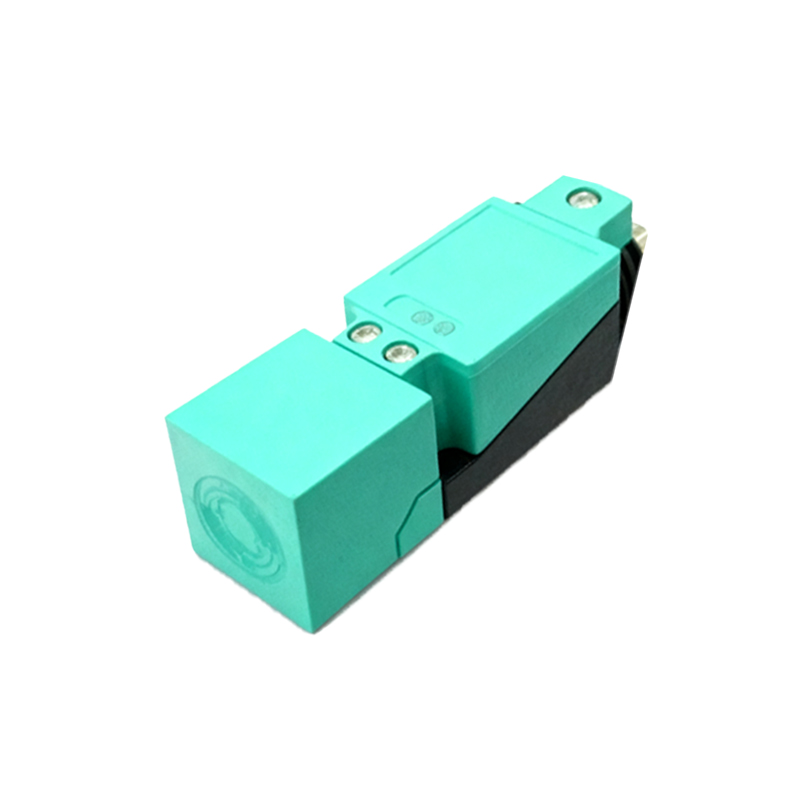
Another defining characteristic is their versatility in detecting various materials. While photoelectric diffuse sensors excel at detecting solid objects, capacitive diffuse variants can sense non-metallic materials like liquids, plastics, and wood by detecting changes in an electrical field. Ultrasonic diffuse sensors use sound waves and are excellent for detecting objects regardless of color, transparency, or surface texture, including clear glass or shiny metal that might challenge optical sensors. This material versatility makes the diffuse mode a go-to solution for diverse production environments.
Robustness and reliability in harsh conditions are paramount. High-quality industrial diffuse sensors are built with rugged housings, often rated IP67 or higher, providing protection against dust, water jets, and mechanical impact. They are designed to withstand typical industrial stressors such as vibration, temperature fluctuations, and exposure to cutting fluids or washdowns. This durability ensures consistent performance and long service life, minimizing maintenance downtime.
Modern diffuse sensors also integrate smart features that enhance their functionality. Programmable output modes (e.g., light-on/dark-on), teach-in functionality for easy range setting, and IO-Link communication are becoming standard. IO-Link, in particular, enables detailed parameter setting, real-time monitoring of signal strength, and diagnostic data reporting, facilitating predictive maintenance and seamless integration into Industry 4.0 frameworks. These features empower engineers to fine-tune sensor behavior for optimal performance within a connected factory ecosystem.
In application, diffuse proximity sensors are ubiquitous. They are used for object presence detection on conveyor lines, bottle/cap detection in packaging, wafer positioning in semiconductor manufacturing, and stack height monitoring in palletizing. Their ability to detect small objects at close range makes them perfect for precision assembly tasks. The choice between standard diffuse, background suppression, or foreground suppression models depends entirely on the specific detection challenge, such as ignoring a background or ensuring detection only within a very narrow window.
In conclusion, the diffuse proximity sensor's combination of simple installation, material versatility, environmental robustness, and evolving intelligence makes it an indispensable tool. Its design elegantly solves the problem of non-contact detection in confined or complex spaces where other sensor types are less feasible. As automation demands greater flexibility and data integration, the capabilities of diffuse sensors will continue to expand, solidifying their role in efficient and reliable industrial systems.