In the realm of industrial automation, proximity switch sensors are indispensable for non-contact object detection. However, a common and often challenging application involves detecting plastic materials. Unlike conductive metals, plastics are non-conductive and non-magnetic, presenting unique hurdles for standard inductive and capacitive proximity sensors. This article delves into the technical principles, sensor selection criteria, and best practices for reliably sensing plastic components in various industrial environments.
The fundamental challenge stems from the operating principles of common proximity sensors. Inductive proximity sensors generate an electromagnetic field to detect metallic objects. Since plastics do not disturb this field, they are essentially invisible to inductive sensors. Therefore, for plastic detection, the primary technologies employed are capacitive proximity sensors and, in some specific cases, photoelectric sensors.
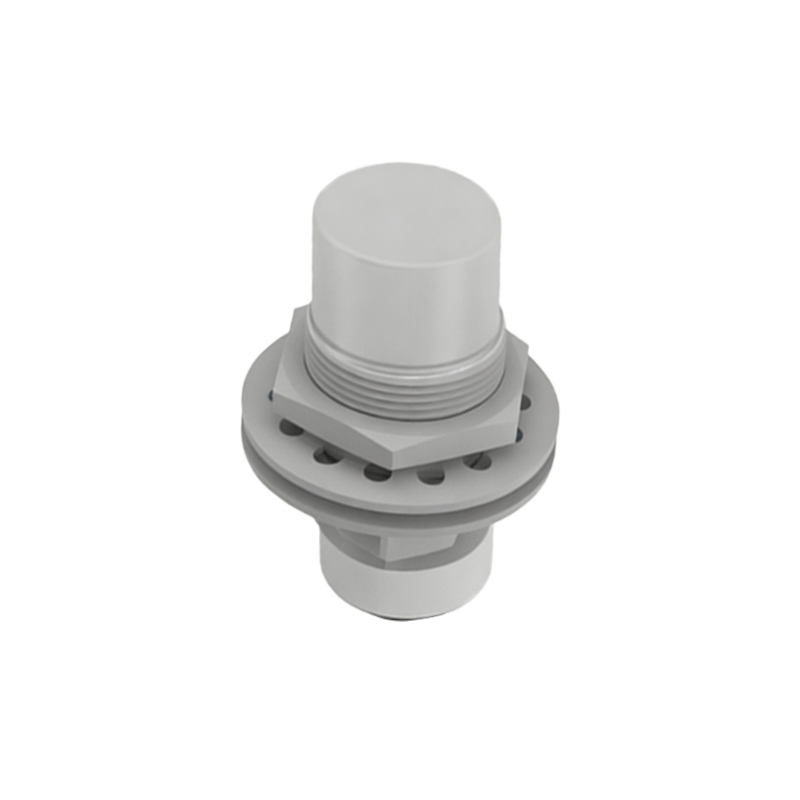
Capacitive proximity sensors operate by generating an electrostatic field. Any object that enters this field alters the sensor's capacitance, triggering a switching signal. Crucially, capacitive sensors can detect both conductive and non-conductive materials, including all types of plastics, glass, wood, and liquids, provided they have a sufficient dielectric constant. The detection is based on the material's ability to be polarized in an electric field. Most plastics have a dielectric constant higher than air (which is 1), allowing them to be detected. For instance, PVC has a dielectric constant around 3-4, while PTFE (Teflon) is lower, around 2.1, making it more challenging to sense.
Key factors influencing the reliable detection of plastics with capacitive sensors include:
1. Dielectric Constant (εr): This is the most critical material property. Materials with a higher dielectric constant are easier to detect at greater distances. Knowing the specific plastic's εr is essential for sensor selection and setup.

2. Sensor Adjustment: Capacitive sensors typically feature a sensitivity potentiometer. This allows fine-tuning of the sensing field's intensity to distinguish between the target plastic object and background materials (like a plastic conveyor belt), preventing false triggers.
3. Mounting and Environment: The sensor must be installed correctly, ensuring the sensing face is unobstructed. Environmental factors like dust, humidity, and temperature fluctuations can affect performance. Condensation or material buildup on the sensor face can cause drift or failure.
4. Object Size and Distance: The size of the plastic part and the required sensing distance (rated operating distance) must be within the sensor's specifications. Smaller objects may require reduced sensing distances.
For applications where capacitive sensing faces limitations—such as detecting very thin plastic films, specific colors, or transparent materials—photoelectric sensors offer a robust alternative. Through-beam, retro-reflective, and diffuse reflective models can be highly effective. For transparent plastics, polarized retro-reflective or through-beam sensors are often necessary to avoid false signals from glossy surfaces.
Ultrasonic sensors represent another viable option, particularly for detecting plastic objects regardless of color, transparency, or surface finish. They measure the time-of-flight of sound waves and are excellent for distance measurement and presence detection of varied plastic materials, though they can be influenced by temperature and air turbulence.
In practical application, consider a bottling plant handling PET plastic bottles. A capacitive sensor could detect the presence of the bottle on a conveyor, but a photoelectric sensor might be better for verifying that a cap is present, especially if the cap is a different color or material. The mounting position is critical; sensors should be placed where they can reliably "see" the target without interference from machine vibration or other passing objects.
Regular maintenance is paramount. Keep the sensor face clean from dust, oil, or plastic shavings. Periodically verify the sensing distance and output signal, especially after any changes in the plastic material composition or environmental conditions. Modern sensors with IO-Link capability provide valuable diagnostic data, such as signal strength and operating status, enabling predictive maintenance.
In conclusion, while plastic detection requires careful consideration, modern proximity sensor technology provides effective solutions. Capacitive sensors are the go-to choice for most solid plastic objects, while photoelectric and ultrasonic sensors fill critical niche roles. Success hinges on understanding the plastic material properties, precisely configuring the sensor, and accounting for the full installation environment. By following these technical guidelines, engineers can achieve high reliability in automated systems involving plastic component handling, inspection, and positioning.