Infrared (IR) proximity sensors are a cornerstone technology in modern automation, robotics, and consumer electronics. Operating on the principle of detecting infrared radiation, these sensors provide a non-contact method for object detection, distance measurement, and presence sensing. For engineers designing systems that require reliable environmental interaction, understanding the underlying technology, key performance parameters, and application nuances is critical.
At its core, a typical IR proximity sensor consists of an infrared emitter (usually an IR LED) and a receiver (a photodiode or phototransistor). The emitter projects a beam of infrared light, which is invisible to the human eye. When this beam encounters an object within its field of view, a portion of the light is reflected back towards the sensor. The receiver detects this reflected signal. The intensity of the reflected light is inversely proportional to the square of the distance to the object, following the inverse-square law. By measuring the intensity of the received signal, the sensor or its associated circuitry can estimate the proximity of the object. More advanced versions use modulated IR signals and corresponding demodulation at the receiver to filter out ambient infrared noise from sources like sunlight or incandescent lighting, significantly improving reliability.
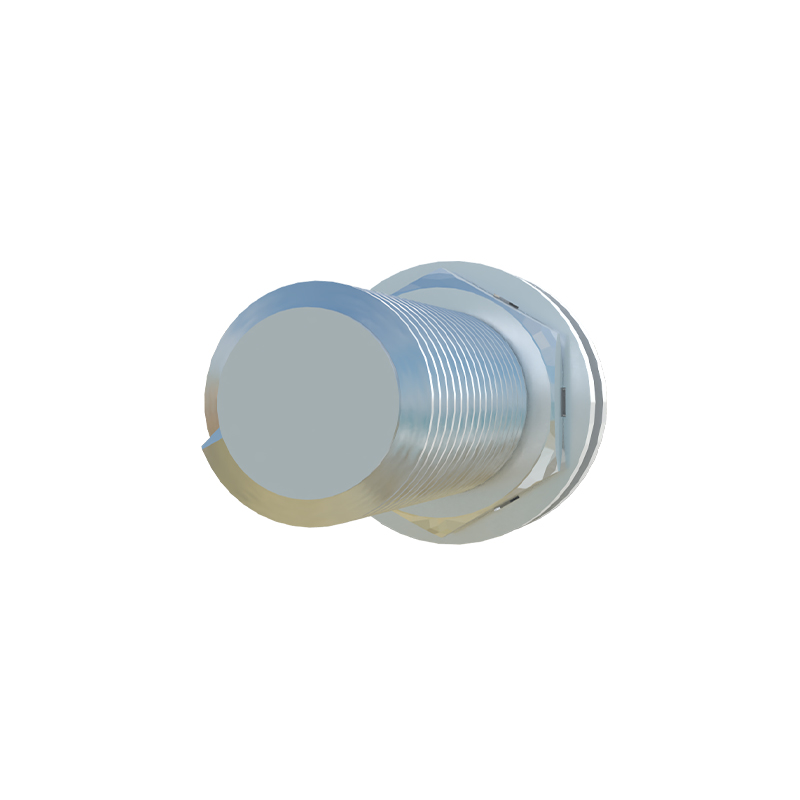
Key specifications define the performance and suitability of an IR proximity sensor for a given task. The sensing range is paramount, varying from a few centimeters to several meters, depending on the emitter power and receiver sensitivity. The response time determines how quickly the sensor can detect a change, which is vital for high-speed applications. Output type is another major differentiator; sensors provide digital (on/off) outputs for simple presence detection or analog outputs (or I2C/SPI digital data) for distance measurement. The field of view (FOV) dictates the detection cone—a narrow FOV is precise for targeted sensing, while a wide FOV is better for area coverage. Engineers must also consider environmental factors: the sensor's performance can be affected by the object's color and reflectivity (dark, non-reflective materials are harder to detect), ambient light conditions, and interference from other IR sources.
The applications of IR proximity sensors are vast and cross-industry. In consumer electronics, they are ubiquitous for smartphone screen blanking during calls, saving power and preventing accidental touch inputs. In industrial automation, they are deployed on conveyor belts for object counting, in robotic arms for obstacle avoidance and precise positioning, and in packaging machinery for detecting product presence. The automotive sector utilizes them in anti-pinch systems for windows and sunroofs, and in driver monitoring systems for safety. Home appliances like automatic faucets, soap dispensers, and paper towel dispensers rely on their hygienic, touch-free operation. Furthermore, they are integral to many robotics projects for navigation and object avoidance, offering a cost-effective solution compared to more complex technologies like LiDAR.
Selecting the right IR proximity sensor requires a systematic approach. First, clearly define the primary requirement: is it simple presence detection, rough distance estimation, or precise ranging? For presence detection within a fixed short range, a basic digital output sensor suffices. For measuring distance, an analog or digital-output sensor with a calibrated output is necessary. Second, analyze the operating environment. Will there be high levels of ambient IR? If so, a modulated sensor is essential. What is the typical color and surface of the target object? Testing with actual samples is highly recommended. Third, interface with the control system. Ensure the sensor's output type (digital, analog, I2C) is compatible with your microcontroller or PLC. Consider the required sampling rate and the computational load for processing the signal. Fourth, evaluate mechanical constraints, including the sensor's size, mounting requirements, and lens orientation.
While IR proximity sensors are versatile, they have limitations. As mentioned, they struggle with black, IR-absorbent materials. They can also be confused by highly reflective surfaces that scatter light. For applications requiring detection regardless of color or surface properties, or for very long ranges, ultrasonic sensors or time-of-flight (ToF) laser sensors might be more appropriate. However, for a balance of cost, size, power consumption, and performance in standard conditions, IR proximity sensors remain an exceptionally powerful tool.
Future trends point towards greater integration and intelligence. Sensors are increasingly incorporating signal processing circuitry on-chip, providing filtered, stable digital outputs directly. Multi-element sensors and sensor fusion—combining IR data with inputs from accelerometers or other environmental sensors—are enabling more complex contextual awareness. As the Internet of Things (IoT) expands, the demand for small, low-power, and reliable proximity sensing will only grow, ensuring the continued evolution and relevance of infrared proximity sensing technology in the engineer's toolkit.