In the demanding landscape of modern industrial automation, the reliability of sensing technology is paramount. Among the critical components ensuring seamless operation, the anti-interference magnetic proximity sensor stands out as a cornerstone for precision and durability. This article delves into the sophisticated engineering, operational principles, and pivotal applications of these sensors, highlighting their role in enhancing system robustness against electromagnetic noise and harsh environmental conditions.
At its core, a magnetic proximity sensor detects the presence or absence of a magnetic field, typically generated by a permanent magnet or an electromagnet. The fundamental mechanism relies on Hall-effect or magnetoresistive elements that convert magnetic flux density into an electrical signal. However, standard magnetic sensors are often susceptible to electromagnetic interference (EMI), which can originate from nearby motors, power lines, or communication devices. This interference leads to false triggering, signal degradation, and ultimately, system failures. To mitigate these challenges, advanced anti-interference designs incorporate multiple layers of protection.
Engineering robust anti-interference capabilities begins with integrated circuit design. Modern sensors employ specialized ASICs (Application-Specific Integrated Circuits) with built-in filtering algorithms. These algorithms, such as digital signal processing (DSP) techniques, actively distinguish between the target magnetic signal and background noise. By setting precise threshold levels and implementing hysteresis, the sensor ensures that only intentional magnetic actuations trigger a response, effectively ignoring transient EMI spikes. Additionally, shielding techniques using mu-metal or ferrite enclosures are employed to physically block external magnetic fields, providing a passive yet highly effective defense.
The selection of sensing technology plays a crucial role. While Hall-effect sensors are widely used for their linearity and cost-effectiveness, anisotropic magnetoresistive (AMR) and tunnel magnetoresistive (TMR) sensors offer superior sensitivity and lower power consumption, making them ideal for high-interference environments. TMR sensors, in particular, exhibit excellent signal-to-noise ratios and thermal stability, allowing for reliable detection even in the presence of strong alternating currents or fluctuating temperatures. Coupled with differential sensing architectures—where two sensing elements measure opposing magnetic fields—common-mode noise is effectively canceled out, further enhancing immunity.
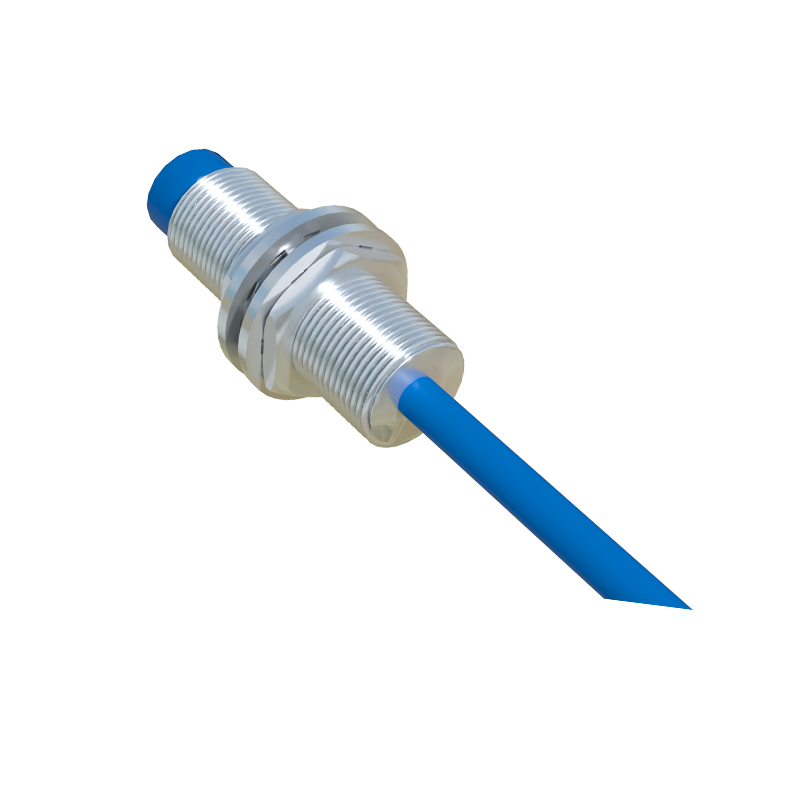
Environmental resilience is another critical aspect. Industrial settings expose sensors to contaminants like oil, dust, and moisture. Therefore, anti-interference magnetic proximity sensors are typically housed in ruggedized, IP67 or IP69K-rated stainless steel or polymer casings. These enclosures not only provide physical protection but also prevent conductive contaminants from affecting internal electronics. Moreover, temperature compensation circuits are integrated to maintain consistent performance across a broad operating range, typically from -40°C to 125°C, ensuring reliability in extreme conditions.
Applications of these advanced sensors span diverse industries. In automotive manufacturing, they are used for precise position sensing in robotic arms and conveyor systems, where EMI from welding equipment is prevalent. In material handling and packaging, sensors detect metallic objects on high-speed lines, preventing jams and optimizing throughput. The renewable energy sector relies on them for monitoring turbine blade positions, where exposure to strong electromagnetic fields from generators is inevitable. Furthermore, in safety-critical systems like elevator door control or railway signaling, their fail-safe operation is indispensable, as any malfunction could have severe consequences.
Installation and maintenance best practices are essential for maximizing sensor performance. Proper grounding and cable shielding, using twisted-pair or coaxial cables, minimize noise induction along signal lines. Sensors should be mounted away from high-current conductors and rotating machinery when possible. Regular calibration checks, though often minimal due to the sensors' solid-state nature, help ensure long-term accuracy. Many modern sensors also feature diagnostic outputs, such as PNP or NPN open-collector signals with short-circuit protection, enabling easy integration into PLC (Programmable Logic Controller) networks for real-time monitoring.
Looking ahead, the evolution of anti-interference magnetic proximity sensors is closely tied to Industry 4.0 trends. The integration of IO-Link communication protocols allows for smart sensor functionalities, including parameter adjustment, condition monitoring, and predictive maintenance alerts directly from a central control system. This digital transformation enhances adaptability, as sensors can be reprogrammed on-the-fly to handle different magnetic targets or noise profiles without physical reconfiguration. Additionally, miniaturization efforts are yielding compact sensors with uncompromised performance, suitable for space-constrained applications like medical devices or precision instrumentation.
In conclusion, anti-interference magnetic proximity sensors represent a fusion of meticulous electrical engineering and practical industrial design. By leveraging advanced materials, intelligent circuitry, and robust construction, they deliver unwavering reliability in the face of electromagnetic and environmental challenges. As automation systems grow more complex and interconnected, the demand for such resilient sensing solutions will only intensify, driving continuous innovation in this vital field. Engineers and system integrators must prioritize these technologies to build future-proof, efficient, and safe industrial operations, where every detection event counts.