Proximity sensors are indispensable components in modern industrial automation, providing non-contact detection of metallic or non-metallic objects. Understanding their wiring principles is crucial for ensuring reliable operation, safety, and system integration. This article delves into the core wiring methodologies for the primary types of proximity sensors: inductive, capacitive, and magnetic.
The foundation of any proximity sensor connection lies in its power supply and output configuration. Most industrial proximity sensors operate on DC voltages, commonly 10-30 VDC, or AC voltages like 90-250 VAC. The first critical step is to consult the sensor's datasheet to confirm its rated voltage and current. Incorrect power supply connection is a leading cause of premature sensor failure.
Inductive proximity sensors, designed to detect metallic objects, typically feature three-wire or four-wire designs. The three-wire version is most prevalent, comprising wires for power supply positive (brown), power supply negative (blue), and the output signal (black). In a standard NPN (sourcing) configuration, the black wire connects to the load, which is then connected to the positive supply. When the sensor detects a target, it switches the NPN transistor, allowing current to flow from the load to the common negative (blue), thus completing the circuit. Conversely, a PNP (sinking) configuration has the black output wire connected to the load, which is then connected to the negative supply. Here, the sensor switches the PNP transistor to connect the load to the positive supply (brown). The choice between NPN and PNP depends on the input logic of the connected controller (PLC).
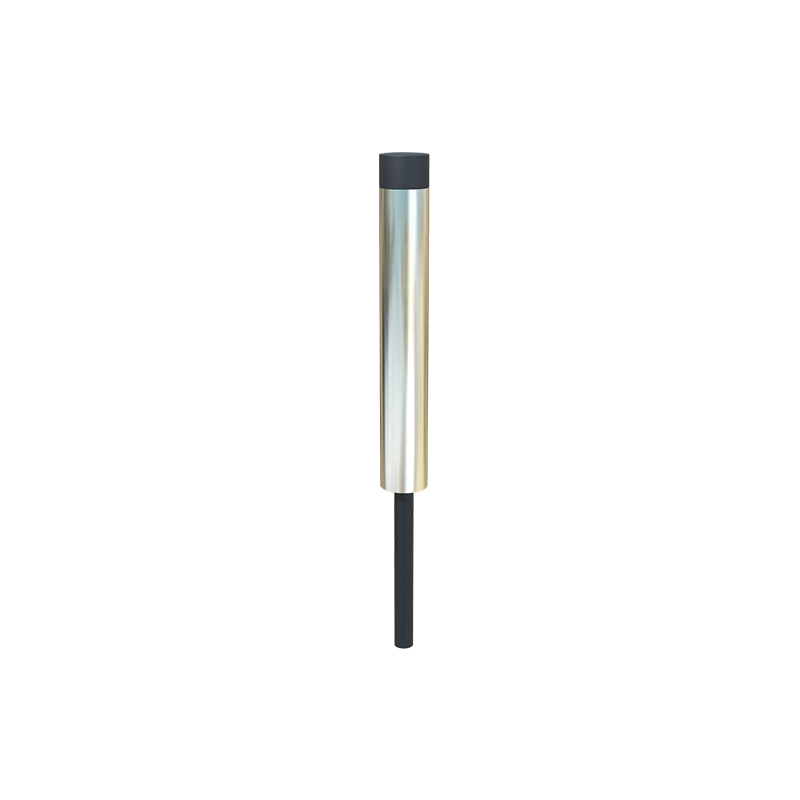
Two-wire AC/DC sensors simplify wiring by integrating the sensor and load in series with the power supply. While easier to install, they require careful consideration of the residual current or leakage current when in the "off" state, which must be below the holding current of any connected relay or PLC input to prevent false triggering.
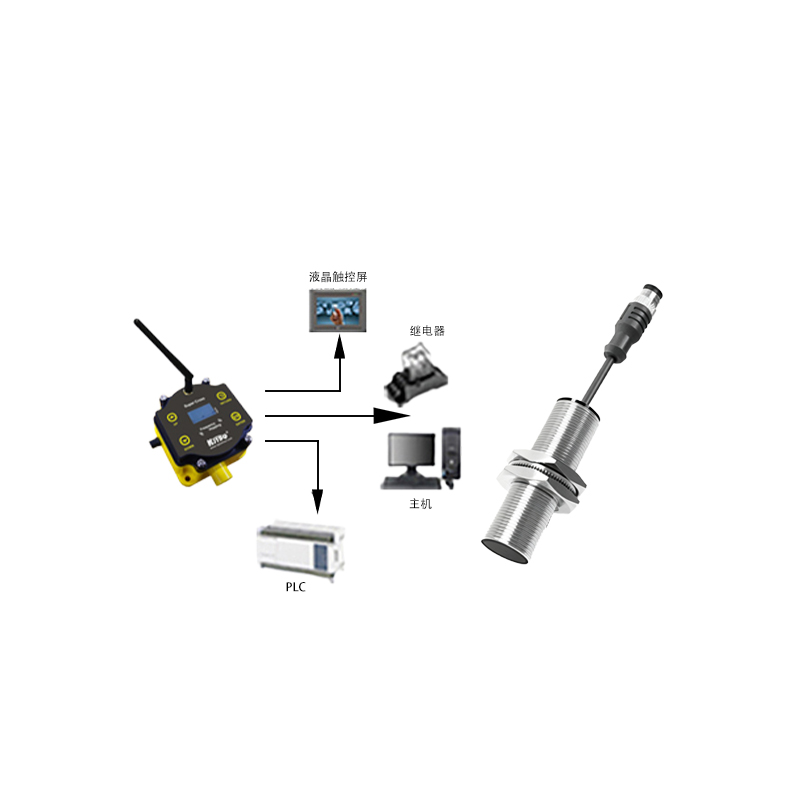
Capacitive proximity sensors, used for detecting non-metallic materials, often share similar three-wire DC wiring schemes. A key wiring consideration is the sensitivity adjustment potentiometer, which may require calibration after installation to account for the dielectric constant of the target material and environmental conditions. Shielding or grounding the sensor body is sometimes necessary to minimize false triggers from surrounding objects.
Magnetic proximity sensors (reed switches or Hall-effect sensors) commonly use two-wire designs. For DC magnetic sensors, polarity is paramount; reversing the power connections will prevent operation. Hall-effect sensors, offering solid-state reliability, usually have three wires: supply, ground, and an open-collector output that requires a pull-up resistor to the supply voltage.
Shielding and cable management are vital for electrical noise immunity, especially in environments with variable frequency drives (VFDs) or heavy machinery. Using shielded cables and grounding the shield at only one end (typically the control panel end) is a best practice. The cable run should be routed away from high-voltage power lines.
For integrating the sensor output with a Programmable Logic Controller (PLC), understanding the sink/source convention of the PLC's digital input module is essential. An NPN sensor, being a sinking device, is compatible with a sourcing PLC input. A PNP sensor, a sourcing device, pairs with a sinking PLC input. Mismatching these can lead to a non-functional circuit. Always verify the input circuit diagram of the PLC module.
Finally, practical installation tips include: ensuring proper mechanical alignment for the sensing range, allowing for a hysteresis margin to prevent output oscillation, and implementing protective measures such as fuses or surge suppressors in circuits with inductive loads like solenoids or relays. A systematic approach to wiring—verifying power, confirming output type, ensuring proper grounding, and testing under operational conditions—guarantees long-term sensor performance and contributes to robust automation system design.