In the intricate world of industrial automation and machinery, the precise detection of objects is a fundamental requirement for operational efficiency, safety, and process control. Among the diverse array of sensing technologies available, the right-angle proximity sensor stands out as a critical component, offering unique advantages in space-constrained and complex mechanical environments. This article delves into the function, applications, and benefits of these specialized sensors, providing insights into their indispensable role.
A right-angle proximity sensor, as the name implies, is designed with its sensing face positioned at a 90-degree angle relative to its mounting body or connection stem. This distinctive right-angle configuration is its primary differentiator from standard inline or cylindrical sensors. The core operating principle remains consistent with other inductive, capacitive, or photoelectric proximity sensors: it detects the presence or absence of a target object without physical contact, typically by emitting an electromagnetic field or beam and monitoring changes in the return signal. However, its physical form factor is engineered for specific installation challenges.
The primary function of these sensors is to detect objects in locations where direct, straight-line mounting is impractical or impossible. In densely packed control panels, robotic arms, conveyor systems, or within the internal mechanisms of assembly machines, space is often at a premium. The compact, right-angle design allows the sensor to be mounted flush against a surface or in a corner, with the sensing element directed sideways. This enables detection in tight lateral spaces where a standard sensor would protrude and interfere with moving parts or adjacent equipment. For instance, they are perfect for monitoring the position of a cylinder piston from the side of its housing or detecting the edge of a metal workpiece on a narrow guide rail.
Applications for right-angle proximity sensors are vast and varied across industries. In automotive manufacturing, they are deployed on welding robots to confirm the correct positioning of car body panels before a weld is applied. In packaging machinery, they verify the presence of a product carton before a labeling head descends, preventing costly errors and material waste. Within the electronics sector, these sensors ensure miniature components are correctly seated in pick-and-place machines. Their robust construction, often featuring metal housings and high ingress protection (IP) ratings, makes them suitable for harsh environments with exposure to coolants, metal chips, dust, and vibrations.
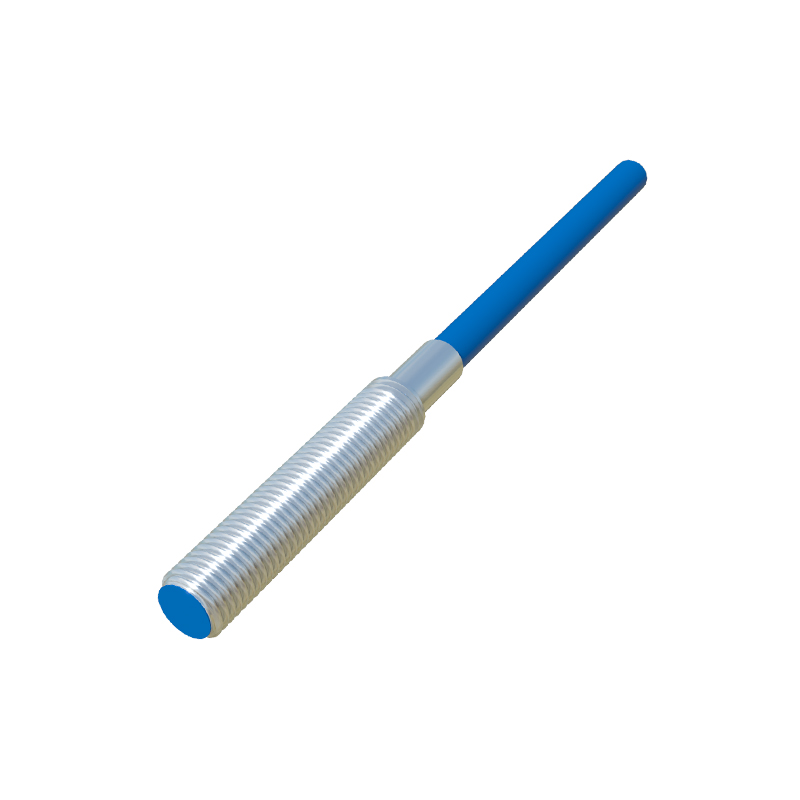
The benefits of utilizing right-angle proximity sensors are significant. First and foremost is their space-saving design, which allows for more flexible and optimized machine layouts. This leads to more compact equipment designs without compromising on sensing capabilities. Secondly, they enhance reliability. By enabling installation in protected niches, they are less susceptible to accidental impacts or damage from passing objects, thereby increasing system uptime and reducing maintenance costs. Furthermore, their non-contact nature ensures long operational life and prevents wear and tear on both the sensor and the target object. Finally, they contribute to overall system safety by providing critical feedback for interlock systems, ensuring machines only operate when components are in a safe and correct position.
When selecting a right-angle proximity sensor, engineers must consider several key parameters. The sensing range, which is typically shorter than inline models due to the design, must be appropriate for the application. The choice of sensing technology—inductive for metals, capacitive for non-metals or liquids, or photoelectric for precise position detection—is crucial. Environmental factors such as temperature extremes, potential chemical exposure, and required electrical output (e.g., NPN, PNP, analog) also guide the selection process. Proper mounting and alignment are essential to achieve the specified sensing performance and avoid false triggers.
In conclusion, the right-angle proximity sensor is a quintessential example of engineering ingenuity tailored to solve real-world spatial constraints in automation. Its ability to deliver reliable, non-contact detection in compact and challenging installations makes it a silent yet powerful enabler of modern manufacturing efficiency, quality control, and operational safety. As machinery continues to evolve towards greater density and complexity, the strategic implementation of these sensors will remain a cornerstone of intelligent system design.