In industrial automation and control systems, proximity sensors are indispensable components that detect the presence or absence of objects without physical contact. Understanding the various types of proximity sensors and their visual characteristics is crucial for engineers and technicians in selecting, installing, and maintaining these devices. This guide provides a detailed overview of common proximity sensor types, accompanied by descriptive imagery to aid in identification and application.
Inductive Proximity Sensors are widely used for detecting metallic objects. They typically feature a cylindrical or rectangular housing made of metal or robust plastic, often in silver, black, or blue colors. The sensing face is usually flat and may have a protective coating. Internally, they contain a coil and oscillator circuit that generates an electromagnetic field. When a metal object enters this field, it induces eddy currents, causing a change in oscillation amplitude that triggers the sensor. These sensors are ideal for harsh environments like manufacturing lines, capable of detecting ferrous and non-ferrous metals at short ranges, usually up to 60 mm. Common applications include position sensing in machinery, conveyor systems, and automotive assembly.
Capacitive Proximity Sensors can detect both metallic and non-metallic materials, such as liquids, plastics, or wood. They often resemble inductive sensors in shape but may have a larger sensing area or a plastic housing. The sensing face is typically flat or slightly convex, with some models featuring adjustable sensitivity screws. These sensors work by measuring changes in capacitance between the sensor and the target object. When an object approaches, it alters the dielectric constant, triggering detection. They are commonly used in level detection for tanks, material handling, and packaging industries, with sensing distances ranging from a few millimeters to about 40 mm.
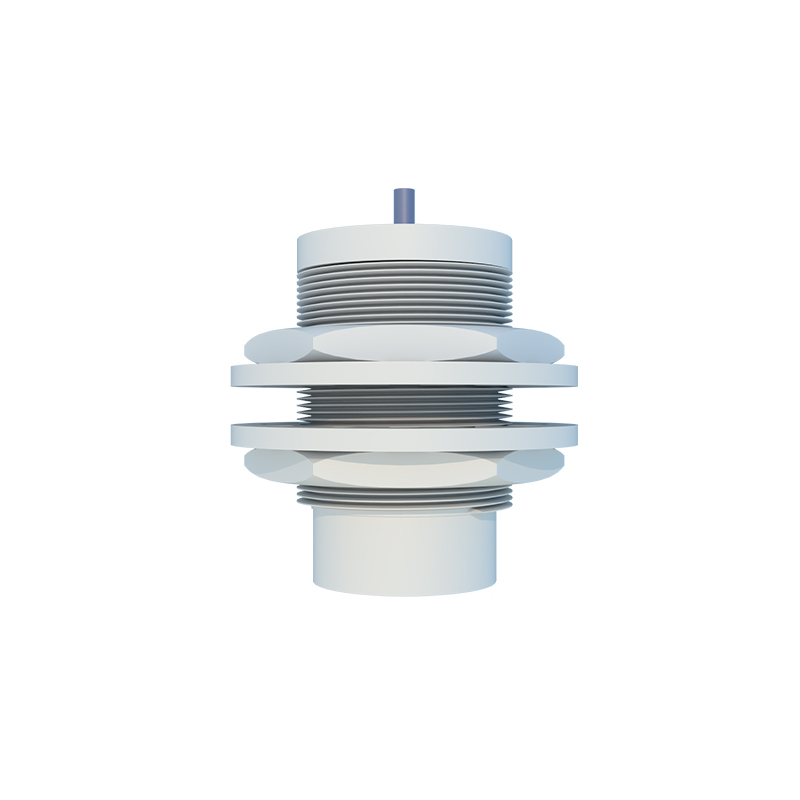
Ultrasonic Proximity Sensors utilize sound waves for detection and are recognizable by their transducer elements, which may appear as small discs or grids on the sensor face. They come in various housings, including cylindrical and rectangular designs, often in gray or black. These sensors emit high-frequency ultrasonic pulses and measure the time taken for echoes to return, calculating distance based on sound speed. They excel in detecting objects regardless of material, color, or transparency, making them suitable for applications like liquid level monitoring, object counting, and collision avoidance in automated guided vehicles (AGVs). Sensing ranges can extend up to several meters, depending on the model.
Photoelectric Proximity Sensors use light beams for detection and are identifiable by their emitter and receiver components. They come in diverse forms: through-beam sensors have separate units for emitting and receiving light, often housed in rectangular or cylindrical enclosures; retro-reflective sensors combine both in one housing with a reflector; and diffuse sensors have a single unit that emits and receives light. Colors vary, but many feature transparent or tinted lenses. These sensors detect objects by measuring light intensity changes and are versatile for non-contact sensing of various materials, including glass and paper. Common uses include conveyor belt systems, packaging, and security systems, with ranges from centimeters to over 100 meters for through-beam types.
Magnetic Proximity Sensors, often called reed switches or Hall effect sensors, are compact and typically housed in small plastic or metal casings. They detect magnetic fields from permanent magnets or electromagnets, making them useful for position sensing in cylinders or doors. Visual cues include simple designs with two or three wires and a sensing tip. Hall effect sensors, in particular, are solid-state and durable, commonly found in automotive and robotics applications.
When selecting a proximity sensor, consider factors like sensing range, material compatibility, environmental conditions (e.g., temperature, humidity), and output type (e.g., NPN, PNP, analog). Always refer to manufacturer datasheets for specific details and installation guidelines. By recognizing these visual and functional characteristics, professionals can enhance system reliability and efficiency in electrical and automation projects.