In the realm of industrial automation, robotics, and precision measurement, laser distance sensors have become indispensable tools. Their ability to provide non-contact, high-accuracy, and rapid distance measurements has revolutionized numerous applications. Understanding the fundamental components that constitute a laser distance sensor is crucial for engineers and technicians to select, integrate, and maintain these systems effectively. This article delves into the core building blocks of a typical laser distance sensor, explaining their function and interplay.
At the heart of every laser distance sensor lies the Laser Diode. This semiconductor device generates the coherent, monochromatic light beam essential for measurement. Typically operating in the visible red spectrum (around 650 nm) or, more commonly for industrial sensors, in the infrared range (e.g., 850 nm or 905 nm), the laser diode is chosen for its small size, efficiency, and reliability. A driver circuit meticulously controls the diode's current, ensuring stable optical output power, which is critical for consistent measurement performance and eye safety compliance (Class 1 or Class 2 laser products).
The emitted laser light is then conditioned by the Transmitting Optics (Tx Optics). This assembly, comprising one or more lenses, shapes and collimates the raw laser beam. Its primary function is to produce a well-defined, narrow, and low-divergence spot on the target object. The quality of these optics directly influences the sensor's minimum spot size, beam shape (often a point or a line), and the effective working range. For long-range sensors, highly precise collimation is paramount to prevent excessive beam spread.
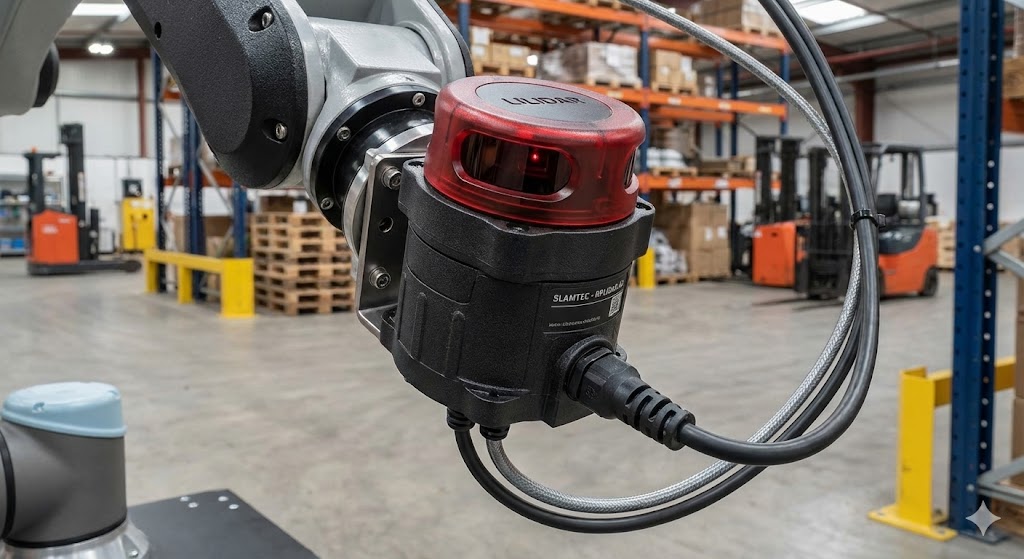
Once the laser beam strikes the target, it is reflected or scattered back towards the sensor. The Receiving Optics (Rx Optics) collect this returning light. These optics, often including an objective lens, gather the diffuse reflection from the target's surface and focus it onto the core detection element. The aperture size and design of the receiving optics determine how much light is captured, impacting the sensor's sensitivity and maximum range, especially for low-reflectivity surfaces.
The focused return light falls onto the Photodetector, the component that converts optical signals into electrical signals. The type of photodetector is intrinsically linked to the measurement principle. The two most prevalent technologies are:
1. Time-of-Flight (ToF) Principle: Often uses an Avalanche Photodiode (APD) or a Single-Photon Avalanche Diode (SPAD). These are highly sensitive detectors that can measure the minute time delay between the emitted and received laser pulse. The distance is calculated using the speed of light: Distance = (Speed of Light × Time Delay) / 2.
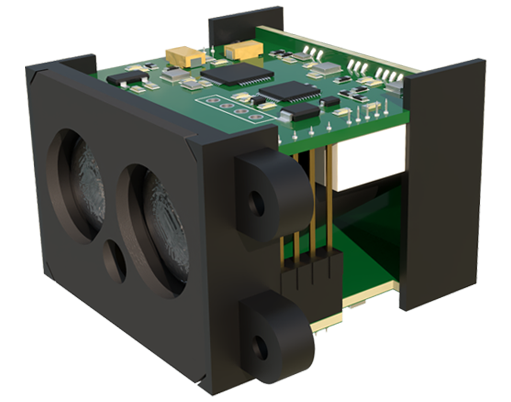
2. Triangulation Principle: Employs a Position-Sensitive Device (PSD) or, more commonly in modern sensors, a CMOS (Complementary Metal-Oxide-Semiconductor) or CCD (Charge-Coupled Device) linear array. Here, the position of the laser spot on the detector array changes proportionally with the target distance. A receiving lens images the spot onto the array, and a processor calculates the distance based on the known geometry (baseline distance between Tx and Rx optics and the focal length).
The weak electrical signal from the photodetector is fed into the Signal Processing Circuitry. This stage is critical for noise reduction and signal amplification. It includes transimpedance amplifiers, filters, and analog-to-digital converters (ADCs). For pulsed ToF systems, this circuitry must have extremely high temporal resolution to measure nanosecond-level differences. In triangulation sensors, it digitizes the profile from the CMOS array for precise centroid calculation of the laser spot.
All components are governed by the Microcontroller Unit (MCU) or Digital Signal Processor (DSP). This is the computational brain of the sensor. It controls the laser pulse timing (for ToF), processes the digitized signal from the detector, executes the distance calculation algorithm, manages communication interfaces, and handles internal calibration and temperature compensation. Advanced sensors use powerful DSPs to implement sophisticated algorithms that filter out ambient light interference, compensate for different surface materials, and provide averaged or filtered output.
Finally, the processed distance value is communicated to an external system (e.g., a PLC, robot controller, or PC) via the Interface Electronics. Common industrial interfaces include analog outputs (0-10V, 4-20mA), digital I/O (for switching outputs), and serial communication protocols like RS-232, RS-485, or modern industrial fieldbuses such as PROFINET, EtherNet/IP, or EtherCAT. Some sensors also feature IO-Link for enhanced parameterization and diagnostics.
Supporting these core components are several ancillary but vital systems. Housing and Mechanical Design provides IP-rated protection (e.g., IP67) against dust and water, ensures mechanical stability for optical alignment, and often includes mounting features. Temperature Management, through passive design or active components like Thermoelectric Coolers (TECs), stabilizes the laser diode and detector performance across wide operating temperature ranges. An integrated Temperature Sensor provides data to the MCU for real-time thermal compensation of optical and electronic parameters.
In summary, a laser distance sensor is a sophisticated synergy of optoelectronics, precision mechanics, and high-speed digital processing. From the generation of a coherent light beam to the precise timing or positional detection of its reflection, each component plays a pivotal role in delivering reliable and accurate distance data. As technology advances, we see trends towards miniaturization of these components, higher-speed processors enabling faster measurement rates, and the integration of smarter onboard intelligence for easier integration and more robust operation in challenging industrial environments.