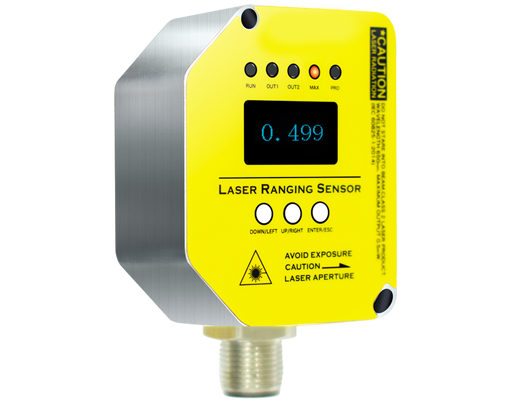
Engraving laser sensors represent a pivotal advancement in modern manufacturing, offering unparalleled precision, speed, and versatility. These sophisticated devices utilize focused laser beams to mark, etch, or engrave surfaces with exceptional accuracy. The core technology hinges on high-precision optics and advanced control systems that guide the laser's path, ensuring consistent results across various materials, including metals, plastics, ceramics, and composites. A key component is the sensor system itself, which continuously monitors parameters such as distance, temperature, and surface reflectivity. This real-time feedback allows for dynamic adjustments, compensating for material inconsistencies or environmental fluctuations to maintain optimal engraving quality.
The operational principle involves directing a concentrated beam of light onto the target surface. The energy of the laser interacts with the material, causing localized heating that results in melting, vaporization, or color change, thereby creating permanent marks. Different laser types, such as fiber, CO2, or UV lasers, are selected based on the application's specific requirements. Fiber lasers, for instance, excel in marking metals due to their high peak power and absorption characteristics, while CO2 lasers are preferred for organic materials like wood or acrylic. The integration of galvanometer scanners enables rapid beam steering, allowing for high-speed engraving of complex patterns, logos, serial numbers, or barcodes without physical contact, which eliminates tool wear and reduces contamination risks.
In industrial settings, engraving laser sensors are indispensable for traceability and customization. They facilitate permanent part identification (PPID) in aerospace and automotive sectors, where durable markings withstand harsh conditions. In electronics, they precisely mark micro-components and PCBs. The medical device industry relies on them for sterile, high-contrast engravings on surgical tools and implants to ensure compliance with stringent regulations. Moreover, the advent of smart sensors with integrated vision systems and AI-driven software has further enhanced capabilities. These systems can automatically align designs, read existing marks, and perform quality inspections, reducing human error and increasing throughput.
Despite their advantages, challenges such as initial investment costs, maintenance of optical components, and the need for operator training persist. However, ongoing research focuses on improving energy efficiency, developing compact and portable units, and enhancing software for user-friendly interfaces. The future points toward greater integration with Industry 4.0 and IoT frameworks, where engraving lasers will communicate with other machinery for fully automated, adaptive production lines. As demand for personalized products and stringent quality standards grows, engraving laser sensors will continue to be at the forefront of manufacturing innovation, driving efficiency and enabling new design possibilities across global industries.