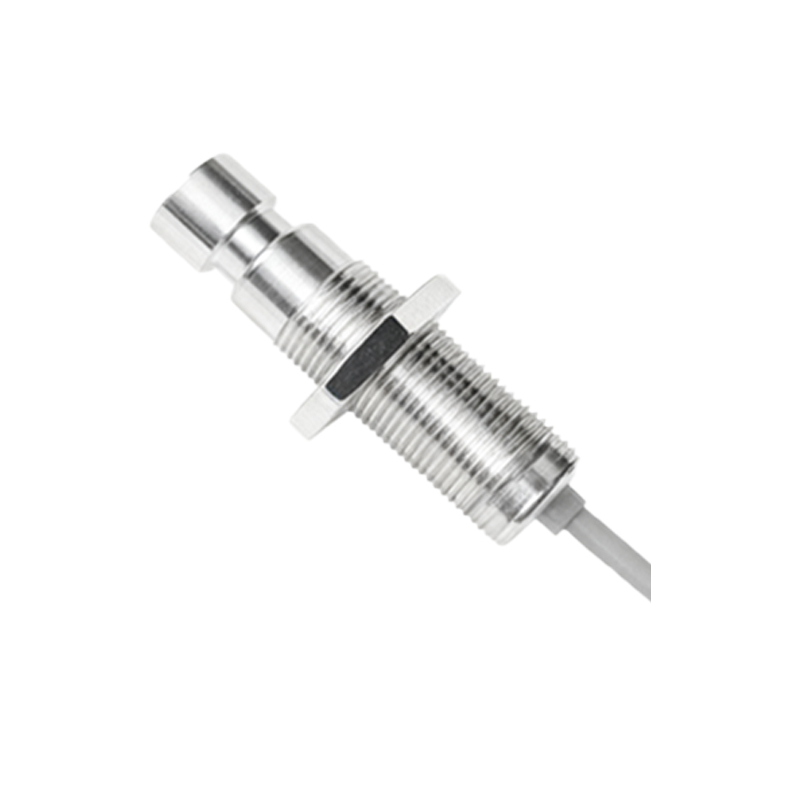
Flat proximity sensors, also known as planar or rectangular proximity sensors, are widely used in industrial automation for non-contact detection of metallic objects. Unlike cylindrical sensors, their slim, flat design allows for easy integration into tight spaces and mounting on surfaces without protruding. This article delves into the working principles, types, and key advantages of flat proximity sensors.
The core operating principle of most flat proximity sensors is based on electromagnetic induction. Inside the sensor, an oscillator circuit generates a high-frequency alternating magnetic field from a coil wound around a ferrite core. When a metallic target, such as steel, aluminum, or copper, enters this magnetic field, eddy currents are induced on the target's surface. These eddy currents draw energy from the sensor's oscillator, causing a reduction in oscillation amplitude. A detection circuit monitors this amplitude change and triggers a solid-state output switch (typically NPN or PNP) when the amplitude drops below a set threshold, indicating the presence of the target. The sensing distance, or "switching distance," is precisely defined and depends on factors like the sensor's design, target material, and size. For instance, ferrous metals like iron generally allow longer sensing ranges compared to non-ferrous metals.
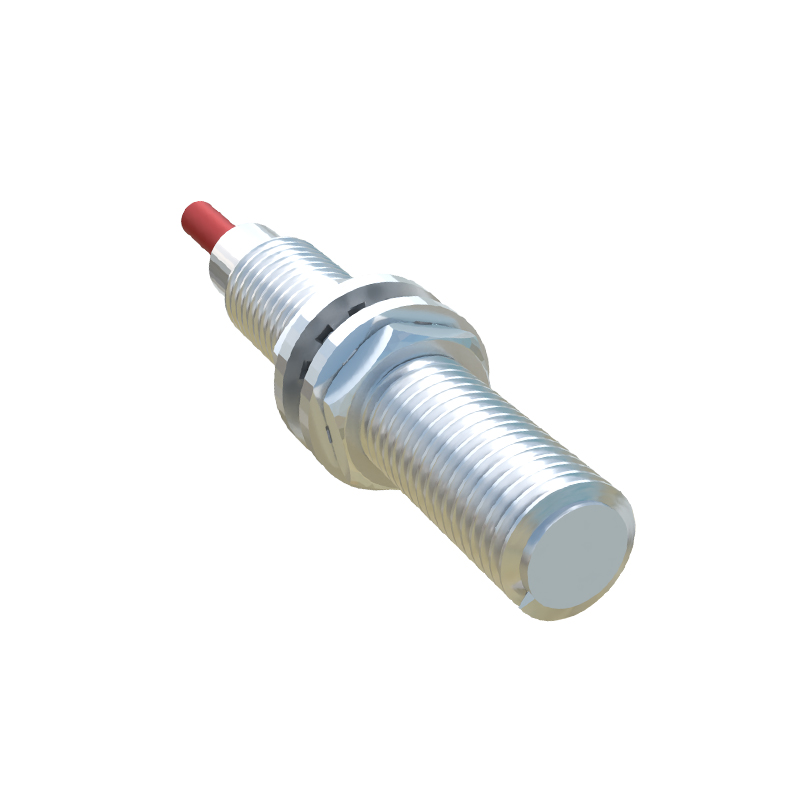
Two primary technologies dominate flat proximity sensors: inductive and capacitive. Inductive flat sensors, as described above, detect only conductive metals. They are highly reliable, resistant to environmental contaminants like dust or oil, and offer fast response times, making them ideal for counting, positioning, or end-of-travel detection in machinery. Capacitive flat sensors, on the other hand, can detect both metallic and non-metallic materials (plastics, liquids, wood) by measuring changes in capacitance. They contain an electrode that forms one plate of a capacitor; when any material with a different dielectric constant approaches, it alters the capacitance, triggering the switch. This makes capacitive flat sensors versatile for level detection or handling diverse materials.
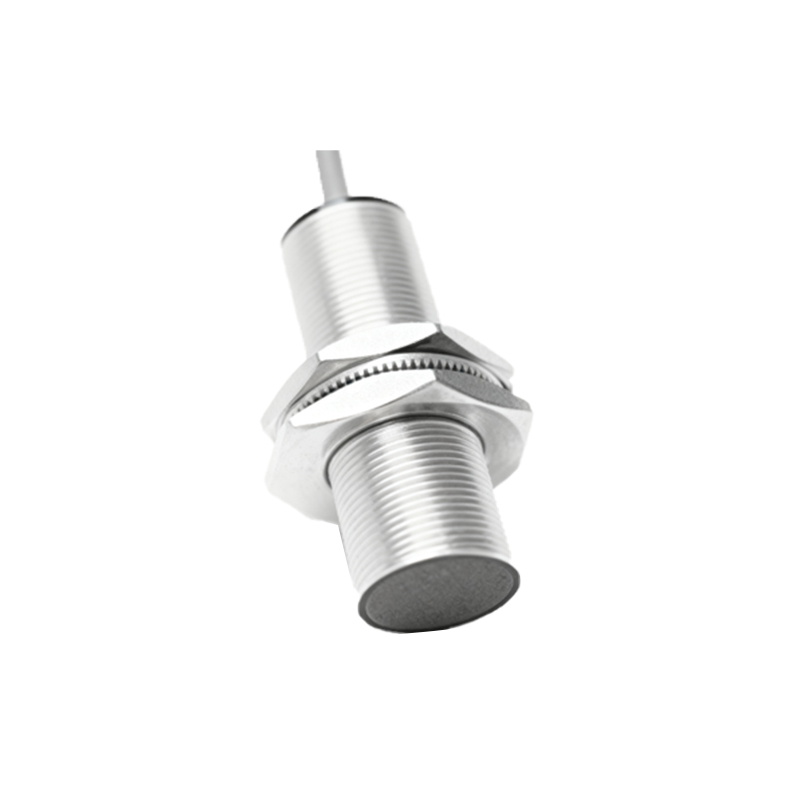
Key advantages of the flat form factor include space-saving installation, resistance to mechanical damage due to minimal protrusion, and the ability to be flush-mounted in metal surfaces without loss of function. Many models feature built-in LED indicators for status and robust housing (often IP67 or IP69K rated) for harsh environments. Selection considerations involve the required sensing range, target material, output type, supply voltage (commonly 10-30V DC), and environmental conditions like temperature or exposure to chemicals.
In summary, flat proximity sensors provide a critical solution for precise, non-contact detection in constrained industrial layouts. Their electromagnetic or capacitive sensing principles ensure reliable operation across manufacturing, packaging, and automotive applications, enhancing automation efficiency and system durability.