In modern industrial automation, safety, and interactive systems, the ability to detect the presence or approach of a human hand is paramount. Proximity sensors designed for this specific task are sophisticated devices that operate without physical contact, enabling safer machinery, intuitive user interfaces, and efficient process control. This article delves into the core technologies, operational principles, key applications, and critical selection criteria for hand proximity sensing solutions.
The fundamental principle behind most hand proximity sensors involves emitting a field or beam and detecting changes in that field caused by the intrusion of a conductive or dielectric object—in this case, a human hand. The primary technologies employed are capacitive sensing and infrared (IR) sensing, each with distinct advantages.
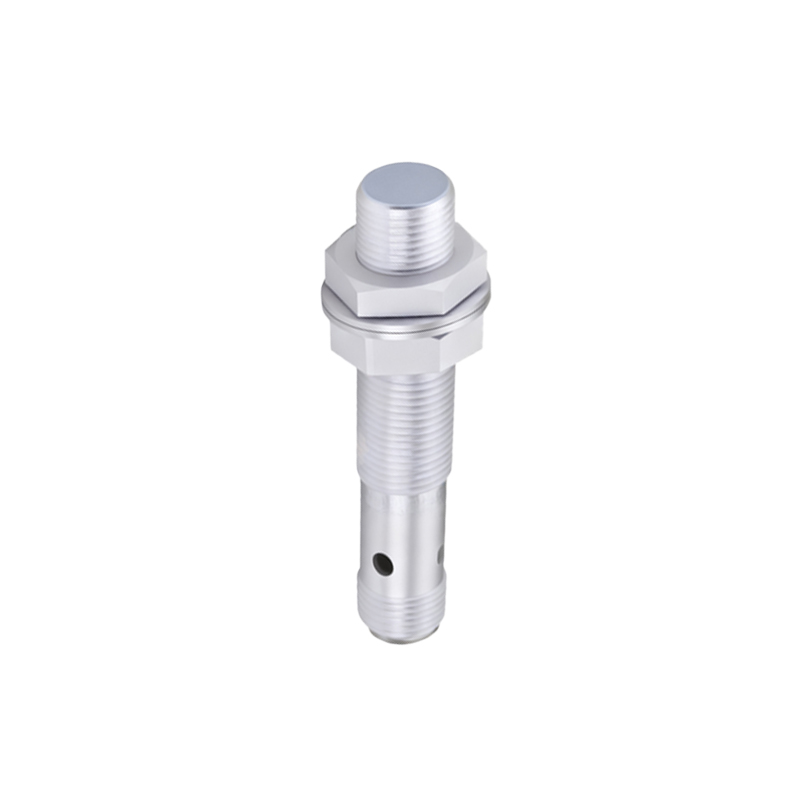
Capacitive proximity sensors function by generating an electrostatic field. A human body, being conductive and having a dielectric constant different from air, alters the capacitance of the sensor's field when a hand approaches. The sensor's circuitry detects this change in capacitance and triggers an output signal. These sensors are excellent for detecting a hand through non-conductive materials like glass, plastic, or thin wood, making them ideal for touchless switches, interactive displays, and liquid-level detection behind panels. Their sensitivity is a double-edged sword; they can be finely tuned but may also be triggered by environmental factors like humidity or unintended conductive objects.
Infrared-based sensors, often configured as passive infrared (PIR) or active IR systems, detect thermal radiation or reflected light. PIR sensors detect changes in infrared radiation emitted by the warm human hand against the ambient background, commonly used in automatic lighting and security. Active IR systems, like infrared proximity or time-of-flight (ToF) sensors, emit an infrared beam and measure the intensity of the reflection or the time taken for the light to return. This allows for more precise distance measurement of the hand. IR sensors are widely used in gesture recognition systems, automatic faucets, hand dryers, and safety curtains where a specific detection zone is required.
Ultrasonic sensors represent another robust technology, emitting high-frequency sound waves and calculating distance based on the echo's return time. They are less common for fine hand detection but useful in broader presence detection applications where environmental factors like dust or smoke might interfere with optical sensors.
The applications for hand proximity sensors are vast and growing. In industrial safety, they form the core of presence detection devices for machinery guards, ensuring a machine cannot operate or will enter a safe state when a hand is detected in a hazardous area. In the consumer and commercial electronics sector, they enable touchless control of appliances, smartphones (for screen blanking during calls), and interactive kiosks, enhancing hygiene and user experience. The automotive industry integrates them for interior lighting control and touchless trunk opening. Furthermore, they are critical in medical equipment for touchless operation, reducing contamination risks.
Selecting the right sensor requires a careful analysis of several parameters. First, define the required sensing range and the nature of the detection (presence vs. precise distance). Capacitive sensors typically have shorter ranges (a few centimeters to tens of centimeters) suited for direct approach, while IR ToF sensors can offer longer, more precise ranging. The sensing field shape (point, planar, or volumetric) must match the application—a planar field for a light curtain, a focused point for a button.
Environmental robustness is non-negotiable in industrial settings. Consider the sensor's IP (Ingress Protection) rating for dust and water resistance, its operating temperature range, and its immunity to electromagnetic interference (EMI). For capacitive sensors, evaluate potential interference from nearby moving metal or changing humidity. For optical sensors, consider ambient light conditions, transparency of intervening materials, and contamination from dirt or oil.
Output type is another key decision. Common outputs include digital (PNP/NPN), analog (4-20mA, 0-10V), or IO-Link for smart sensors that provide detailed diagnostic data. The choice depends on the controller interface. Finally, form factor and mounting options must align with the mechanical design constraints of the application.
In conclusion, hand proximity sensors are indispensable components bridging human interaction with automated systems. From ensuring operator safety on a factory floor to creating seamless touchless interfaces in public spaces, their role is critical. A successful implementation hinges on a clear understanding of the operational environment, the desired human-machine interaction, and the nuanced strengths of capacitive, infrared, and ultrasonic sensing technologies. By meticulously matching sensor specifications to application demands, engineers can build systems that are not only functional and reliable but also intuitive and safe.