Proximity sensors are indispensable components in modern industrial automation, serving as the critical "eyes" of machinery by detecting the presence or absence of objects without physical contact. Their performance directly impacts system reliability, efficiency, and safety. For engineers and system integrators, a deep understanding of key performance parameters is essential for selecting the right sensor for a specific application. This article delves into the core specifications that define proximity sensor capabilities.
The primary parameter is the Sensing Distance. Also known as the nominal sensing range (Sn), it is the theoretical distance at which a standard target will trigger the sensor under ideal conditions. It is crucial to note that real-world performance is affected by factors like target material, size, shape, and environmental conditions. The Assured Operating Distance (Sa) is often more critical; it is a guaranteed sensing distance that accounts for manufacturing tolerances and variables like supply voltage and temperature, typically 70-90% of Sn. Never design a system where the target operates exactly at Sn.
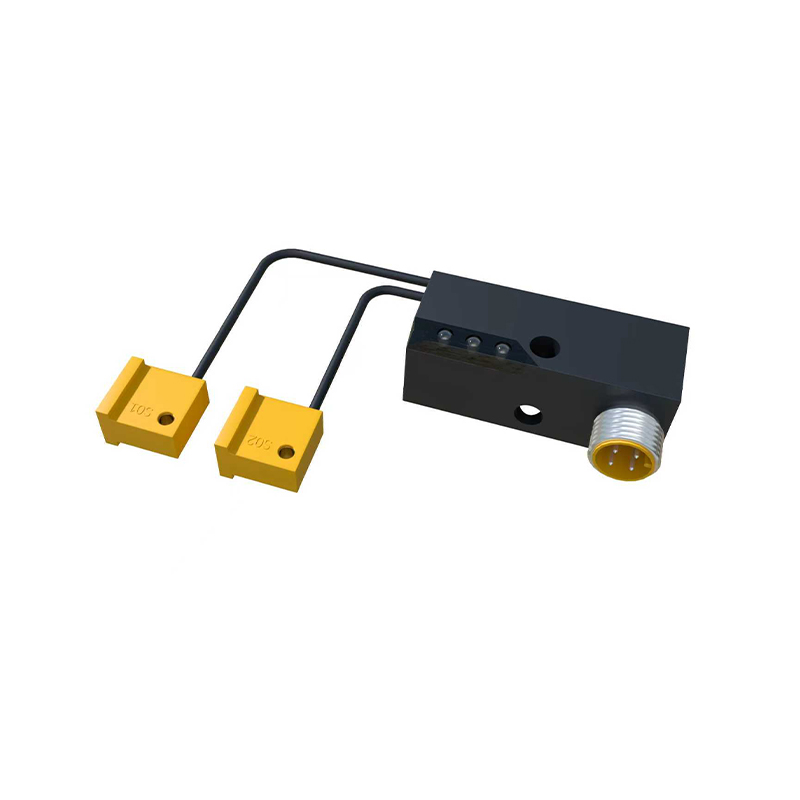
Repeatability is a measure of precision, defining the sensor's ability to consistently detect a target at the same point under unchanged conditions. It is usually expressed as a percentage of the sensing distance. High-repeatability sensors are vital for precision positioning and assembly tasks. Related to this is Hysteresis, the difference between the switch-on point (as the target approaches) and the switch-off point (as it moves away). Hysteresis prevents output oscillation when a target is positioned at the exact sensing threshold, ensuring stable switching.
The Response Time or switching frequency dictates how quickly a sensor can react. It includes both the approach time (target moving into range) and release time (target moving out of range). A sensor with a 1ms response time can theoretically handle up to 500 switching operations per second. This parameter is paramount in high-speed packaging, sorting, or CNC machinery.
Output Configuration is a fundamental choice. Sensors come with discrete outputs (PNP/NPN transistor, also known as sourcing/sinking) or analog outputs (0-10V, 4-20mA). Discrete types are for simple on/off detection, while analog outputs provide continuous distance information. The Output Current rating specifies the maximum load the sensor can drive, which must be compatible with the input module of the PLC or controller it connects to.
Environmental robustness is defined by several parameters. Temperature Range specifies the ambient operating and storage limits. Industrial sensors typically operate from -25°C to +70°C. Ingress Protection (IP) Rating (e.g., IP67, IP69K) indicates resistance to dust and liquids, critical for washdown environments in food and beverage or pharmaceutical industries. Shielding is another key design aspect. Shielded (flush-mountable) sensors have a restricted lateral sensing field, allowing installation flush with metal without triggering it. Unshielded (non-flush) sensors offer a longer sensing range but require a non-metallic surround.
For inductive sensors (detecting metals), the Target Material factor is significant. The sensing distance is rated for mild steel. For other metals like stainless steel, aluminum, or copper, a correction factor (often reducing Sn) must be applied. Capacitive sensors (detecting various materials) have adjustment potentiometers for sensitivity to compensate for different dielectric constants.
Finally, consider Electrical Protection. Features like short-circuit protection, reverse polarity protection, and surge suppression protect both the sensor and the control system from wiring errors and voltage spikes common in industrial environments. Mean Time Between Failures (MTBF) data, though statistical, offers insight into long-term reliability expectations.
In conclusion, selecting a proximity sensor is more than just picking a sensing range. A holistic evaluation of repeatability, response time, environmental ratings, output type, and application-specific factors like target material ensures optimal performance, minimizes downtime, and extends the lifecycle of the automation system. Always consult the manufacturer's detailed datasheet, as performance under extreme conditions may differ from nominal ratings.