In the realm of industrial automation, robotics, and precision measurement, laser sensors have become indispensable tools. Their accuracy, speed, and non-contact nature make them ideal for a vast array of applications, from distance measurement and object detection to surface profiling and alignment. However, the performance of any laser sensor is fundamentally governed by the quality and design of its optical components, with specialized lenses playing the most critical role. These are not generic optical elements but are engineered with extreme precision to meet the stringent demands of laser-based systems.
The core function of a laser sensor lens is to precisely shape, focus, or collimate the laser beam emitted from the source, and to efficiently collect and direct the reflected or scattered light onto the detector. This process directly influences key sensor parameters such as measurement resolution, spot size, working range, and signal-to-noise ratio. For instance, in a triangulation-based displacement sensor, a precisely designed lens focuses the laser diode's output into a sharp, well-defined spot on the target. The light scattered from this spot is then collected by a receiving lens and imaged onto a position-sensitive detector (PSD) or CMOS/CCD array. Any aberration, distortion, or inefficiency in these lenses will introduce measurement error.
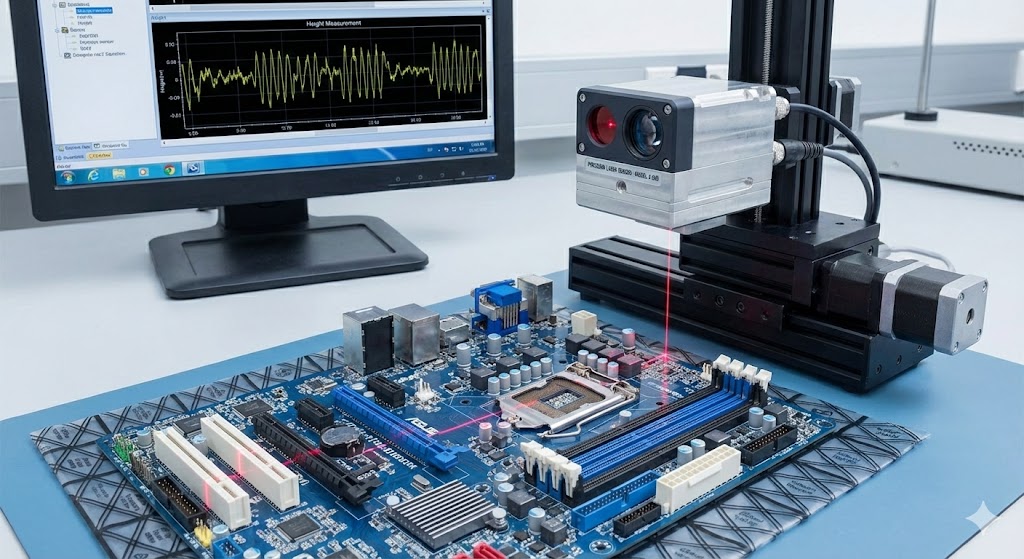
Material selection is the first critical decision. For most industrial laser sensors operating with common wavelengths like 650nm (red visible) or 850nm/905nm (infrared), high-quality optical glass such as BK7 or fused silica is standard. These materials offer excellent transmission, homogeneity, and environmental stability. For high-power laser sensors or those using specific wavelengths (e.g., UV or far-IR), materials like synthetic fused silica, calcium fluoride, or zinc selenide may be required to prevent absorption and thermal lensing effects. Anti-reflective (AR) coatings are almost universally applied. These multi-layer dielectric coatings are tailored to the laser's specific wavelength to maximize transmission—often achieving over 99.5%—and minimize harmful back-reflections that can destabilize the laser source or create ghost signals.

Lens design is a sophisticated exercise in balancing optical theory with practical application. Common designs include:
* Singlets and Doublets: Simple spherical lenses or achromatic doublets for basic collimation or focusing, correcting for chromatic aberration if a non-monochromatic source is used.
* Aspheric Lenses: Crucial for high-precision sensors. By deviating from a simple spherical surface, aspheric lenses can eliminate spherical aberration, producing a smaller, tighter focal spot and improving measurement accuracy at the edges of the field of view.
* Telecentric Lenses: Essential for gauging and inspection sensors where measurement must be independent of an object's position within a range. They provide an orthographic view, ensuring that the apparent size of a feature does not change with minor distance variations.
* F-Theta Lenses: Used in laser scanning sensors (e.g., for 3D profiling). They are designed to create a linear relationship between the scan angle and the focal plane position, ensuring a constant spot size and scan velocity across the entire field.
Beyond design, manufacturing and integration tolerances are exceptionally tight. Centration errors (decentration and tilt) of even a few microns can cause beam walk-off or distorted images, degrading sensor performance. Mounting within the sensor housing must be robust and stable, often involving kinematic mounts or adhesive bonding techniques that account for differential thermal expansion between the lens, mount, and housing material.
Environmental robustness is non-negotiable. Industrial sensors face temperature swings, humidity, vibration, and contamination. Lenses must be housed and sealed appropriately. For harsh environments, protective windows made of durable materials like sapphire may be placed in front of the primary optics. The entire assembly must maintain its optical alignment and clarity over years of operation.
In conclusion, the specialized lens is the unsung hero of the laser sensor. It is the critical interface that transforms raw laser light into reliable, high-fidelity data. Selecting or specifying the correct lens requires a deep understanding of the sensor's operating principle, the laser characteristics, the target properties, and the environmental conditions. There is no one-size-fits-all solution; it is always a custom-engineered compromise to achieve the optimal balance of performance, size, cost, and durability. As laser sensors push into new frontiers of speed and accuracy—enabling advancements in autonomous vehicles, micro-electronics assembly, and smart manufacturing—the innovation in specialized lens technology will continue to be the cornerstone of their evolution.