Laser sensors have revolutionized industrial automation by providing non-contact, high-precision measurement and detection capabilities. Among their diverse applications, bidirectional detection—or forward/reverse detection—stands out as a critical function for ensuring process integrity, safety, and efficiency. This technology enables the sensor to distinguish the direction of an object's movement, a feature paramount in complex material handling, assembly verification, and robotic guidance systems.
At its core, a laser sensor for bidirectional detection operates by emitting a focused beam of coherent light. When this beam intersects with a target object, it is reflected back to the sensor's receiver. The fundamental principle enabling direction discrimination often involves the use of multiple receiver elements, precise timing analysis, or advanced signal processing algorithms. For instance, a sensor might employ two photodiodes arranged strategically. As an object moves, the reflected light pattern hits these diodes in a specific temporal sequence. By analyzing the order and time delay between signals from these receivers, the sensor's internal processor can definitively determine whether the object is moving forward or in reverse.
The advantages of implementing laser-based bidirectional detection are substantial. Firstly, it enhances operational safety. In automated guided vehicle (AGV) systems or conveyor lines, knowing the exact direction of a pallet or product prevents collisions and misrouting. Secondly, it significantly improves quality control. In assembly processes, such as verifying the correct orientation of electronic components or bottle caps, a bidirectional laser sensor can confirm not just presence but also correct positioning, rejecting improperly oriented items. Thirdly, it contributes to predictive maintenance. By monitoring the direction and consistency of movement in machinery, these sensors can detect anomalies like slippage or jamming early, preventing costly downtime.
Key technical specifications to consider when selecting such a sensor include measurement range, response time, resolution, and the type of output. Modern laser sensors offer sub-millimeter resolution and response times in the microsecond range, making them suitable for high-speed production lines. Outputs are typically digital (PNP/NPN) or analog (4-20 mA, 0-10V), and many models feature programmability via software interfaces, allowing engineers to fine-tune sensitivity and detection logic for specific applications. Common setups include through-beam sensors, where emitter and receiver are separate units, and reflective sensors, which use a single unit that emits and receives the beam bounced off a reflector or the target itself. For bidirectional tasks, reflective or diffuse-reflective models with advanced optics are frequently employed.
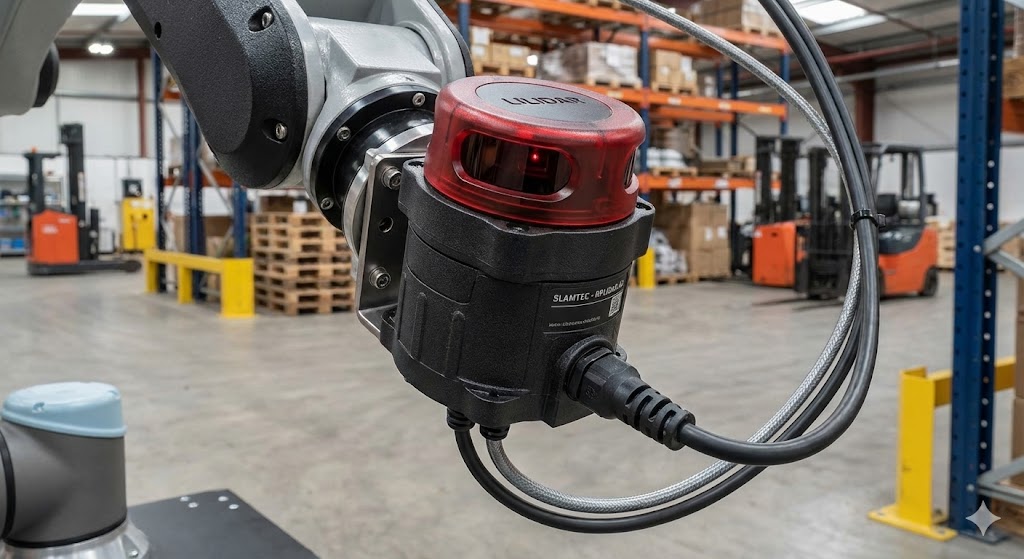
Applications span numerous industries. In packaging, they ensure cases move in the correct direction on sorting lines. In automotive manufacturing, they verify the proper seating and orientation of parts like pistons or valves. In logistics, they monitor the flow direction of parcels on automated sorters. A growing application is in collaborative robotics (cobots), where laser sensors provide precise directional feedback for safe and intricate human-robot interaction.
However, challenges exist. Environmental factors like ambient light, dust, oil mist, or vibrations can interfere with laser performance. Selecting sensors with robust housings (often IP67 or higher), specific laser classes for safety, and features like background suppression or polarized filters is crucial for reliable operation in harsh industrial environments. Furthermore, proper installation and alignment are non-negotiable for accurate bidirectional detection; even a slight misalignment can lead to false readings.
Looking ahead, the integration of laser sensors with Industrial Internet of Things (IIoT) platforms is a clear trend. Smart sensors with integrated IO-Link or Ethernet connectivity can transmit not just a simple directional signal but also rich diagnostic data—such as signal strength, internal temperature, and operating hours—to centralized control systems. This facilitates condition monitoring, data logging, and seamless integration into broader digital twin and Industry 4.0 frameworks.
In conclusion, laser sensors capable of bidirectional detection are indispensable tools in modern industrial automation. Their ability to provide reliable, contactless directional information drives improvements in safety, quality, and operational intelligence. As technology advances, these sensors will become even more intelligent, connected, and adaptable, solidifying their role as a cornerstone of efficient and smart manufacturing ecosystems. Engineers must carefully evaluate application requirements against sensor specifications to harness their full potential effectively.