Red laser probe sensors represent a critical advancement in non-contact measurement and detection technologies, widely utilized across manufacturing, automation, and quality control sectors. These sensors emit a highly visible red laser beam, typically at wavelengths around 650 nm, which allows for precise alignment, positioning, and inspection tasks. The working principle is based on the triangulation method or time-of-flight measurement, where the sensor projects a focused red laser spot onto a target surface and analyzes the reflected light to determine distance, presence, or profile characteristics.
One of the primary advantages of red laser probes is their exceptional visibility. The bright red beam enables operators to easily align the sensor during installation and troubleshooting, reducing setup time and minimizing errors. This feature is particularly beneficial in environments requiring manual calibration or where visual confirmation of the sensing point is necessary. Compared to infrared sensors, red laser variants offer a clear indication of the measurement spot, enhancing operational safety and accuracy in complex assemblies.
In industrial settings, these sensors excel in applications such as edge detection, thickness gauging, and object counting. For instance, in conveyor belt systems, red laser probes can detect minute height variations or monitor the integrity of packaged goods without physical contact, thereby preventing product damage. The high resolution and repeatability—often within micrometer ranges—make them ideal for precision manufacturing, including electronics assembly and automotive component inspection.
Environmental factors, however, can influence performance. Ambient light interference, especially from strong incandescent or sunlight sources, may affect signal stability. Modern red laser sensors incorporate modulated light sources and advanced filtering techniques to mitigate such issues, ensuring reliable operation in diverse conditions. Additionally, the choice of wavelength balances visibility with minimal eye safety concerns, as Class 2 red lasers are generally considered low-risk for accidental exposure.
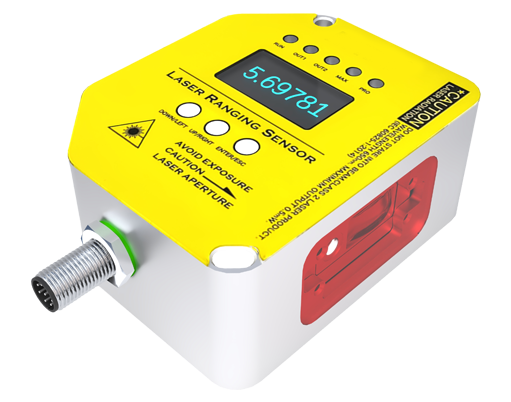
Integration with industrial control systems is streamlined through standard output interfaces like analog voltage, current loops, or digital protocols (e.g., IO-Link). This compatibility allows seamless data transmission to PLCs or SCADA systems, enabling real-time monitoring and automated adjustments. Maintenance requirements are minimal, primarily involving periodic lens cleaning to prevent dust accumulation, which could scatter the laser beam and degrade accuracy.
Future trends point toward enhanced miniaturization and smart features, such as embedded diagnostics and wireless connectivity. As Industry 4.0 evolves, red laser probe sensors are increasingly paired with AI algorithms for predictive maintenance and adaptive control, further boosting efficiency in smart factories. Despite the emergence of blue laser technologies offering finer spot sizes, red lasers remain a cost-effective and versatile solution for many applications, balancing performance with operational simplicity.
In summary, red laser probe sensors are indispensable tools in modern industrial automation. Their visibility, precision, and adaptability support critical quality assurance processes, driving productivity and reducing waste. Engineers and technicians should consider factors like target material, environmental conditions, and required resolution when selecting a sensor to optimize outcomes. With ongoing advancements, these devices will continue to play a pivotal role in enabling high-accuracy, non-contact measurement across diverse sectors.
