In the realm of industrial automation, precision, reliability, and durability are non-negotiable. Among the myriad of sensing technologies available, ceramic proximity sensors have carved out a critical niche, offering unique advantages that make them indispensable in harsh and demanding environments. Unlike their plastic or metal-housed counterparts, these sensors utilize advanced ceramic materials in their sensing face or entire housing, providing exceptional performance where other sensors might fail.
The core function of a ceramic proximity sensor is to detect the presence or absence of an object without physical contact. They operate primarily on the inductive principle, generating an electromagnetic field from a coil within the sensor. When a metallic target enters this field, it induces eddy currents, causing a change in the oscillation amplitude. The sensor's circuitry detects this change and triggers a solid-state switch output. The key differentiator lies in the ceramic component. Typically made from materials like alumina (Al2O3) or zirconia (ZrO2), the ceramic face is exceptionally hard, wear-resistant, and chemically inert.
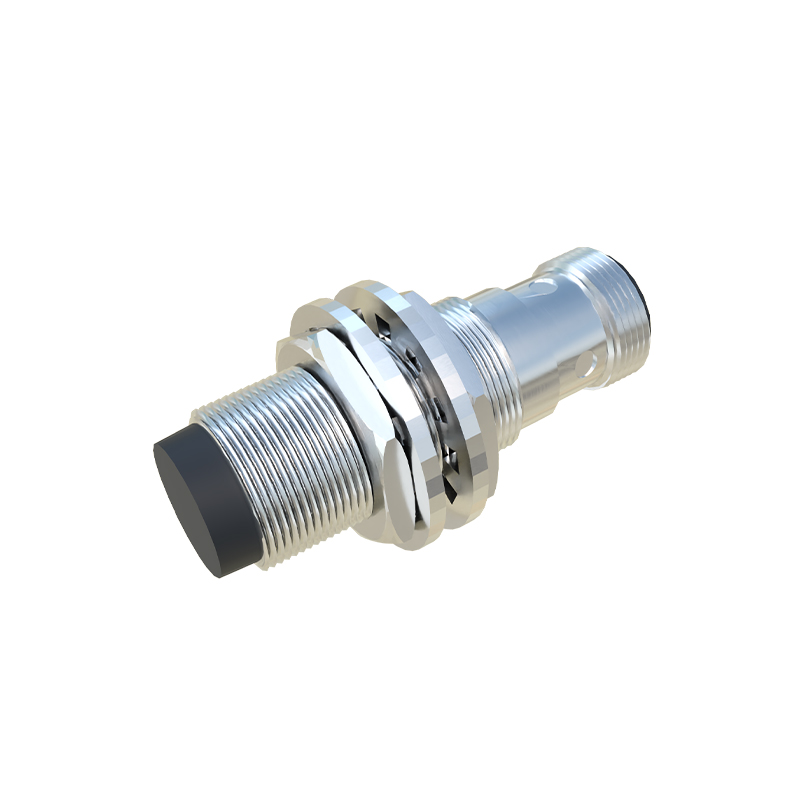
This material superiority translates into direct, tangible benefits for industrial applications. First and foremost is extreme wear resistance. In applications involving constant abrasion—such as detecting metal parts on high-speed conveyor belts, monitoring tool presence in CNC machining centers, or counting products in packaging lines—the ceramic face withstands physical degradation far better than plastic. This dramatically extends the sensor's service life, reducing downtime and maintenance costs.
Secondly, ceramic sensors excel in corrosive and high-temperature environments. They are impervious to most acids, alkalis, solvents, and oils that would quickly degrade polymer-based sensors. This makes them ideal for chemical processing plants, food and beverage production (where washdowns with aggressive cleaning agents are common), and metalworking facilities with cutting fluids. Their ability to maintain stable operation at elevated temperatures, often up to 150°C or higher, allows for use near furnaces, foundries, or in hot manufacturing processes.
Another significant advantage is their stability and precision. The ceramic material does not absorb moisture and exhibits minimal thermal expansion, ensuring that the sensing distance remains consistent despite fluctuations in ambient temperature or humidity. This is crucial for applications requiring high positional accuracy, such as robotic arm end-effector positioning, precision assembly, and automated quality control inspection stations.
The applications for ceramic proximity sensors are vast and varied. In the automotive industry, they monitor robotic weld gun operations and detect piston positions in harsh engine assembly areas. In the pulp and paper industry, they withstand abrasive dust and chemical-laden atmospheres. In metal stamping and forming, they reliably detect parts despite constant exposure to metal shavings and lubricants. Their robust nature also makes them suitable for heavy machinery, agricultural equipment, and mining operations, where dust, mud, and mechanical shock are ever-present challenges.
When selecting a ceramic proximity sensor, engineers must consider several parameters: the sensing distance (which may be slightly less than equivalent plastic sensors due to the material's properties), the target material (ferrous metals like iron and steel are detected at the rated distance, while non-ferrous metals like aluminum or copper require a reduction factor), the output type (PNP/NPN, NO/NC), and the electrical connection (pre-wired or quick-disconnect). Choosing a sensor with an appropriate IP (Ingress Protection) rating, such as IP67 or IP69K, is also vital for ensuring resilience against dust and high-pressure water jets.
In conclusion, ceramic proximity sensors represent a fusion of robust material science and precise sensing technology. They are not a universal replacement for all sensor types but are the definitive solution for applications defined by abrasion, corrosion, high temperature, and the need for long-term reliability. By providing a virtually indestructible sensing interface, they enhance system uptime, reduce lifecycle costs, and enable automation in environments that would otherwise be hostile to sensitive electronics. As industries continue to push the boundaries of efficiency and operational toughness, the role of the ceramic proximity sensor as a silent, resilient guardian of the automated process will only become more pronounced.