Point laser sensors have become indispensable tools in modern industrial automation, offering unparalleled precision, reliability, and versatility. These compact devices emit a focused laser beam to detect the presence, position, displacement, or profile of objects with micron-level accuracy. Their non-contact measurement principle eliminates mechanical wear and minimizes interference with delicate processes, making them ideal for demanding environments.
In manufacturing, point laser sensors are extensively used for precise dimensional inspection. They verify critical tolerances on components such as automotive pistons, semiconductor wafers, and medical implants. By detecting minute height variations or edge positions, they ensure products meet stringent quality standards, reducing waste and rework. Assembly lines leverage these sensors for part presence verification and correct orientation checks, preventing jams and misassemblies that could halt production.
Material handling systems rely on point laser sensors for accurate object detection and positioning. In automated warehouses, they detect pallet heights and positions to guide robotic arms, optimizing storage and retrieval. Conveyor systems use them to count items, monitor fill levels in containers, and trigger sorting mechanisms based on detected profiles. Their fast response times, often in the microsecond range, enable high-speed operations without sacrificing accuracy.
Process control applications benefit significantly from point laser sensors. In the packaging industry, they monitor film thickness, seal integrity, and label placement on high-speed filling lines. For liquid or powder level monitoring in tanks and silos, they provide continuous, reliable measurements unaffected by media properties like color, transparency, or viscosity. This ensures consistent batch quality and prevents overfills or shortages.
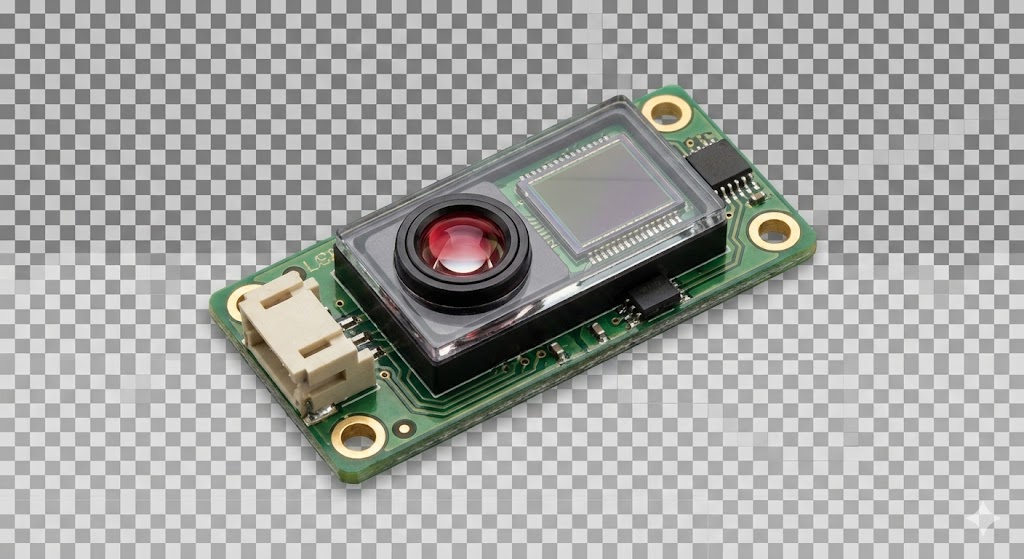
Robotics and automation integrators embed point laser sensors for enhanced guidance and safety. Collaborative robots (cobots) use them to detect human proximity, enabling safe interaction in shared workspaces. In precision welding or dispensing applications, sensors maintain optimal tool-to-workpiece distance, compensating for surface irregularities in real-time. Autonomous guided vehicles (AGVs) employ them for obstacle detection and navigation, improving operational safety in dynamic environments.
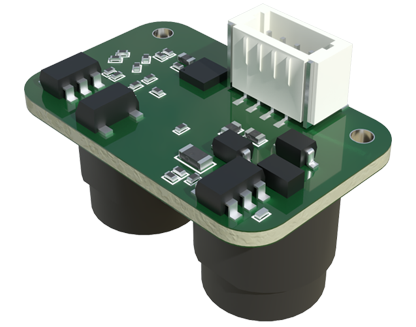
The electronics and semiconductor industries demand extreme precision, where point laser sensors excel. They measure solder paste thickness on printed circuit boards (PCBs), inspect micro-component placement, and verify lead frame coplanarity. Their ability to operate in cleanrooms without contamination makes them vital for wafer alignment and defect inspection during lithography processes.
Advancements in sensor technology have expanded their capabilities. Modern point laser sensors feature integrated processors for onboard data analysis, reducing reliance on external controllers. Enhanced connectivity options, such as IO-Link, Ethernet/IP, and PROFINET, facilitate seamless integration into Industrial Internet of Things (IIoT) networks. This allows for predictive maintenance by monitoring sensor health and environmental conditions, minimizing unplanned downtime.
Selecting the right point laser sensor involves considering key parameters. Measurement range, spot size, resolution, and response time must align with application requirements. Environmental factors like ambient light, temperature fluctuations, dust, or vibrations also influence sensor choice. Models with robust housings (IP67/IP69K ratings) withstand harsh conditions in foundries, food processing plants, or outdoor installations.
In summary, point laser sensors are critical enablers of efficiency, quality, and safety across industries. Their ability to deliver precise, non-contact measurements in real-time supports automation goals, from lean manufacturing to smart factory initiatives. As industries evolve toward greater automation and data-driven decision-making, the role of point laser sensors will continue to grow, driven by innovations in miniaturization, connectivity, and adaptive sensing algorithms. Engineers and system designers should evaluate these sensors as foundational components for next-generation automated systems.