In the realm of industrial automation and machinery, proximity sensors are indispensable components for non-contact detection. Among the various types available, hollow type proximity sensors, also known as ring or donut sensors, offer unique capabilities for specialized applications. This article delves into the working principles, key features, common applications, and critical selection criteria for these versatile devices.
At its core, a hollow type proximity sensor is characterized by its central opening or "hollow" area. Unlike standard cylindrical sensors that detect objects in front of their sensing face, a hollow sensor detects objects passing through its central aperture. The most common technology employed is inductive sensing. The sensor generates an oscillating electromagnetic field around its inner circumference. When a metallic object enters this hollow space, it disturbs the electromagnetic field. This disturbance is detected by the sensor's internal circuitry, which then triggers a switching output signal. This design allows for the detection of objects without physical contact, making it ideal for high-speed or delicate operations.
The advantages of hollow type proximity sensors are numerous. First, they enable non-invasive detection. Objects can be sensed as they pass through the ring, without the need to mount a sensor at a specific point along the path. This is particularly useful for counting, sorting, or verifying the presence of components on a conveyor line. Second, they offer high-speed response. Because the sensing is based on an electromagnetic field disturbance, detection is nearly instantaneous, suitable for fast-moving production lines. Third, they are highly reliable in harsh environments. Many models are built with robust housings, often from materials like nickel-plated brass or stainless steel, offering resistance to dust, chips, oils, and coolants. Their sealed designs can meet IP67 ratings, making them suitable for washdown areas in food processing or other demanding industrial settings.
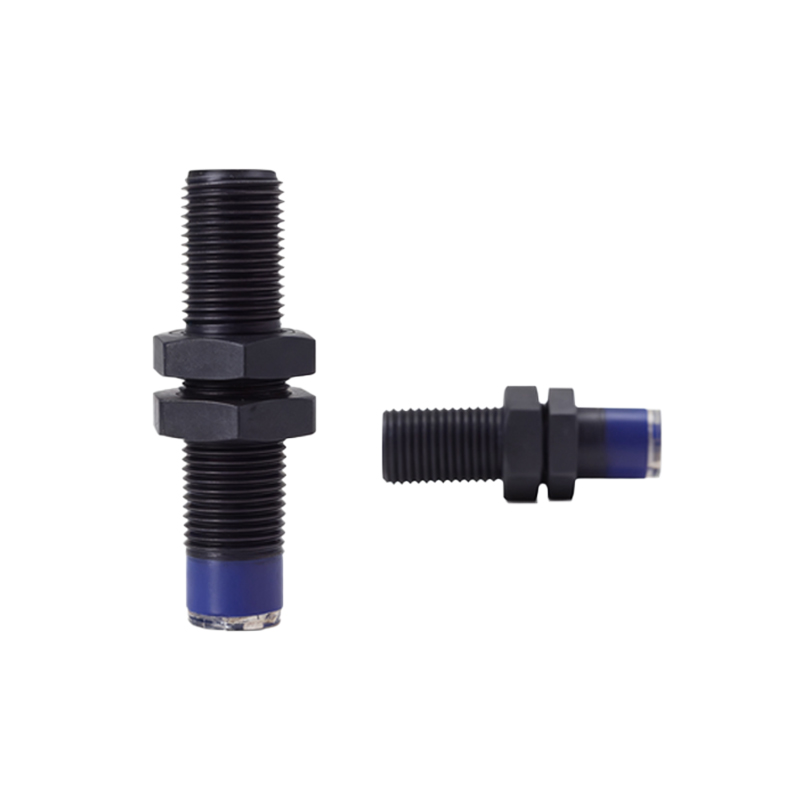
Typical applications span a wide range of industries. In automotive manufacturing, they are used to detect the presence of nuts on studs or verify if a bolt has been properly inserted through a hole. In metalworking, they can detect broken taps or drills by sensing the metal tool passing through the center. On assembly lines, they are perfect for counting metallic items like bolts, nuts, or small machined parts as they fall through a chute. In packaging machinery, they can confirm the presence of metallic caps or foil seals on containers. Furthermore, they play a crucial role in safety systems, such as detecting if a metal guard is in place before a machine cycle begins.
Selecting the right hollow type proximity sensor requires careful consideration of several parameters. The inner diameter is the most fundamental specification; it must be large enough to allow the target object to pass through without contact, yet not so large that sensitivity is compromised. Sensing distance, typically defined within the hollow area, is another key factor. The sensor must reliably detect the smallest intended target object. The material of the target object is critical, as inductive sensors primarily detect ferrous metals (like iron and steel) with the longest sensing range, while non-ferrous metals (like aluminum or copper) have a reduced range. Output type is also important; common options include NPN (sinking), PNP (sourcing), or analog outputs, which must be compatible with the connected controller (PLC). Other considerations include the switching frequency (how many detections per second), supply voltage (e.g., 10-30V DC), housing material for environmental compatibility, and connection style (pre-wired cable or connector).
Installation and maintenance are generally straightforward. The sensor is typically mounted via its external threads or flange, ensuring the target path is correctly aligned with the hollow center. It is vital to maintain the recommended clearance around the sensor to avoid interference from surrounding metal structures, which could cause false triggering. Regular cleaning of the aperture to remove debris or metal dust buildup ensures consistent performance. For optimal longevity, operating within the specified temperature, voltage, and current limits is essential.
In conclusion, hollow type proximity sensors provide an elegant and efficient solution for non-contact detection of metallic objects in motion. Their unique through-hole design addresses challenges that are difficult or inefficient for other sensor types. By understanding their operating principle, recognizing their ideal applications, and meticulously selecting based on technical specifications, engineers and maintenance personnel can significantly enhance the reliability, speed, and safety of automated systems. As automation continues to evolve, these specialized sensors will remain a key tool in the precision control of industrial processes.