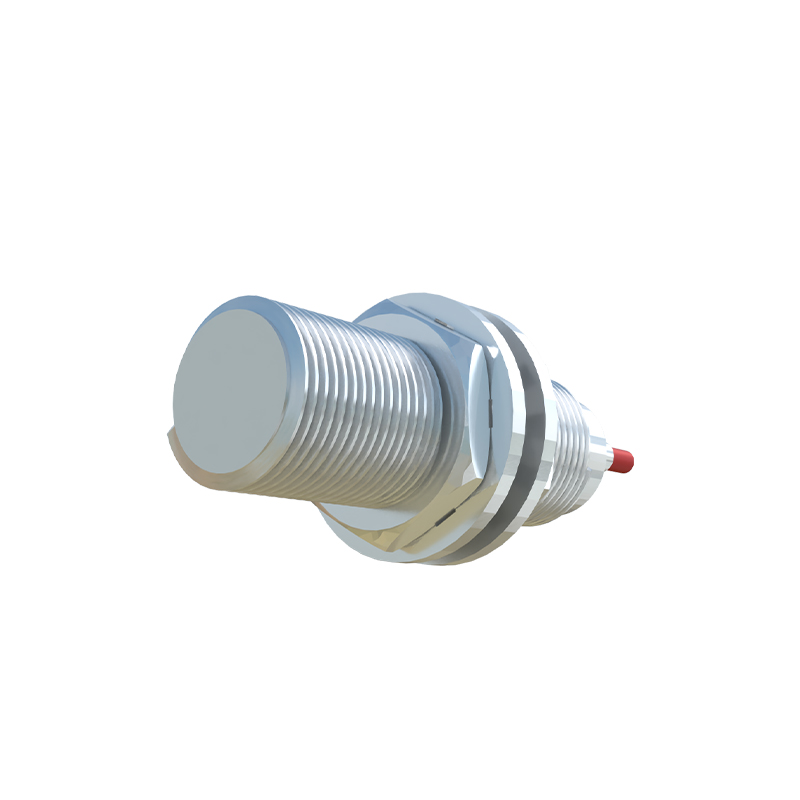
Inductive proximity sensors are fundamental components in modern industrial automation, offering reliable non-contact detection of metallic objects. These robust devices operate on the principle of electromagnetic induction, generating an oscillating electromagnetic field from a coil within the sensor's face. When a metallic target enters this field, eddy currents are induced on the target's surface, causing a change in the oscillation amplitude. The sensor's internal circuitry detects this change and triggers a solid-state output switch, signaling the presence of the object. This technology is prized for its exceptional durability, as the sensing element is typically encapsulated in a rugged housing—often nickel-plated brass or stainless steel—making it resistant to vibration, shock, and harsh environmental conditions like coolants, oils, and dust.
A key advantage of inductive sensors is their ability to detect ferrous metals (like iron and steel) at greater distances than non-ferrous metals (such as aluminum, copper, or brass). The sensing range, or nominal switching distance (Sn), is standardized and depends on the sensor's diameter and the target material. For instance, a standard 18mm diameter sensor might have an Sn of 8mm for mild steel, but only approximately 3mm for aluminum. Engineers must carefully consider this factor, along with the target's size, shape, and approach direction, during system design. Temperature compensation circuits ensure stable operation across a wide industrial temperature range, typically from -25°C to +70°C.
Modern inductive sensors come in various form factors: cylindrical threaded barrels (e.g., M8, M12, M18, M30), rectangular block styles, and ring-shaped models for applications like part counting on conveyors. Output configurations include NPN (sinking), PNP (sourcing), normally open (NO), normally closed (NC), and analog (4-20mA or 0-10V) versions for distance-proportional measurement. Many feature LED status indicators and short-circuit, overload, and reverse polarity protection. Advanced models incorporate IO-Link communication for digital parameter setting, diagnostics, and process data exchange, enabling predictive maintenance and seamless integration into Industry 4.0 frameworks.
Typical applications are vast, including position sensing of machine tool slides, end-of-travel detection, monitoring of metal parts on assembly lines, jam detection in automated machinery, and safety interlocking. In packaging machinery, they detect the presence of metallic foils or caps. In automotive manufacturing, they verify the presence of engine blocks or chassis components. Their solid-state design, with no moving parts, guarantees a long operational life with hundreds of millions of switching cycles, far exceeding mechanical limit switches. When selecting a sensor, critical parameters beyond range include switching frequency (response speed), hysteresis (the difference between switch-on and switch-off points to prevent chatter), and environmental IP (Ingress Protection) ratings like IP67 or IP69K for washdown areas. Proper installation is crucial; sensors must be mounted flush in metal without adjacent metallic objects in the lateral area to avoid false triggering. Shielded (flush-mountable) and unshielded (non-flush) types offer different installation flexibilities.
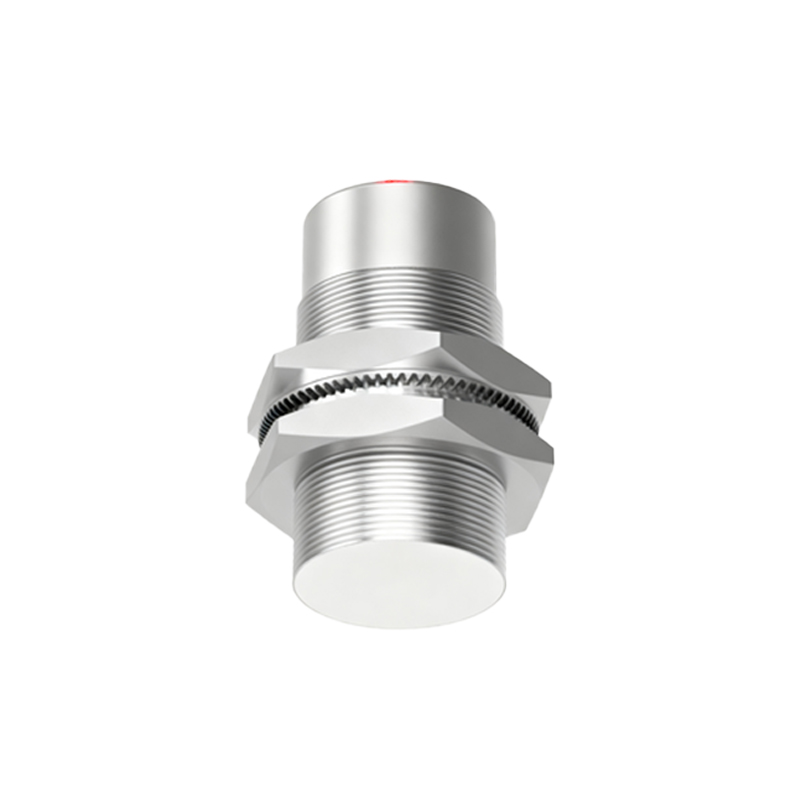
In summary, inductive proximity sensors are indispensable for precise, wear-free metal detection in demanding industrial environments. Their evolution continues with miniaturization, enhanced sensing distances, and smarter digital interfaces, solidifying their role as a cornerstone of efficient and reliable factory automation.