In the realm of industrial automation and precision measurement, CCT (Charge-Coupled Device) laser sensors have emerged as a cornerstone technology. These sophisticated devices combine the principles of laser triangulation with high-resolution CCD imaging to deliver unparalleled accuracy in non-contact measurement and inspection tasks. This article delves into the operational mechanics, key advantages, diverse applications, and critical selection factors for CCT laser sensors, providing a thorough resource for engineers and system integrators.
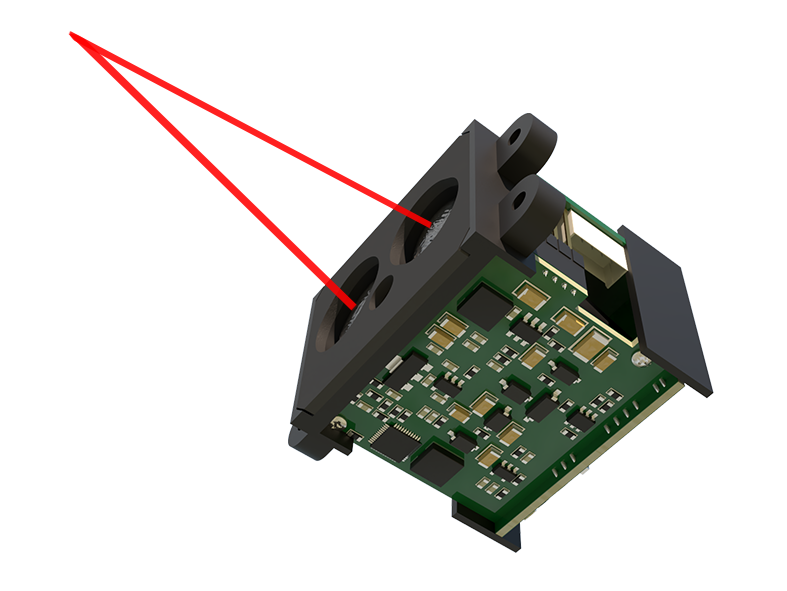
At its core, a CCT laser sensor operates on the principle of optical triangulation. The sensor projects a focused laser beam onto the target surface. The diffusely reflected light from this point is then captured by a high-precision CCD linear image sensor positioned at a known angle relative to the laser emitter. The position of the light spot on the CCD array shifts proportionally to the distance or height of the target. This positional data is processed by the sensor's internal circuitry using sophisticated algorithms to calculate the exact measurement value with micron-level resolution. The term "CCT" often refers to the specific type of imaging sensor used, known for its high sensitivity and linear response, which is crucial for stable and repeatable measurements.

The advantages of employing CCT laser sensors in industrial settings are manifold. Firstly, their non-contact nature eliminates the risk of damaging delicate surfaces or causing wear on the sensor itself, ensuring long-term reliability. They offer exceptionally high resolution and repeatability, capable of detecting minute variations in height, thickness, or position that are invisible to the human eye or mechanical probes. Modern CCT sensors boast impressive sampling speeds, often in the kilohertz range, making them suitable for high-speed production lines. Furthermore, they are largely immune to electromagnetic interference and can be configured with various output options (analog, digital, serial communication) for seamless integration into PLCs and control systems. Their robustness allows them to perform consistently in challenging environments with vibration, dust, or variable ambient light, especially when equipped with protective housings and specialized filters.
The application spectrum for CCT laser sensors is vast and continues to expand. In the electronics manufacturing industry, they are indispensable for measuring component coplanarity, solder paste height on PCBs, and the precise positioning of microchips. Automotive manufacturers rely on them for gap and flush measurement between body panels, brake disc thickness inspection, and tire profile analysis. In precision machining, they verify part dimensions, monitor tool wear, and ensure surface flatness. They also play critical roles in logistics for package dimensioning, in pharmaceuticals for tablet thickness control, and in robotics for providing precise guidance and object detection. Essentially, any process requiring fast, accurate, and reliable dimensional assessment is a potential candidate for CCT laser sensor deployment.
Selecting the appropriate CCT laser sensor for a specific application requires careful consideration of several technical parameters. The measurement range defines the minimum and maximum distances over which the sensor can operate accurately. The stand-off distance is the nominal working distance from the sensor head to the target. Resolution indicates the smallest detectable change in distance, while linearity defines the accuracy across the entire measurement range. The spot size of the laser is crucial, as a smaller spot allows for measurement on finer features or edges. The sampling rate must be matched to the speed of the target or production line. Material properties of the target, such as color, reflectivity, and surface texture (matte, glossy, transparent), significantly impact performance and may necessitate sensors with automatic exposure control or specialized laser wavelengths. Environmental factors like temperature fluctuations, contaminants, and ambient light must also be accounted for, often requiring sensors with appropriate ingress protection (IP) ratings and robust housing.
In conclusion, CCT laser sensors represent a mature yet continually evolving technology that is fundamental to modern quality control and automation. Their ability to provide precise, high-speed, and non-contact measurements makes them an invaluable tool across countless industries. By understanding their operating principles, recognizing their strengths, and meticulously evaluating application requirements against sensor specifications, engineers can effectively harness this technology to optimize processes, enhance product quality, and drive operational efficiency. As Industry 4.0 and smart factory concepts advance, the integration of CCT laser sensors with data analytics and IoT platforms will further unlock their potential for predictive maintenance and process optimization.