In the rapidly evolving landscape of industrial automation, proximity sensors have become indispensable components for enhancing efficiency, safety, and precision. Among the leading manufacturers, Airtac (also known as AirTAC or Airtac International Group) stands out with its robust and reliable proximity sensor solutions. These devices are engineered to detect the presence or absence of objects without physical contact, leveraging electromagnetic fields, infrared light, or ultrasonic waves. This article delves into the technology behind Airtac proximity sensors, their key features, and diverse applications across industries.
Airtac proximity sensors primarily utilize inductive, capacitive, or photoelectric sensing principles. Inductive sensors are ideal for detecting metallic objects, generating an electromagnetic field that triggers a signal when a metal target enters its range. Capacitive sensors, on the other hand, can detect both metallic and non-metallic materials by measuring changes in capacitance caused by the object's dielectric properties. Photoelectric sensors employ light beams to sense objects, offering long-range detection capabilities. Airtac's product line includes a variety of models tailored to specific needs, such as shielded and unshielded designs, with sensing distances ranging from a few millimeters to several meters. Key features often highlighted include high switching frequency, resistance to environmental factors like dust, moisture, and temperature fluctuations, and compatibility with different voltage levels (e.g., 10-30V DC). These attributes ensure reliable performance in harsh industrial settings, from manufacturing floors to outdoor installations.
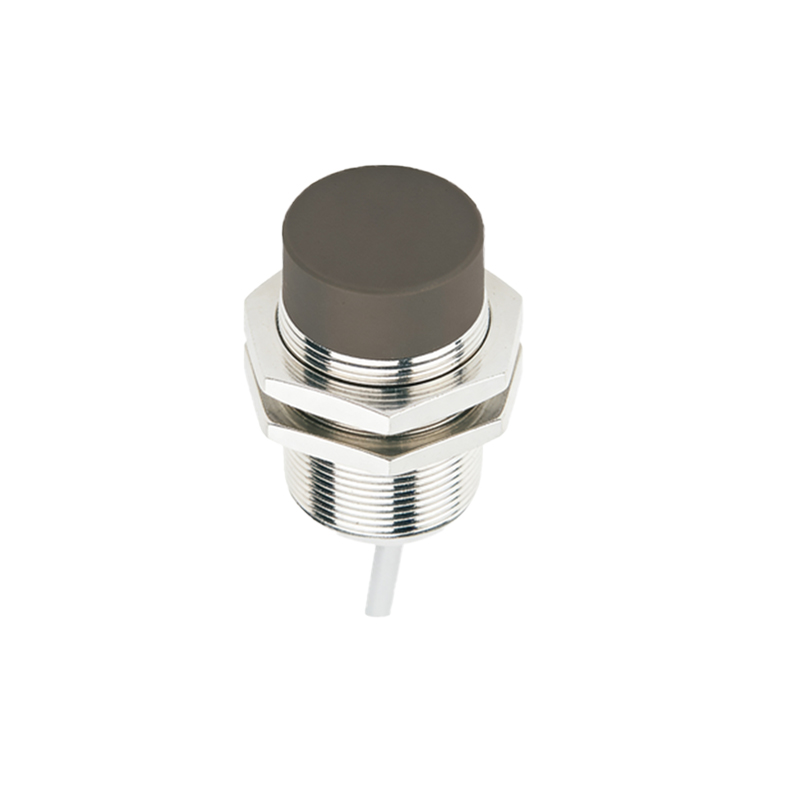
The applications of Airtac proximity sensors are vast and varied. In automotive assembly lines, they are used for position sensing, part counting, and safety interlocks to prevent machinery accidents. In packaging industries, these sensors facilitate precise object detection for filling, labeling, and sorting processes. Additionally, they play a critical role in material handling systems, such as conveyor belts, where they monitor item flow and prevent jams. Beyond traditional manufacturing, Airtac sensors are integrated into robotics for obstacle avoidance and in renewable energy systems for monitoring equipment status. Their versatility is further enhanced by easy installation and maintenance, thanks to compact designs and durable housings made from materials like nickel-plated brass or stainless steel.
When selecting an Airtac proximity sensor, engineers must consider factors such as the target material, required sensing distance, environmental conditions, and output type (e.g., NPN or PNP). Proper calibration and alignment are essential to maximize accuracy and longevity. Airtac also emphasizes innovation, with recent advancements focusing on smart sensors that offer digital interfaces for real-time data communication with PLCs (Programmable Logic Controllers) and IoT (Internet of Things) networks. This connectivity enables predictive maintenance and system optimization, aligning with Industry 4.0 trends.
In summary, Airtac proximity sensors represent a blend of advanced technology and practical design, making them a trusted choice for industrial automation. By understanding their operational principles and applications, professionals can leverage these devices to improve productivity and safety. As industries continue to automate, the demand for high-quality sensors like those from Airtac is expected to grow, driving further innovations in detection and control systems.