Laser temperature sensor modules represent a significant advancement in non-contact temperature measurement technology, widely adopted across various industrial sectors. These devices utilize laser-based infrared (IR) detection to accurately measure surface temperatures without physical contact, making them ideal for applications involving moving objects, hazardous environments, or delicate materials. The core principle relies on detecting infrared radiation emitted by a target, with the laser serving as a precise aiming guide to ensure measurement accuracy.
A typical laser temperature sensor module consists of an optical system, detector, signal processor, and output interface. The optical system focuses IR radiation onto the detector, which converts it into an electrical signal. Advanced signal processing algorithms then compensate for environmental factors like ambient temperature and emissivity variations, providing reliable readings. Modern modules often feature adjustable emissivity settings, high-speed response times (as fast as milliseconds), and wide temperature ranges, from sub-zero to over 2000°C, depending on the model.
In industrial settings, these sensors are crucial for monitoring machinery health, preventing overheating in electrical components, controlling manufacturing processes such as metal forging or plastic molding, and ensuring product quality in food processing. Their non-contact nature minimizes contamination risks and allows measurements in hard-to-reach areas. Integration with IoT systems enables real-time data logging and predictive maintenance, enhancing operational efficiency.
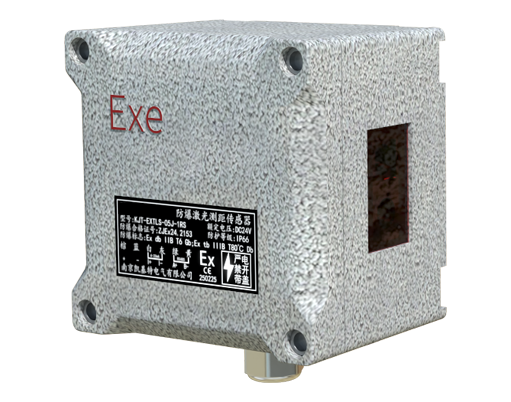
When selecting a laser temperature sensor module, key considerations include measurement range, accuracy (typically ±1% of reading or better), spectral response, spot size, and environmental durability. Proper installation involves aligning the laser correctly, accounting for surface emissivity, and avoiding obstructions like dust or steam that could interfere with readings. Regular calibration against reference standards maintains long-term accuracy.
Future trends point toward miniaturization, enhanced connectivity (e.g., wireless protocols), and AI-driven analytics for anomaly detection. As industries prioritize automation and safety, laser temperature sensors will continue to evolve, offering greater precision and adaptability in demanding environments.
