In the realm of industrial automation, proximity sensors are indispensable components, acting as the "eyes" of machinery by detecting the presence or absence of objects without physical contact. Their reliability directly impacts system efficiency, safety, and uptime. Selecting the right sensor for a specific application is a critical engineering decision. This article outlines the fundamental principles to guide that selection process, ensuring optimal performance and cost-effectiveness.
The first and foremost consideration is the Type of Object to be Detected. Proximity sensors are primarily categorized by their sensing technology, each suited to different materials. Inductive sensors detect metallic objects, typically ferrous metals like steel and iron, with some types capable of sensing non-ferrous metals like aluminum or copper at reduced ranges. Capacitive sensors, on the other hand, can detect a wide variety of materials including metals, plastics, glass, wood, and liquids by sensing changes in capacitance. For applications requiring long-range detection or sensing of any material regardless of color or transparency, photoelectric sensors are the go-to choice, using a light beam (visible red, infrared, or laser). Ultrasonic sensors use sound waves and are excellent for detecting objects of varying materials, shapes, and colors, and are particularly useful in harsh environments where dust or fog might obscure photoelectric beams. Understanding the target material is the cornerstone of the selection process.
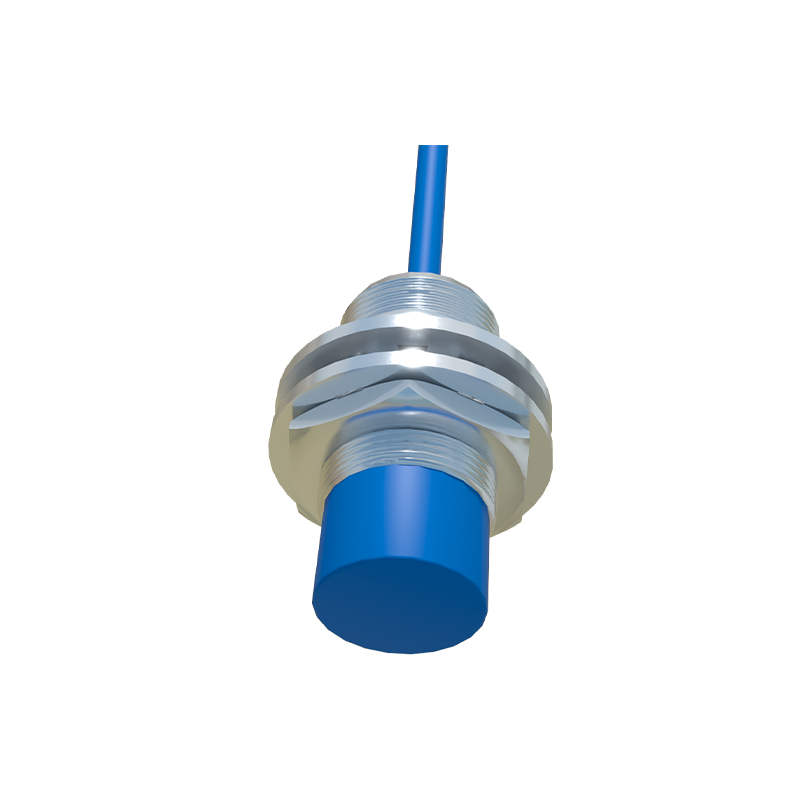
Following material compatibility, the Sensing Distance must be determined. The nominal sensing range, or "Sn," specified by manufacturers is defined under ideal conditions with a standard target. In practice, the effective operating distance is often less due to factors like target material, size, shape, and environmental conditions. A critical rule is to select a sensor with a rated sensing distance 20-30% greater than the maximum required in the application to account for installation tolerances, temperature drift, and component aging. Never operate a sensor at its absolute maximum rated distance, as this leaves no safety margin and risks unreliable operation.
The Electrical Requirements of the sensor and the control system must be perfectly matched. This involves several key parameters:
Operating Voltage: DC (typically 10-30V DC) or AC (typically 90-250V AC). DC sensors are more common in modern control systems (PLCs).
Output Type: This defines how the sensor interfaces with the controller.
PNP (Sourcing): The output switches the positive voltage to the load. Common in Europe and with many PLCs.
NPN (Sinking): The output switches the negative or ground connection to the load. Common in Asia and North America.
Analog Output: Provides a continuous signal (e.g., 4-20mA, 0-10V) proportional to the distance to the target, used for measuring or positioning.
IO-Link: A digital point-to-point communication for smart sensors, enabling parameter setting, diagnostics, and process data exchange.
Output Configuration: 2-wire, 3-wire, or 4-wire. 3-wire DC sensors (with separate power, ground, and signal wires) are the most prevalent for discrete switching.
Current Rating: The sensor's output must be capable of handling the current draw of the connected load (e.g., PLC input, relay coil).
The Physical and Environmental Conditions often dictate the sensor's housing and protection ratings.
Housing Material: Metal (stainless steel for harsh, wash-down, or corrosive environments) or plastic (for general-purpose use).
Size and Form Factor: Cylindrical (threaded barrels in sizes like M8, M12, M18, M30) or rectangular/blocks. The choice depends on available mounting space.
Ingress Protection (IP) Rating: This indicates protection against solids and liquids. For example, IP67-rated sensors are dust-tight and can withstand temporary immersion, making them suitable for most industrial floors. IP69K-rated sensors are designed for high-pressure, high-temperature wash-downs in food & beverage or pharmaceutical applications.
Temperature Range: Ensure the sensor's specified operating temperature range covers the ambient temperature of the installation location, including any heat generated by nearby machinery.
Finally, consider Application-Specific Features. These can solve unique challenges or add value:
Shielded vs. Unshielded (for inductive sensors): Shielded sensors can be flush-mounted in metal without affecting performance, while unshielded sensors offer a longer sensing range but require a non-metallic surround.
Response Time/Frequency: The maximum switching speed (in Hz) must be faster than the required detection rate of the moving objects.
Output Status Indicator: An LED light is invaluable for commissioning and troubleshooting.