In modern industrial automation, precision positioning is a critical factor that directly impacts manufacturing efficiency, product quality, and system reliability. Among the various technologies available for achieving high-accuracy position feedback, laser-based positioning sensors have emerged as a superior solution for demanding applications. Unlike traditional contact-based methods or other optical systems, laser positioning sensors utilize coherent light to measure displacement, distance, or presence with exceptional resolution and speed.
The fundamental principle behind laser positioning involves the emission of a focused laser beam toward a target. The sensor then analyzes the reflected light using techniques such as triangulation, time-of-flight (ToF), or interferometry. In triangulation sensors, a laser diode projects a spot onto the target surface. The reflected light is captured by a receiving lens at a known angle and focused onto a position-sensitive detector, such as a CCD or CMOS array. Any change in the target's position causes the light spot to shift on the detector, allowing the sensor to calculate the exact distance or displacement with micron-level precision. Time-of-flight sensors, on the other hand, measure the round-trip time for a laser pulse to reflect back, ideal for longer ranges. Laser interferometers provide the highest precision by analyzing interference patterns created by combining reference and measurement beams, often used in calibration and ultra-precision machining.
The advantages of laser positioning sensors are manifold. They offer non-contact measurement, eliminating mechanical wear and allowing inspection of delicate or moving objects without physical influence. The high sampling rates, often in the kilohertz range, enable real-time feedback for dynamic processes. Furthermore, laser sensors perform consistently regardless of material color or reflectivity variations, especially when equipped with advanced algorithms for signal conditioning. Their compact design facilitates integration into tight spaces on robotic arms, CNC machines, or conveyor systems.

Typical industrial applications are extensive. In robotics, laser sensors provide precise guidance for pick-and-place operations, welding path control, and assembly verification. In coordinate measuring machines (CMMs) and metrology equipment, they ensure dimensional accuracy of components. Semiconductor manufacturing relies on laser positioning for wafer alignment and lithography stages. Additionally, they are crucial in automated warehousing for inventory positioning and in automotive production for part fitting and gap measurement.
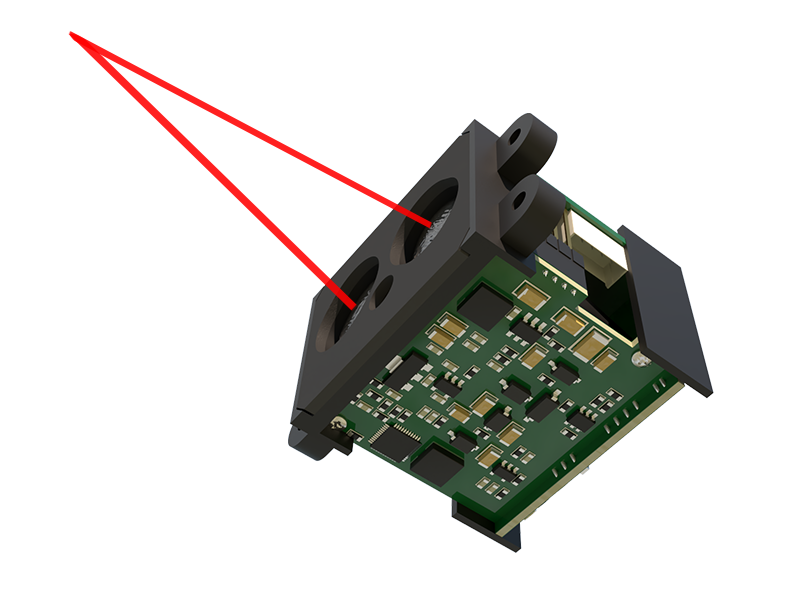
Selecting the appropriate laser positioning sensor requires careful consideration of several parameters. Key specifications include measuring range, resolution, repeatability, linearity, and response time. Environmental factors such as ambient light, temperature fluctuations, vibration, and exposure to dust or coolant must also be evaluated. Modern sensors often feature integrated processors, digital interfaces (e.g., IO-Link, Ethernet/IP), and software tools for easy configuration and diagnostics.
Looking ahead, advancements in laser diode technology, smarter onboard processing, and integration with Industrial IoT platforms are driving the evolution of these sensors. The fusion of laser measurement data with machine learning algorithms promises predictive maintenance and adaptive control, further enhancing operational intelligence. As industries strive for greater precision and flexibility, laser positioning sensors will undoubtedly remain at the forefront of automation innovation, enabling smarter, more responsive manufacturing ecosystems.