In modern industrial environments, safety and operational efficiency are paramount. Collision warning laser sensors have emerged as critical components in safeguarding personnel, machinery, and infrastructure. These advanced devices utilize laser technology to detect potential impacts or intrusions within a defined area, providing real-time alerts to prevent accidents.
The core technology behind these sensors is typically based on time-of-flight (ToF) or triangulation principles. A laser emitter projects an invisible or visible beam. When an object enters the monitoring zone, it reflects the beam back to a receiver. The sensor's internal processor calculates the distance to the object based on the time delay or the angle of reflection. If the object is within a pre-set danger threshold, the system triggers an immediate warning. This warning can be an audible alarm, a visual signal, or a direct command to slow down or halt machinery, such as cranes, automated guided vehicles (AGVs), or robotic arms.
The advantages of laser-based collision warning systems are numerous. They offer high precision, with detection accuracy often within millimeters. Their response time is exceptionally fast, enabling reactions in milliseconds, which is crucial for dynamic industrial settings. Unlike physical barriers or contact-based bumpers, laser sensors provide non-contact detection, eliminating wear and tear and reducing maintenance needs. They are also highly adaptable; their detection range and zone can be easily programmed and adjusted via software to suit different applications, from warehouse logistics to heavy manufacturing assembly lines.
A key application is in the realm of automated material handling. AGVs equipped with perimeter laser scanners can navigate complex factory floors safely, avoiding collisions with static obstacles, other vehicles, and human workers. Similarly, on overhead cranes, laser sensors create an invisible protective shield around the crane's path or the load being carried, preventing costly impacts with building structures or other equipment.
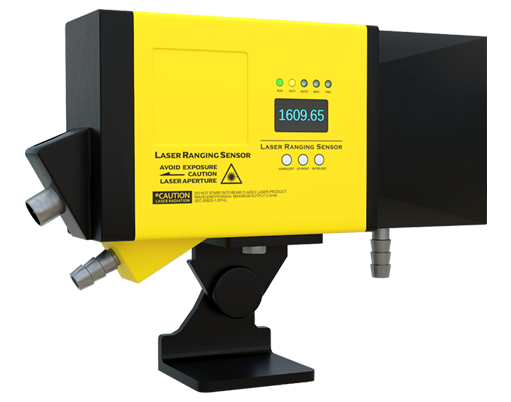
Integration is straightforward with modern industrial control systems. These sensors typically output signals via standard interfaces like IO-Link, PROFINET, or Ethernet/IP, allowing seamless communication with Programmable Logic Controllers (PLCs) and supervisory systems. This enables not just warning functions but also data logging for incident analysis and predictive maintenance.
When selecting a collision warning laser sensor, engineers must consider several factors. The required detection range and field of view are primary. Environmental conditions pose another critical consideration. Many industrial sensors are built with robust housings rated IP67 or higher, protecting against dust, moisture, and vibrations. They must also compensate for ambient light interference and perform reliably in varying temperature ranges.
Looking ahead, the integration of laser sensors with Artificial Intelligence and machine vision is a growing trend. This fusion allows for more sophisticated object classification—distinguishing between a person, a pallet, or machinery—and enabling more nuanced safety protocols. Furthermore, the development of more compact and cost-effective laser diodes continues to drive adoption across smaller-scale operations.
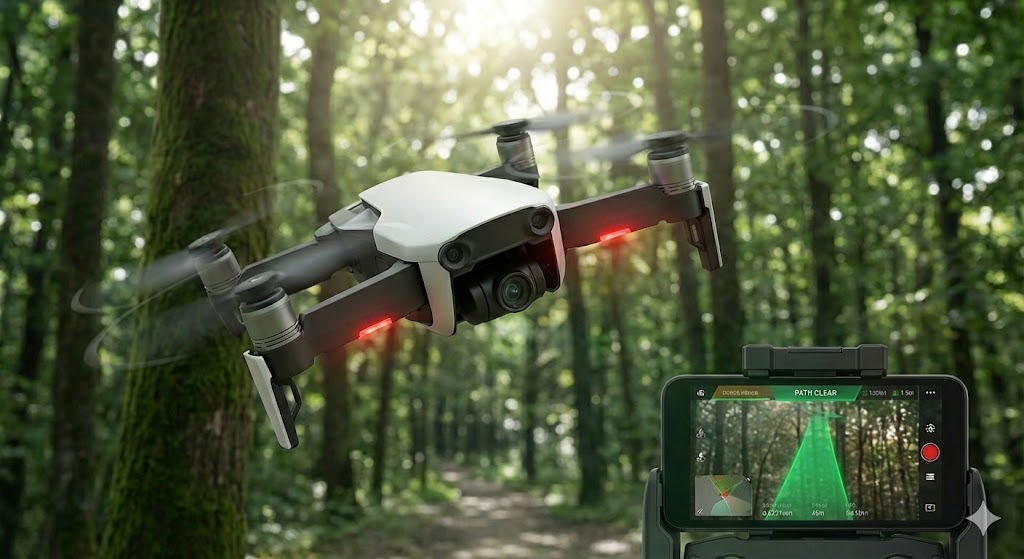
In conclusion, collision warning laser sensors are indispensable tools for modern industrial safety. By providing reliable, precise, and non-contact detection, they form a proactive layer of protection that minimizes downtime, prevents equipment damage, and, most importantly, protects human lives. Their continuous evolution promises even greater integration and intelligence in the automated factories of the future.