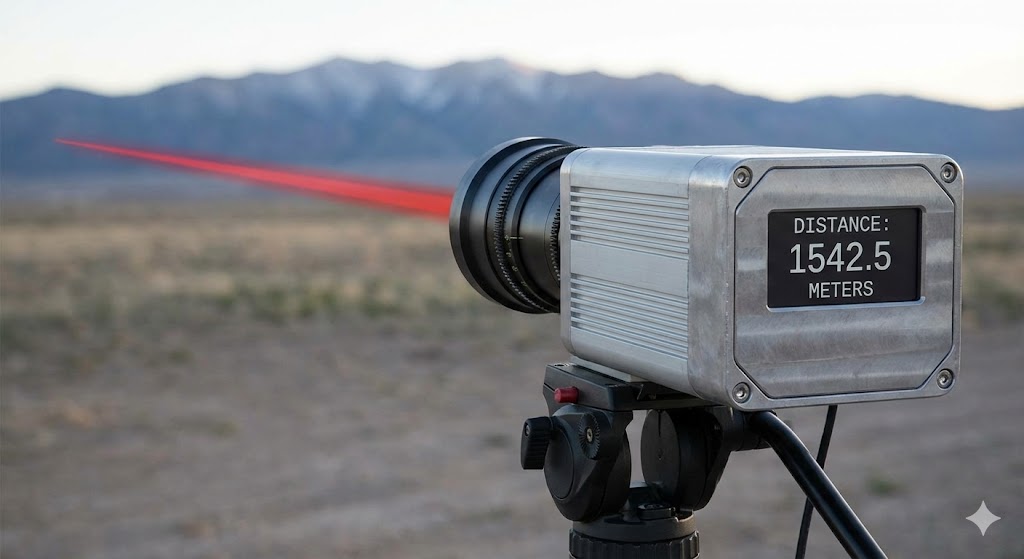
In the realm of industrial automation and precision engineering, the demand for accurate, reliable, and fast positioning solutions is paramount. Laser distance sensors have emerged as a cornerstone technology, enabling non-contact measurement with exceptional precision. These sensors operate on the principle of time-of-flight or phase-shift measurement, emitting a laser beam towards a target and calculating the distance based on the time or phase difference of the reflected signal. This capability is fundamental for tasks requiring exact positioning, such as in robotic guidance, conveyor belt monitoring, and assembly line verification.
The core advantage of laser distance sensors lies in their high accuracy and resolution. Modern sensors can achieve sub-millimeter precision over considerable distances, making them indispensable in quality control processes. For instance, in automotive manufacturing, these sensors are used to verify the precise placement of components like brake pads or engine parts, ensuring each unit meets stringent tolerances. The non-contact nature eliminates mechanical wear and avoids potential damage to sensitive surfaces, thereby enhancing system longevity and reducing maintenance costs.
Integration into industrial systems is facilitated by various output interfaces, including analog voltage, current loops, and digital protocols like IO-Link or PROFINET. This flexibility allows seamless communication with Programmable Logic Controllers (PLCs) and other control units, enabling real-time data processing and immediate corrective actions. Environmental robustness is another critical feature; many laser sensors are designed with high ingress protection (IP) ratings, resisting dust, moisture, and vibrations commonly found in harsh industrial settings. This durability ensures consistent performance in challenging environments, from foundries to clean rooms.
Applications extend beyond static measurements to dynamic positioning. In automated guided vehicles (AGVs), laser sensors provide continuous feedback on position relative to predefined paths or obstacles, facilitating safe and efficient navigation. Similarly, in logistics, they measure parcel dimensions on sorting lines, optimizing storage and shipping processes. The advent of multi-point sensors and profile scanners has further expanded capabilities, allowing for 3D positioning and surface contour analysis, which are vital in sectors like aerospace for inspecting turbine blade geometries.
Despite their advantages, selecting the appropriate laser sensor requires careful consideration of factors such as measurement range, target surface properties, and ambient light conditions. Dark or highly reflective surfaces can affect signal reflection, necessitating sensors with advanced filtering algorithms or adjustable laser power. Calibration and regular verification are also essential to maintain accuracy over time, as thermal drift or lens contamination may introduce errors.
Looking ahead, advancements in laser diode technology and signal processing algorithms promise even greater precision and faster response times. Integration with artificial intelligence and machine learning platforms is poised to enable predictive maintenance and adaptive positioning systems, where sensors not only measure but also anticipate adjustments based on historical data. As Industry 4.0 and smart manufacturing evolve, laser distance sensors will continue to play a pivotal role in achieving unparalleled levels of automation and quality assurance, driving efficiency and innovation across diverse industrial landscapes.
