Proximity and light sensors are integral components in today's electronic devices, enabling intuitive user interfaces and smart automation. Understanding their working principles provides insight into the seamless functionality of smartphones, industrial machinery, and IoT systems.
A proximity sensor detects the presence or absence of a nearby object without physical contact. The most common type is the infrared (IR) proximity sensor. It typically consists of an IR LED emitter and a photodiode or phototransistor receiver. The IR LED emits a beam of infrared light. When an object enters the sensor's field, this light reflects off the object and is detected by the receiver. The sensor's internal circuitry, often a comparator, then processes the signal strength from the receiver. A significant increase in received IR intensity indicates an object is close. This simple reflection principle is enhanced with modulation techniques. The emitter is pulsed at a specific frequency, and the receiver is tuned to detect only that frequency. This method effectively filters out ambient light interference, such as sunlight or indoor lighting, which contains IR components, ensuring reliable operation in various environments. Another prevalent technology is the capacitive proximity sensor. Instead of light, it detects changes in capacitance. The sensor creates an electrostatic field. When a conductive or dielectric object approaches, it alters this field, changing the capacitance. This change is measured by an oscillator circuit or a dedicated IC. Capacitive sensors are excellent for detecting non-metallic objects like a human hand or plastic, making them ideal for touch-sensitive buttons and liquid level detection.
Light sensors, or ambient light sensors (ALS), measure the intensity of visible light in the environment. The core component is a photodetector, usually a photodiode or photoresistor (LDR - Light Dependent Resistor). A photodiode generates a current proportional to the incident light intensity when operated in photovoltaic mode. More commonly, in ALS applications, it is used in photoconductive mode with a reverse bias, where its conductivity changes with light. A photoresistor's resistance decreases as light intensity increases. The sensor IC converts this analog change (current or resistance) into a digital value via an analog-to-digital converter (ADC). Advanced light sensors incorporate spectral response filters to mimic the human eye's sensitivity (the photopic response), ensuring the measurement correlates with perceived brightness. This data is used for automatic display brightness adjustment in devices like phones and laptops, enhancing readability while conserving battery power. Some sophisticated sensors also include RGB color sensing capabilities.
The integration of these sensors into systems involves sophisticated signal processing and calibration. Microcontrollers or dedicated sensor hubs read the digital output from these sensors. For proximity sensors, a threshold value is set to define the "near" state. Hysteresis is often implemented to prevent rapid toggling when an object is at the borderline distance. For light sensors, algorithms average readings over time to smooth out sudden, transient changes in lighting, providing a stable reference for backlight control.

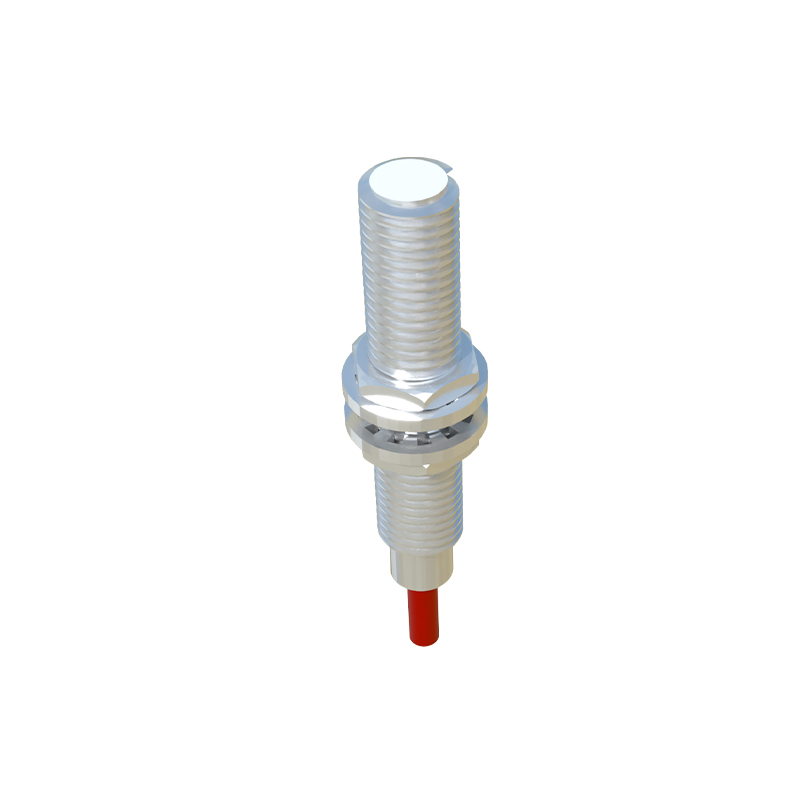
In practical applications, these sensors work in concert. In a smartphone, the proximity sensor detects when the phone is held to the ear during a call, triggering the touchscreen to turn off to prevent accidental inputs. Simultaneously, the ambient light sensor continuously measures environmental brightness to adjust screen luminance. In industrial settings, inductive or capacitive proximity sensors (for metallic and non-metallic objects respectively) are workhorses for object counting, position verification, and machine safety curtains. In automotive interiors, they enable touchless gesture control for infotainment systems. The evolution of these sensors focuses on miniaturization, lower power consumption, and higher accuracy. Emerging technologies like time-of-flight (ToF) sensors, which measure the round-trip time of a light pulse for precise distance measurement, are expanding the definition of proximity sensing into 3D depth mapping.
From a design engineering perspective, key considerations include sensor placement (to avoid false triggers from internal reflections or external noise), optical design (lens or aperture for the sensing field), power management for always-on sensing, and communication protocols (I2C being dominant). Environmental robustness against dust, moisture, and temperature variations is critical for reliability. Understanding the underlying physics of light reflection, capacitive coupling, and photoelectric effect is fundamental to selecting, integrating, and troubleshooting these ubiquitous yet vital components that bridge the physical and digital worlds seamlessly.