In the realm of photonics and industrial automation, the precise measurement of light is paramount. Among the various photodetectors available, laser intensity sensors stand out for their specialized role in quantifying the power or energy density of laser beams. Unlike general-purpose light sensors, these devices are engineered to handle the unique characteristics of laser light—coherence, monochromaticity, and often high intensity—providing accurate, reliable data critical for a multitude of applications.
At its core, a laser intensity sensor operates by converting incident optical power into an electrical signal. This process typically involves a photodetector element, such as a photodiode or a photodiode array. For low-power measurements, silicon photodiodes are common, offering good sensitivity in the visible and near-infrared spectra. For higher-power lasers or different wavelengths, materials like germanium, indium gallium arsenide (InGaAs), or pyroelectric detectors may be employed. The key is matching the sensor's spectral response and damage threshold to the laser's wavelength and expected power levels. The photodetector generates a photocurrent proportional to the incident light intensity. This analog signal is then conditioned through transimpedance amplifiers and analog-to-digital converters to produce a stable, readable output, often calibrated in units like watts (W) or watts per square centimeter (W/cm²).
Accuracy in laser power measurement is influenced by several factors. Sensor calibration is fundamental, typically traceable to national standards. The uniformity of response across the sensor's active area, known as spatial uniformity, is crucial, especially for measuring laser beams with non-uniform profiles like Gaussian beams. Furthermore, factors such as temperature dependence, linearity over a dynamic range, and response time must be considered. For pulsed lasers, sensors must have a sufficiently fast response time to capture peak power accurately, while for continuous-wave (CW) lasers, stability and thermal management are more critical.
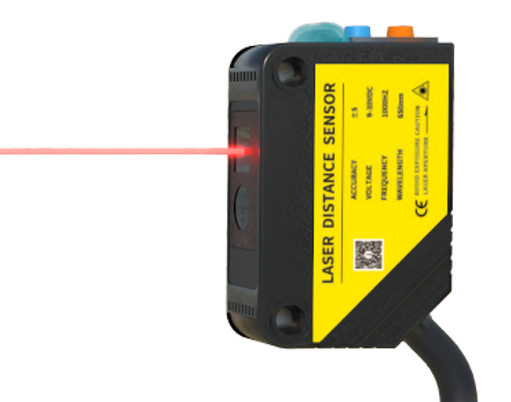
The applications of laser intensity sensors are vast and span numerous industries. In manufacturing and materials processing, they are indispensable for process control in laser cutting, welding, and engraving. By monitoring laser power in real-time, these sensors ensure consistent quality, prevent material damage from power fluctuations, and optimize energy usage. In the medical field, they are used to calibrate and monitor surgical lasers, dermatological equipment, and diagnostic instruments, where precise dosage is vital for patient safety and treatment efficacy. In telecommunications, they help monitor signal power in fiber optic networks. Research and development laboratories rely on them for characterizing new laser sources, conducting spectroscopic studies, and in experimental setups in physics and chemistry. Emerging fields like LiDAR for autonomous vehicles and additive manufacturing (3D printing) also depend on accurate laser power sensing for system reliability and performance.
Selecting the right laser intensity sensor requires a careful analysis of operational parameters. The primary specification is the power range, from nanowatts to kilowatts. The sensor must comfortably handle the maximum expected power without risk of saturation or damage. Wavelength compatibility is equally important; a sensor's responsivity curve must cover the laser's emission wavelength. For pulsed lasers, the sensor's peak power rating, pulse width handling capability, and damage threshold for pulsed energy are critical. Other practical considerations include the sensor's active area size (which should be larger than the laser beam diameter), the type of output interface (analog voltage, digital USB, etc.), form factor for integration, and environmental robustness for industrial settings.
Modern advancements continue to enhance sensor capabilities. Integrating microprocessors for onboard data processing, enabling Ethernet or wireless connectivity for Industry 4.0 systems, and developing more robust coatings to withstand higher power densities are active areas of development. The trend is towards smarter, more connected sensors that provide not just raw data but actionable insights for predictive maintenance and process optimization.
In conclusion, laser intensity sensors are sophisticated instruments that translate optical power into quantifiable electrical data. Their design and selection are nuanced, demanding a clear understanding of the laser source and the application's requirements. From ensuring a perfect weld seam to enabling a delicate surgical procedure, these sensors play a silent yet critical role in harnessing the power of laser technology safely and effectively. As lasers find new applications, the sensors that measure them will continue to evolve, becoming more integral to precision-driven industries worldwide.