In the rapidly evolving landscape of industrial automation and precision engineering, laser sensor distance measurement has emerged as a cornerstone technology, driving efficiency, accuracy, and reliability across diverse sectors. Unlike traditional mechanical or ultrasonic methods, laser-based systems utilize coherent light beams to determine distances with exceptional precision, often achieving micrometer-level resolutions. This capability is pivotal in applications ranging from robotics and automotive assembly to aerospace manufacturing and quality control processes.
The fundamental principle behind laser distance measurement is based on time-of-flight (ToF), triangulation, or interferometry techniques. Time-of-flight sensors calculate distance by measuring the time it takes for a laser pulse to travel to a target and back, leveraging the constant speed of light. This method is highly effective for long-range measurements, often exceeding several hundred meters, making it ideal for surveying, forestry, and large-scale construction. In contrast, triangulation-based sensors use a laser emitter, a receiver, and geometric principles to determine distance with high accuracy at shorter ranges, typically up to a few meters. These sensors are widely employed in factory automation for tasks such as part inspection, thickness gauging, and alignment. Interferometry, while more complex, offers nanometer-level precision by analyzing interference patterns of laser light, serving critical roles in semiconductor fabrication and scientific research.
Recent technological advancements have significantly enhanced the performance and versatility of laser distance sensors. The integration of advanced optics, high-speed processors, and sophisticated algorithms has led to improvements in measurement speed, environmental robustness, and data integration. For instance, modern sensors can compensate for ambient light interference, temperature fluctuations, and surface reflectivity variations, ensuring consistent results in challenging industrial environments. Additionally, the miniaturization of components has enabled the development of compact, lightweight sensors that can be easily integrated into mobile robots, drones, and portable measurement devices.
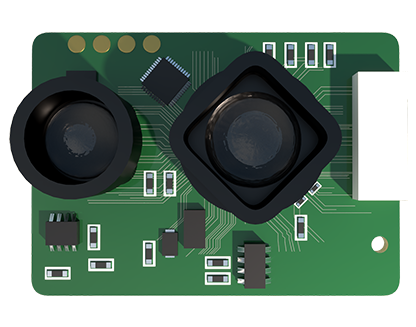
One of the key trends in this field is the adoption of multi-function laser sensors that combine distance measurement with other capabilities, such as profile scanning or 3D imaging. These systems provide comprehensive spatial data, facilitating complex tasks like reverse engineering, volumetric analysis, and real-time monitoring of production lines. The convergence with Internet of Things (IoT) platforms and Industry 4.0 initiatives further amplifies their impact, enabling predictive maintenance, data-driven optimization, and seamless connectivity with cloud-based analytics tools.
Despite these advancements, challenges persist, including high costs for ultra-precision systems, sensitivity to extreme environmental conditions, and the need for specialized expertise in calibration and operation. However, ongoing research in areas like quantum sensing and photonic integration promises to address these limitations, paving the way for next-generation sensors with unprecedented accuracy and affordability.
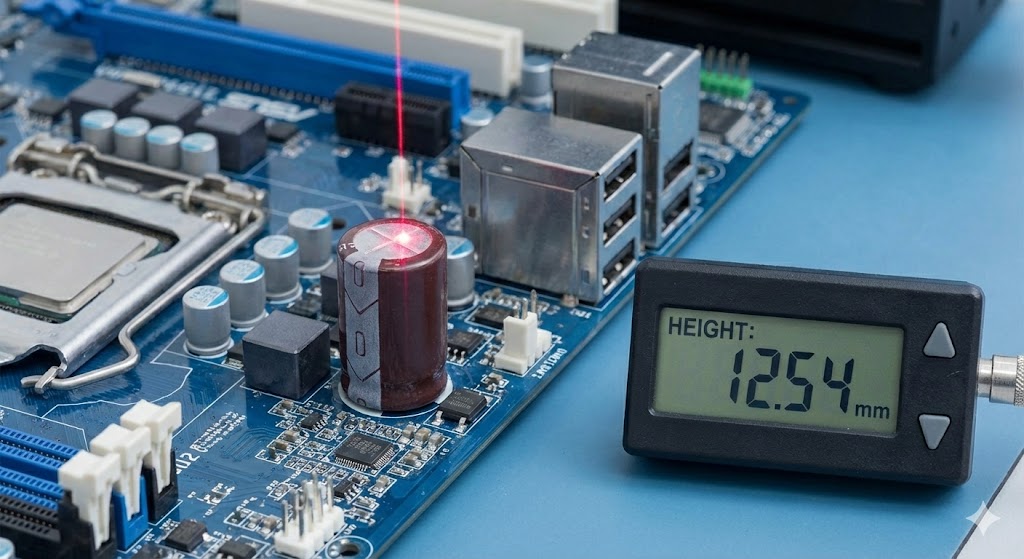
In conclusion, laser sensor distance measurement continues to revolutionize industrial processes by offering unmatched precision and adaptability. As industries increasingly prioritize automation and quality assurance, the demand for innovative laser-based solutions is set to grow, underscoring their vital role in shaping the future of manufacturing and beyond. Engineers and technicians are encouraged to stay abreast of emerging technologies to leverage their full potential in driving operational excellence.