Pulse voltage breakdown is a critical phenomenon in proximity sensors, particularly in industrial automation and high-reliability applications. Proximity sensors detect the presence or absence of objects without physical contact, relying on electromagnetic fields, capacitive coupling, or inductive principles. Among these, inductive and capacitive proximity sensors are most susceptible to pulse voltage breakdown, which can compromise sensor performance, longevity, and system safety. This article delves into the mechanisms, causes, and mitigation strategies for pulse voltage breakdown in proximity sensors, providing insights for engineers and technicians in the electrical and automation industries.
Pulse voltage breakdown occurs when a transient voltage spike exceeds the dielectric strength of the sensor's internal components, such as insulation materials or semiconductor junctions. These spikes often originate from external sources like switching operations, electrostatic discharge (ESD), lightning strikes, or electromagnetic interference (EMI) in industrial environments. In proximity sensors, the sensing element—typically a coil in inductive sensors or electrodes in capacitive sensors—can experience induced voltages from rapid changes in current or nearby electrical noise. When the pulse voltage surpasses the threshold, it leads to partial or complete breakdown, resulting in sensor malfunction, data inaccuracies, or permanent damage.
The impact of pulse voltage breakdown varies based on sensor design and application. For inductive proximity sensors, which generate an oscillating electromagnetic field, voltage spikes can disrupt the oscillation frequency, causing false triggering or reduced sensing range. In capacitive sensors, breakdown may alter the dielectric constant, affecting sensitivity to target materials. Common symptoms include erratic output signals, increased response time, or complete failure. In harsh industrial settings—such as manufacturing lines with motor drives or welding equipment—the risk escalates due to frequent electrical transients.
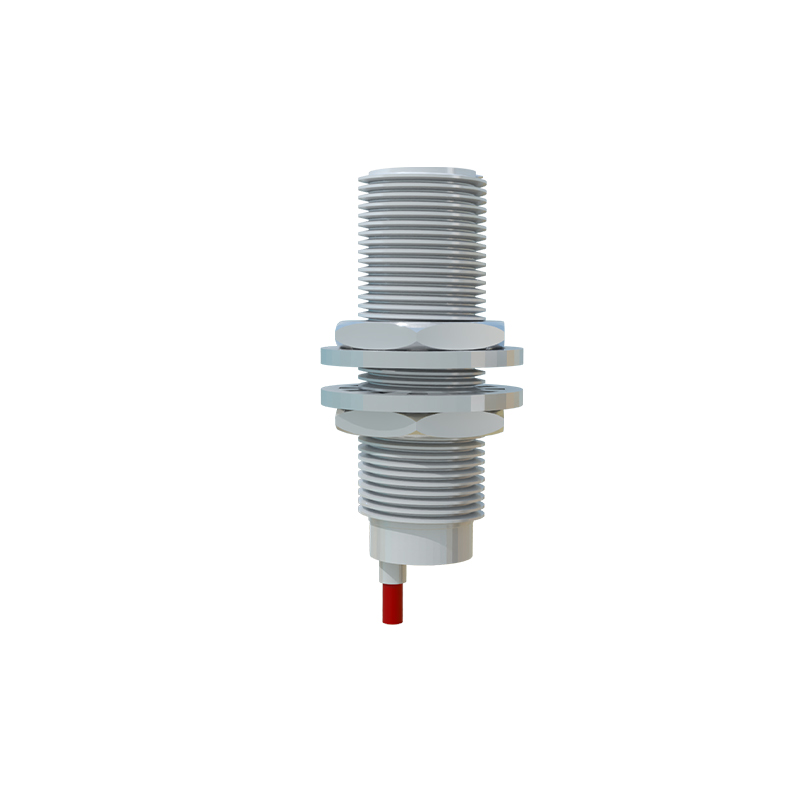
To address pulse voltage breakdown, engineers employ several protective measures. Shielding and grounding are fundamental; proper enclosure design using metallic shields can divert electromagnetic pulses away from sensitive components. Additionally, integrating surge protection devices (SPDs) like transient voltage suppression (TVS) diodes or varistors at the sensor's input stage clamps excessive voltages to safe levels. Circuit design enhancements, such as adding filtering capacitors or ferrite beads, help absorb high-frequency noise. For capacitive sensors, optimizing electrode geometry and insulation thickness can improve dielectric endurance. Regular maintenance, including inspection for insulation degradation and environmental contaminants, also mitigates long-term risks.
Standards and testing protocols play a vital role in ensuring sensor resilience. International standards, such as IEC 60947-5-2 for proximity sensors, define immunity levels against electrical fast transients (EFT) and surge voltages. Compliance testing involves subjecting sensors to simulated pulse voltages in laboratories to verify performance under stress. Engineers should prioritize sensors with certifications like CE or UL, which indicate adherence to safety and durability benchmarks. In critical applications—e.g., automotive assembly or aerospace systems—customized testing may be necessary to account for specific operational hazards.
Advancements in materials and technology are further reducing pulse voltage breakdown risks. Modern proximity sensors incorporate robust semiconductors with higher breakdown voltages, such as silicon carbide (SiC) or gallium nitride (GaN) components, which offer superior thermal stability and electrical resistance. Smart sensors with embedded diagnostics can monitor voltage spikes in real-time, alerting users to potential issues before failure occurs. Additionally, simulation tools like finite element analysis (FEA) enable predictive modeling of electric field distribution, aiding in proactive design improvements.
In conclusion, pulse voltage breakdown is a manageable challenge in proximity sensors with proper engineering practices. By understanding its causes—from environmental interference to design flaws—professionals can implement effective safeguards. As industries evolve toward Industry 4.0 and IoT integration, ensuring sensor reliability against electrical threats becomes paramount. Continuous innovation in protection strategies and materials will enhance the robustness of proximity sensors, supporting safer and more efficient automated systems worldwide.