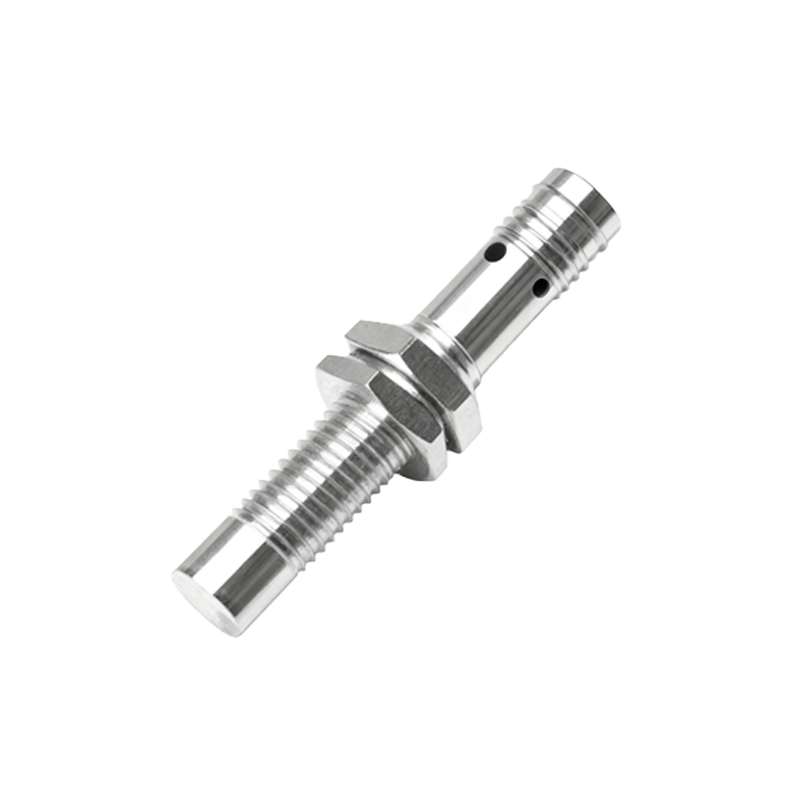
Proximity sensors are pivotal components in industrial automation, enabling non-contact detection of objects within a specific range without physical interaction. These devices operate based on various physical principles, primarily categorized into inductive, capacitive, ultrasonic, and photoelectric types. Inductive proximity sensors generate an electromagnetic field to detect metallic objects, making them ideal for harsh environments where dust, oil, or moisture is present. Capacitive sensors, on the other hand, can detect both metallic and non-metallic materials by measuring changes in capacitance, often used in liquid level detection or material handling. Ultrasonic sensors utilize sound waves to measure distance, excelling in applications requiring precise object positioning or level monitoring. Photoelectric sensors rely on light beams, offering long-range detection and versatility in sensing transparent or colored objects.
The working mechanism of inductive sensors involves an oscillator circuit that creates a fluctuating magnetic field. When a metallic object enters this field, eddy currents are induced, causing a change in the oscillation amplitude. This alteration triggers a switch signal, allowing for real-time detection. Capacitive sensors function by establishing an electrostatic field between the sensor and the target. As an object approaches, the dielectric constant changes, modifying the capacitance and activating the output. Ultrasonic sensors emit high-frequency sound pulses and calculate the time taken for echoes to return, determining object proximity. Photoelectric sensors consist of an emitter and receiver; interruptions or reflections of the light beam indicate the presence of an object, with variations like through-beam, retro-reflective, and diffuse models catering to different needs.
In industrial applications, proximity sensors enhance efficiency and safety across numerous sectors. In manufacturing, they are integral to assembly lines for part counting, positioning, and quality control. For instance, inductive sensors monitor robotic arm movements in automotive plants, ensuring precise welding or painting. Capacitive sensors assist in packaging industries by detecting fill levels in containers, preventing overflow or shortages. Ultrasonic sensors are employed in warehouse automation for pallet stacking and inventory management, while photoelectric sensors facilitate object sorting in logistics centers. Additionally, these sensors contribute to predictive maintenance by monitoring equipment vibrations or alignment, reducing downtime and operational costs.
Advancements in technology have led to the development of smart proximity sensors with integrated microprocessors, enabling features like self-diagnostics, adjustable sensing ranges, and communication protocols such as IO-Link or Ethernet/IP. These innovations support Industry 4.0 initiatives, allowing for seamless data exchange and remote monitoring. When selecting a proximity sensor, factors like sensing distance, environmental conditions, target material, and output type must be considered to ensure optimal performance. Regular calibration and shielding from electromagnetic interference are essential for maintaining accuracy.
Overall, proximity sensors are indispensable in modern industrial systems, driving automation, precision, and reliability. Their ability to operate without physical contact minimizes wear and tear, extending equipment lifespan. As industries evolve toward greater connectivity and intelligence, the role of these sensors will continue to expand, fostering innovations in robotics, smart manufacturing, and beyond. By understanding their principles and applications, engineers can leverage these devices to optimize processes and achieve sustainable operational excellence.