Laser displacement sensors represent a cornerstone technology in modern electronic engineering and industrial automation. These non-contact measurement devices operate on the principle of triangulation or time-of-flight to determine the precise distance between the sensor head and a target object with exceptional accuracy, often in the micrometer range. At the heart of these systems lies a laser diode that emits a focused beam of coherent light. When this beam strikes a target surface, the reflected light is captured by a high-resolution position-sensitive detector (PSD) or a CMOS/CCD linear image sensor. Sophisticated onboard electronics then process the signal, calculating displacement based on the angle or time shift of the reflected beam.
The electronic architecture of a typical laser displacement sensor is a marvel of integrated design. It encompasses the laser drive circuit, which ensures stable and consistent light emission, critical for measurement repeatability. The photodetector's analog signal is conditioned through amplification and filtering stages before being converted into a digital signal by a high-speed analog-to-digital converter (ADC). A dedicated microprocessor or digital signal processor (DSP) executes complex algorithms to compute the displacement value, compensating for factors like ambient light, surface color, and material transparency. The processed data is then output via industry-standard interfaces such as analog voltage/current (0-10V, 4-20mA), RS-232, RS-485, Ethernet/IP, or EtherCAT, enabling seamless integration into Programmable Logic Controllers (PLCs) and supervisory control systems.
Key performance specifications are defined by the electronics. Resolution, the smallest detectable change, is governed by sensor noise and ADC bit depth. Sampling speed, crucial for dynamic measurements, is driven by the processing power of the DSP and the data transmission protocol. Linearity, the accuracy across the entire measuring range, is ensured through precise calibration and algorithmic correction stored in the sensor's memory. Modern sensors incorporate advanced features like multi-peak detection for transparent surfaces, background suppression for ignoring irrelevant objects, and integrated temperature sensors for thermal drift compensation.
Applications are vast and critical across electronics manufacturing itself. They are indispensable for PCB warpage inspection, component coplanarity checks, solder paste height measurement in SMT lines, and thickness verification of semiconductor wafers and thin films. In broader automation, they enable robotic guidance, precise part positioning, vibration analysis, and quality control of assembly gaps. The shift towards Industry 4.0 and smart factories further elevates their role, with sensors providing the essential metrology data for digital twins and closed-loop process control.
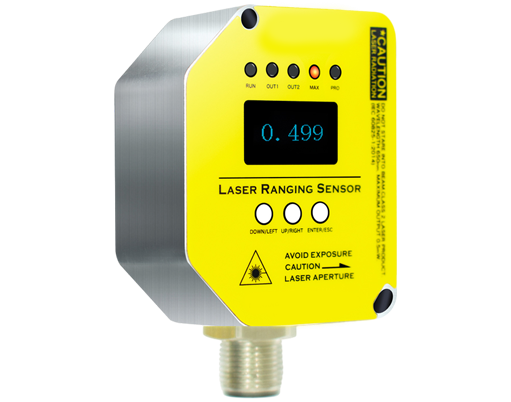
Selecting the appropriate laser displacement sensor requires a detailed analysis of the application's electronic and environmental demands. Engineers must consider the required measuring range, spot size, resolution, and response frequency. The target's surface properties—be it shiny, dark, rough, or translucent—directly impact the choice of sensor model and its internal processing algorithms. Environmental challenges such as dust, coolant mist, or significant ambient light necessitate sensors with robust housings (often IP67 rated) and specialized optical filters. Furthermore, the choice of output interface must align with the existing factory network architecture to ensure reliable, high-speed data communication without bottlenecks.
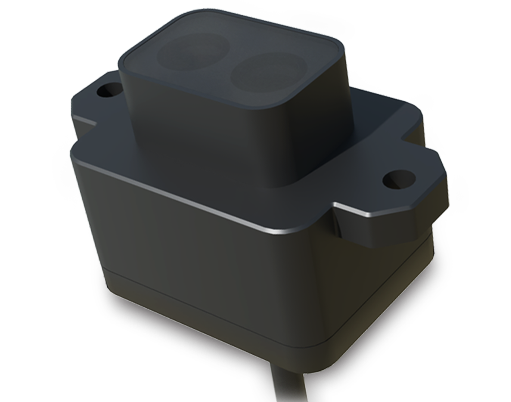
In conclusion, laser displacement sensors are sophisticated electronic instruments where optics, precision analog circuitry, and digital processing converge. Their continued evolution, driven by advancements in laser diode efficiency, faster processors, and smarter algorithms, is fundamental to pushing the boundaries of precision measurement, quality assurance, and automated system intelligence in the electronics and manufacturing sectors. A deep understanding of their electronic operating principles is essential for engineers to deploy them effectively, unlocking their full potential for innovation and efficiency gains.