Laser inductive sensors represent a pivotal technology in modern industrial automation, offering high-precision distance measurement capabilities across diverse applications. These sensors operate on the principle of triangulation or time-of-flight (ToF) methods, emitting a focused laser beam toward a target object and analyzing the reflected light to calculate distance. In triangulation-based sensors, a laser diode projects a spot onto the target, and a position-sensitive detector (PSD) or CMOS array captures the reflected beam at an angle. The displacement of the beam on the detector correlates directly with the distance to the object, enabling resolutions down to micrometers in controlled environments. For long-range measurements, ToF sensors measure the phase shift or pulse delay between emitted and reflected signals, achieving accuracies within millimeters over distances up to several hundred meters.
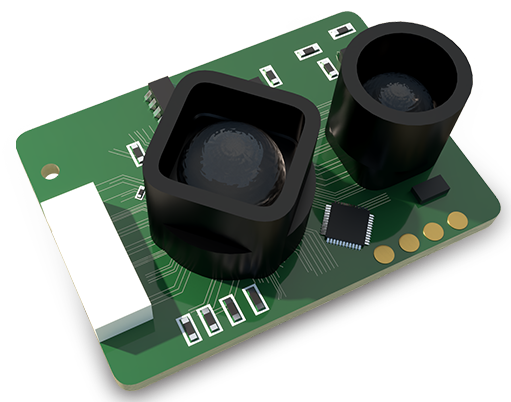
The core components of a laser inductive sensor include a laser source, optical system, photodetector, and signal processing unit. Industrial-grade sensors typically employ Class 1 or Class 2 laser diodes with wavelengths ranging from 650 nm (visible red) to 850 nm (infrared), balancing visibility and eye safety. Advanced models integrate temperature compensation circuits to mitigate thermal drift, ensuring stability in fluctuating operational conditions. Key performance parameters encompass measuring range (e.g., 10 mm to 500 m), linearity error (<0.1% of full scale), repeatability (±0.01 mm), and response time (sub-millisecond). Environmental factors such as ambient light interference, surface reflectivity, and material transparency must be accounted for during sensor selection. For instance, diffuse surfaces may require sensors with adjustable exposure settings, while transparent objects often necessitate specialized retro-reflective configurations.
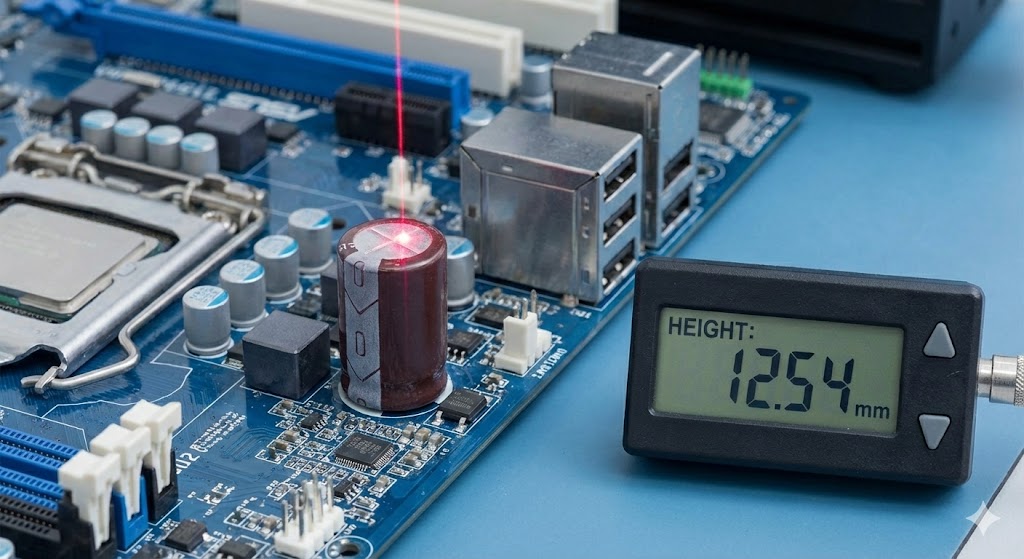
In manufacturing, laser inductive sensors facilitate critical tasks like robotic guidance, conveyor belt monitoring, and dimensional inspection. Automotive assembly lines utilize them for gap detection between body panels, ensuring tolerances within ±0.1 mm. Similarly, in electronics, sensors verify component placement on printed circuit boards (PCBs) by measuring solder paste thickness or chip alignment. Beyond production, they enable logistics automation through warehouse inventory profiling and pallet height detection. Emerging applications include autonomous vehicle LiDAR systems, where ToF sensors generate 3D point clouds for obstacle avoidance, and structural health monitoring in civil engineering, detecting millimeter-level deformations in bridges or pipelines.
Calibration and maintenance protocols are essential for sustained accuracy. Regular verification against certified reference standards, such as gauge blocks or interferometers, helps correct deviations. Contamination of optical surfaces by dust or oil necessitates periodic cleaning with lint-free swabs and approved solvents. Integration with industrial networks (e.g., IO-Link, PROFINET) allows real-time data transmission to PLCs, enabling predictive maintenance alerts based on signal degradation trends. When selecting a sensor, engineers must evaluate factors like IP ratings for dust/water resistance (e.g., IP67 for harsh environments), mounting constraints, and compatibility with factory communication protocols.
Future advancements focus on miniaturization, multi-sensor fusion, and AI-enhanced signal processing. Micro-electromechanical systems (MEMS) are reducing sensor footprints while maintaining performance, facilitating integration into compact devices. Hybrid systems combining laser triangulation with chromatic confocal techniques are improving measurements on complex geometries. Additionally, machine learning algorithms now compensate for surface variations in real time, expanding applicability to irregular materials like textiles or granular solids. As Industry 4.0 evolves, laser inductive sensors will continue to underpin smart manufacturing through enhanced connectivity and adaptive sensing capabilities.
In summary, laser inductive sensors provide robust, non-contact distance measurement solutions critical to precision-driven industries. Their evolution reflects ongoing innovation in optics, electronics, and data analytics, driving efficiencies in automation and quality control. By adhering to operational best practices and leveraging technological trends, engineers can optimize these sensors for diverse challenges, from micron-level metrology to large-scale spatial mapping.