In the rapidly evolving landscape of industrial automation, autonomous systems, and smart infrastructure, the selection of an appropriate sensing technology is a critical engineering decision. Two prominent contenders in the field of non-contact distance measurement and object detection are ultrasonic sensors and Light Detection and Ranging (LiDAR) systems. While both serve the fundamental purpose of perceiving the environment, their underlying principles, performance characteristics, and ideal applications differ substantially. This article provides a technical comparison to guide engineers and system integrators in making informed choices.
Ultrasonic sensors operate on a simple yet effective principle reminiscent of sonar. They emit high-frequency sound waves (typically between 20 kHz and 200 kHz) beyond the range of human hearing. These waves travel through the air until they encounter an object, upon which they reflect back to the sensor. A transducer within the sensor then converts the reflected sound waves into an electrical signal. By precisely measuring the time interval between the emission and the reception of the echo (Time-of-Flight, ToF), the sensor calculates the distance to the object. The primary advantages of ultrasonic sensing are its cost-effectiveness, robustness in challenging environmental conditions, and reliability in detecting a wide variety of materials, including transparent objects and liquids, which often pose problems for optical systems. They are largely unaffected by ambient light, dust, smoke, or color variations. However, their limitations are notable. The speed of sound is relatively slow and varies with air temperature and humidity, which can introduce measurement inaccuracies if not compensated for. Their effective range is typically limited to a few meters, and they have a relatively wide beam angle, leading to lower spatial resolution and difficulty in discerning fine details or multiple closely spaced objects. Furthermore, soft, sound-absorbing materials may not provide a reliable echo.
In stark contrast, LiDAR is an optical remote sensing technology. It emits rapid pulses of laser light (often in the near-infrared spectrum) and measures the time it takes for each pulse to reflect off a surface and return to the receiver. This LiDAR-specific ToF measurement, combined with the known speed of light, allows for extremely precise distance calculations. Modern LiDAR systems use scanning mechanisms (rotating mirrors, MEMS, or solid-state phased arrays) to direct these laser pulses across a field of view, thereby generating a high-resolution, three-dimensional point cloud map of the surrounding environment. The key strengths of LiDAR are its exceptional accuracy, high spatial resolution, long operational range (easily exceeding 100 meters for some models), and fast data acquisition rates. It excels at creating detailed environmental models, crucial for applications like autonomous vehicle navigation, high-precision mapping, and complex obstacle detection. The drawbacks, however, include a significantly higher cost per unit compared to ultrasonic sensors, potential performance degradation in adverse weather conditions like heavy fog, rain, or snow that can scatter the laser beams, and sensitivity to very reflective or absorbent surfaces. Eye safety considerations for certain laser classes also necessitate careful design.

The choice between these technologies is fundamentally application-driven. Ultrasonic sensors are the workhorses in numerous industrial and automotive scenarios. They are ubiquitous in factory automation for presence detection, bottle filling level control, loop control, and robotic obstacle avoidance in confined spaces. In the automotive sector, they form the backbone of parking assistance systems. Their low cost and material-agnostic detection make them ideal for these roles. LiDAR, with its superior resolution and range, is indispensable where detailed environmental perception is paramount. This includes autonomous driving (Level 3 and above), where it fuses with cameras and radar for a comprehensive view; robotics for simultaneous localization and mapping (SLAM); surveying and topography; and advanced security systems for perimeter monitoring.
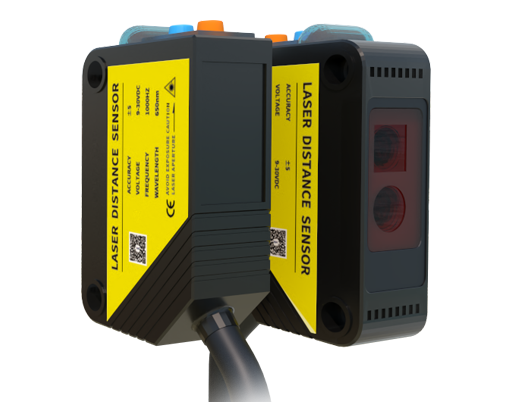
A growing trend in sophisticated systems is sensor fusion—the synergistic combination of multiple sensing modalities. Here, ultrasonic sensors and LiDAR are not necessarily competitors but complementary components. For instance, an autonomous mobile robot might use long-range LiDAR for primary navigation and mapping, while employing a ring of short-range ultrasonic sensors as a fail-safe, low-cost solution for immediate collision avoidance, especially for detecting objects that might be missed by the LiDAR's scanning pattern. This approach leverages the strengths of each technology to create a system that is more robust, reliable, and cost-optimized than one relying on a single sensor type.
In conclusion, there is no universal "best" technology. The ultrasonic sensor remains a highly reliable, economical solution for short-range, material-independent detection in varied environments. LiDAR stands as the premier choice for applications demanding high-fidelity, long-range, and detailed spatial awareness, despite its higher cost and sensitivity to certain conditions. The engineer's task is to meticulously evaluate the requirements for range, resolution, environmental robustness, form factor, and budget. By understanding the core physics and trade-offs of each technology, one can specify the optimal sensor—or a strategic fusion of both—to build intelligent systems that perceive the world with the necessary precision and reliability.