Proximity counting sensors are fundamental components in modern industrial automation, playing a critical role in object detection, positioning, and, most importantly, accurate counting operations. Unlike simple presence detection, counting requires high reliability, speed, and environmental robustness. The core principle revolves around non-contact detection, where a sensor generates a signal when a target object enters its sensing field without physical contact. This eliminates mechanical wear and allows for high-speed operation, essential for production lines, packaging systems, and inventory management.
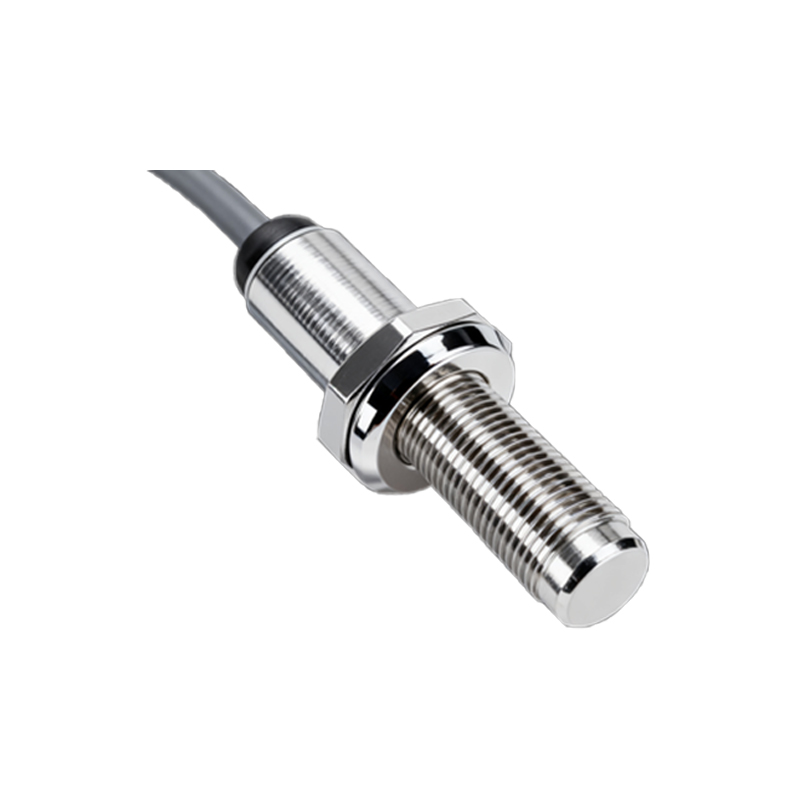
The most common technologies employed in proximity counting sensors are inductive, capacitive, and photoelectric. Inductive sensors are the workhorse for detecting metallic objects. They operate on the principle of electromagnetic induction. The sensor contains an oscillator circuit that generates a high-frequency electromagnetic field at its active face. When a conductive metal target enters this field, eddy currents are induced on the target's surface. These eddy currents draw energy from the oscillator, causing a change in its amplitude or frequency. This change is detected by a threshold circuit, which then switches the sensor's output state (e.g., from OFF to ON). Each output pulse corresponds to one detected object, forming the basis for counting. The key advantages for counting are their insensitivity to non-metallic contaminants like dust, oil, or water, and their exceptional switching frequency, often exceeding several thousand Hertz, enabling counting of rapidly moving parts.
Capacitive sensors function on a different principle: the change in capacitance. They can detect both metallic and non-metallic materials (plastics, wood, liquids, etc.). The sensor face acts as one plate of a capacitor, with the target object acting as the other plate, and the air gap as the dielectric. As a target approaches, the capacitance of this system increases. The sensor's internal circuit measures this change. Once the capacitance exceeds a preset threshold, the output switches. For counting applications, such as bottles on a conveyor or stacks of paper, capacitive sensors offer versatility. However, they can be influenced by environmental factors like humidity or material composition, requiring careful calibration.
Photoelectric sensors, particularly through-beam and retro-reflective types, are extremely popular for high-precision counting. They operate by emitting a beam of light (usually infrared, laser, or visible LED) and detecting its presence or absence. In a through-beam setup, an emitter and receiver are placed opposite each other. An object passing between them interrupts the beam, triggering a count. This method offers the longest sensing ranges and highest accuracy. Retro-reflective sensors combine emitter and receiver in one housing, using a reflector to bounce the light back. An object breaking this reflected beam causes a detection event. Diffuse or proximity-mode photoelectric sensors rely on light reflected directly from the target itself. Their fast response time and ability to detect极小 objects make them ideal for counting small components, tablets, or on high-speed bottling lines. Advanced versions use modulated light to ignore ambient light interference.
The act of counting is not performed by the sensor alone but by its integration with a counting device, typically a programmable logic controller (PLC) or a dedicated counter module. The sensor acts as the input device, providing a clean, discrete digital pulse for each detected object. The logic in the PLC or counter then increments a register based on these pulses. For reliable counting, several sensor characteristics are paramount: Switching Frequency (the maximum number of on/off cycles per second), Repeatability (the consistency of the sensing point), and Hysteresis (the difference between the switch-on and switch-off points, which prevents chatter from vibrating objects). A sensor with insufficient switching frequency will miss counts on a fast line.
Environmental considerations are crucial for stable counting performance. Inductive sensors are favored in harsh, dirty metallic environments. Photoelectric sensors may require protective housings and air purging in dusty conditions to keep lenses clean. Electrical noise from motors or welders can interfere with sensor signals, necessitating shielded cables and proper grounding. Furthermore, the object's properties—size, material, shape, speed, and orientation—directly influence the choice of sensor technology and its mounting position.
In advanced applications, smart sensors with integrated IO-Link communication provide not just a switch signal but also diagnostic data like operating hours, temperature, and signal strength, enabling predictive maintenance and minimizing downtime in critical counting processes. Whether tracking raw materials, monitoring production output, or managing packaging quantities, understanding the underlying principles of proximity sensing technology is essential for designing a robust, accurate, and efficient industrial counting system.