In the realm of industrial automation and control systems, the reliable detection of objects without physical contact is paramount. Among the various sensing technologies available, the 36V proximity sensor stands out as a robust and versatile solution, particularly in demanding environments. This article delves into the operational principles, key specifications, application considerations, and advantages of 36V DC proximity sensors, providing a detailed guide for engineers and technicians.
Fundamentally, a proximity sensor is a device that detects the presence or absence of an object within its sensing range. The 36V DC variant operates on a 36-volt direct current power supply, a voltage level commonly found in industrial control panels and machinery. These sensors primarily utilize inductive, capacitive, or magnetic principles. Inductive sensors are the most prevalent for metallic object detection. They contain an oscillator circuit that generates a high-frequency electromagnetic field at the active face. When a conductive metal object enters this field, eddy currents are induced within the object, causing a change in the oscillation amplitude. This change is detected by the sensor's circuitry, which subsequently triggers a solid-state output switch.
The specification of 36V DC offers distinct benefits. Firstly, it provides a higher signal-to-noise ratio compared to lower voltage sensors (e.g., 12V or 24V DC). This enhanced electrical margin makes the sensor more immune to electromagnetic interference (EMI) commonly generated by motors, drives, and welding equipment on the factory floor. Consequently, 36V sensors exhibit superior reliability and reduced risk of false triggering in electrically noisy environments. Secondly, for long cable runs, a higher voltage minimizes voltage drop issues, ensuring the sensor receives adequate operating voltage even at a distance from the power source.
Key parameters to consider when selecting a 36V proximity sensor include sensing distance, output type, housing material, and environmental ratings. The nominal sensing distance, typically ranging from a few millimeters to several tens of millimeters, must be chosen with a safety margin to account for mechanical tolerances and temperature variations. Outputs are generally categorized as PNP (sourcing) or NPN (sinking), with PNP being more common in many regions for DC sensors. The choice must align with the input module of the programmable logic controller (PLC) or other control device. Housing materials, such as nickel-plated brass, stainless steel, or PBT plastic, are selected based on required mechanical strength and chemical resistance. Crucially, the Ingress Protection (IP) rating, like IP67 or IP69K, indicates the level of protection against dust and liquids, which is vital for washdown areas or outdoor use.
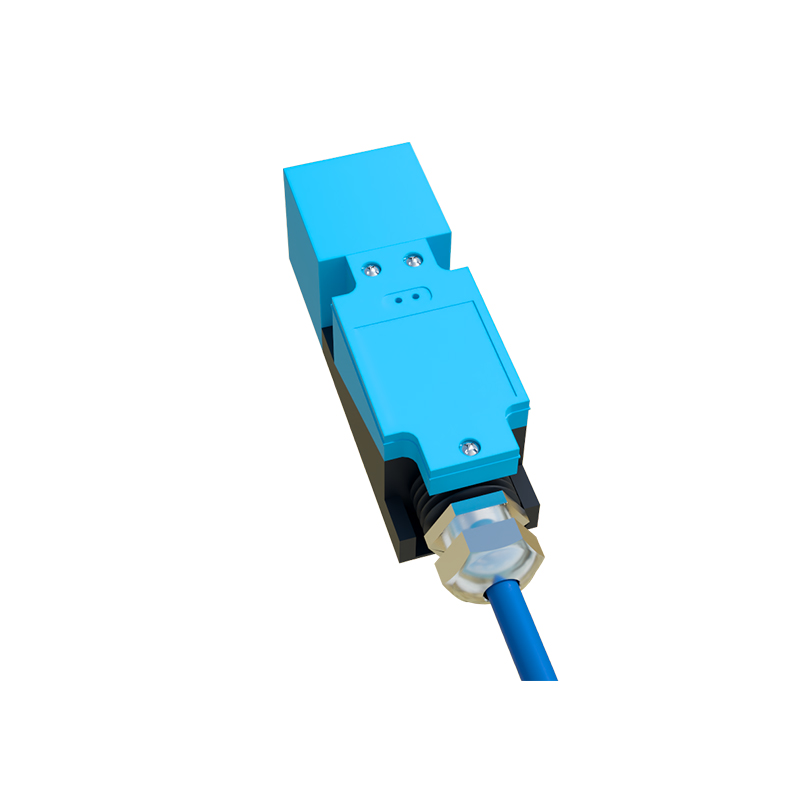
Application scenarios for 36V proximity sensors are extensive. They are indispensable in material handling for detecting pallets on conveyors, in machine tools for monitoring tool position or workpiece presence, in packaging machinery for counting products, and in automotive assembly lines for robotic guidance and part verification. Their non-contact nature ensures no wear and tear on the sensor or the target, leading to exceptionally long service life and minimal maintenance.
Installation and wiring require careful attention. Sensors should be mounted securely to avoid vibration-induced failures. It is critical to ensure that only the specified target material (e.g., mild steel for inductive sensors) enters the sensing zone, as different materials have different correction factors that reduce the effective sensing range. For instance, aluminum and copper typically reduce the range significantly compared to steel. Proper shielding and separation from power cables are recommended to further mitigate EMI. Most 36V sensors incorporate protective features like short-circuit protection, reverse polarity protection, and overload protection, enhancing system durability.
In conclusion, the 36V DC proximity sensor is a cornerstone of modern industrial sensing. Its design optimized for industrial voltage levels, combined with high noise immunity and robust construction, makes it a reliable choice for ensuring precision, safety, and efficiency in automated processes. By understanding its operating principles and carefully matching its specifications to the application requirements, engineers can build more resilient and productive automation systems.