In the realm of industrial automation and precision engineering, the measurement of internal diameters is a critical task that demands high accuracy, reliability, and efficiency. Traditional methods, such as mechanical calipers or bore gauges, often fall short in terms of speed, accessibility, and non-contact requirements. This is where Internal Diameter Laser Distance Sensors (IDLDS) come into play, offering a sophisticated solution for a wide range of applications, from automotive manufacturing to aerospace and beyond.
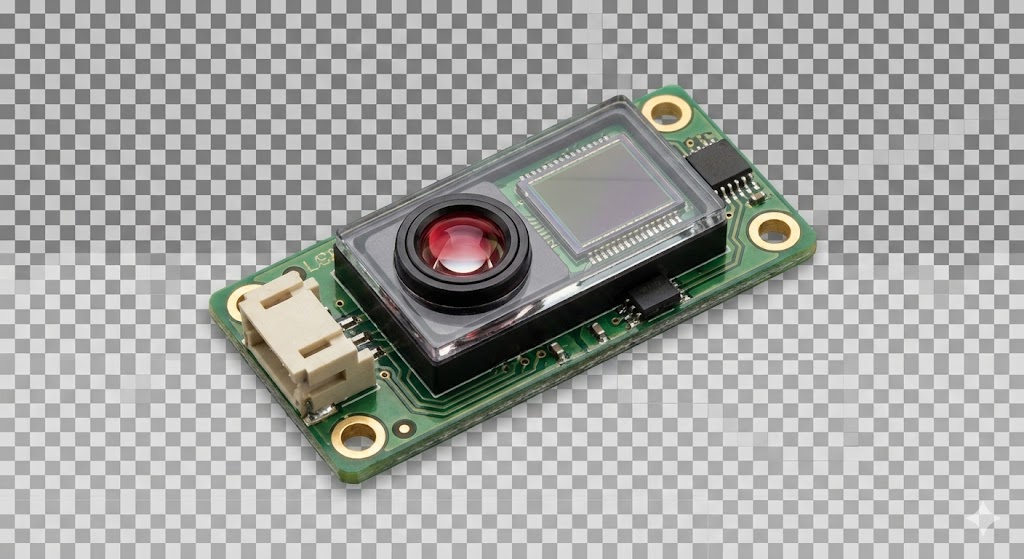
An Internal Diameter Laser Distance Sensor operates on the principle of laser triangulation or time-of-flight measurement, adapted specifically for confined spaces. The sensor emits a focused laser beam towards the inner surface of a bore, tube, or cavity. The reflected light is captured by a detector, and the distance is calculated based on the angle or time delay of the return signal. This non-contact method eliminates the risk of surface damage or wear, making it ideal for delicate or finished components. Key components include a compact laser diode, optical lenses, a high-resolution CMOS or CCD array, and advanced signal processing electronics. The design often incorporates a narrow probe or head that can be inserted into small openings, sometimes as tiny as a few millimeters in diameter, enabling measurements in hard-to-reach areas.
The advantages of using IDLDS are manifold. Firstly, they provide exceptional accuracy, typically within micrometers, ensuring compliance with strict tolerances in industries like semiconductor fabrication or medical device production. Secondly, the non-contact nature prevents contamination and mechanical stress, preserving the integrity of sensitive parts. Thirdly, these sensors enable rapid measurements, often in milliseconds, which is crucial for high-volume production lines where throughput is paramount. Additionally, they can be integrated into automated systems, such as robotic arms or CNC machines, for real-time monitoring and feedback control. This integration supports Industry 4.0 initiatives, facilitating data collection for predictive maintenance and quality assurance.
Applications of Internal Diameter Laser Distance Sensors span diverse sectors. In the automotive industry, they are used to measure engine cylinders, fuel injector nozzles, and brake calipers, ensuring optimal performance and safety. In aerospace, sensors verify the dimensions of turbine blades, hydraulic tubing, and landing gear components, where even minor deviations can lead to catastrophic failures. The energy sector employs them for inspecting pipelines and heat exchangers, detecting corrosion or buildup without disassembly. Furthermore, in electronics manufacturing, IDLDS assists in measuring connector holes and micro-vias on printed circuit boards, supporting miniaturization trends.
When selecting an IDLDS, several factors must be considered. The measurement range should align with the bore size, with some sensors capable of handling diameters from 1 mm to over 500 mm. Resolution and repeatability are critical for precision tasks; look for models with sub-micron capabilities if needed. Environmental conditions, such as temperature fluctuations, vibrations, or ambient light, can affect performance, so opting for sensors with robust housings and compensation algorithms is advisable. Connectivity options, like analog outputs, digital interfaces (e.g., IO-Link, Ethernet), or wireless capabilities, enable seamless integration into existing systems. Lastly, ease of calibration and software support for data analysis should not be overlooked, as they impact long-term usability.
Despite their benefits, challenges exist. Reflective or dark surfaces may interfere with laser reflection, requiring adjustments in laser power or the use of complementary technologies. Complex geometries, such as tapered or stepped bores, might need specialized sensor configurations or multiple measurement points. Cost can be a barrier for small-scale operations, though the return on investment through reduced scrap and improved efficiency often justifies the expense. Ongoing advancements, such as the integration of artificial intelligence for adaptive sensing and the development of more compact, energy-efficient designs, are addressing these limitations, paving the way for broader adoption.
In conclusion, Internal Diameter Laser Distance Sensors represent a pivotal innovation in metrology, empowering industries to achieve unparalleled precision and productivity. By leveraging laser technology, they overcome the constraints of traditional tools, offering non-contact, high-speed measurements that are essential for modern manufacturing and quality control. As technology evolves, these sensors will continue to play a vital role in driving innovation across sectors, from automotive to aerospace, ensuring that internal dimensions are measured with the utmost accuracy and reliability. For engineers and technicians, understanding and implementing IDLDS is key to staying competitive in an increasingly automated and data-driven world.