Magnetic proximity sensors are indispensable components in modern industrial automation, offering reliable non-contact detection of ferromagnetic objects. These sensors operate based on the fundamental principles of magnetism and electromagnetic induction, providing robust performance in harsh environments where mechanical switches or optical sensors may fail. Understanding their working mechanisms is crucial for engineers and technicians involved in system design, maintenance, and optimization.
At the core of a magnetic proximity sensor is a sensing element that reacts to changes in a magnetic field. Most commonly, these sensors utilize a reed switch or a Hall-effect integrated circuit. Reed switch-based sensors consist of two ferromagnetic reeds sealed within a glass tube filled with inert gas. When an external magnetic field, typically from a permanent magnet attached to the target object, approaches the sensor, the reeds magnetize and attract each other, closing the electrical circuit. This contact closure generates a signal indicating the presence of the target. The simplicity of this design allows for high reliability and long operational life, as there are no mechanical parts to wear out from physical contact.
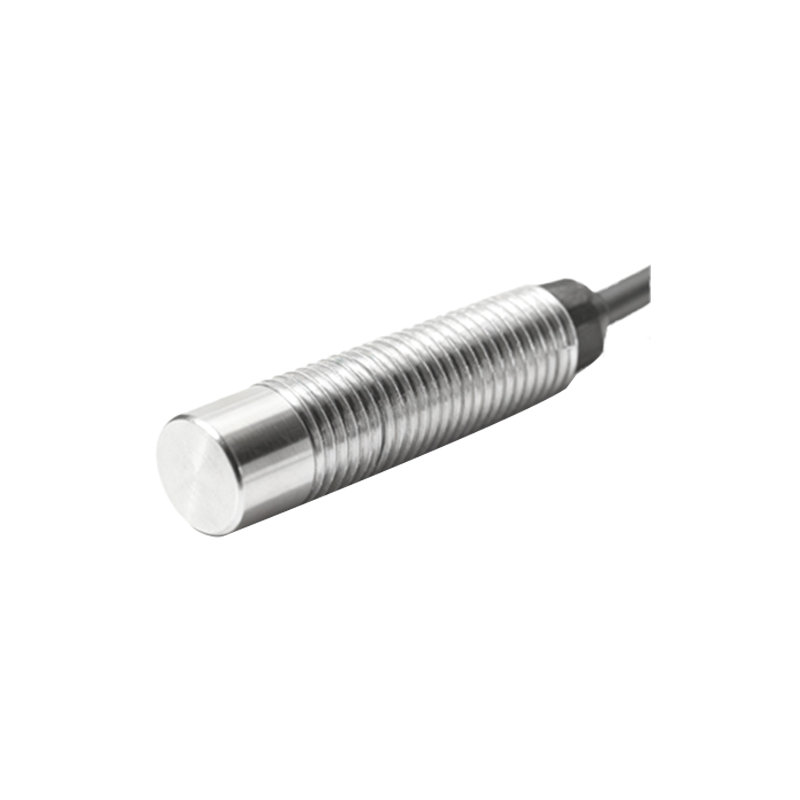
Hall-effect sensors represent a more advanced and widely used technology. They are based on the Hall effect, discovered by Edwin Hall in 1879. A Hall-effect sensor contains a thin semiconductor material (the Hall element). When a control current is applied to this element and it is exposed to a perpendicular magnetic field from an approaching target magnet, a voltage difference (the Hall voltage) is generated across the element. This voltage is proportional to the strength of the magnetic field. Integrated circuitry within the sensor amplifies this tiny voltage signal and converts it into a clean, digital output signal (e.g., PNP/NPN transistor switch) or an analog output proportional to distance. Hall-effect sensors offer superior precision, faster response times, and the ability to detect static magnetic fields, unlike reed switches which require movement to operate.
Another variant is the magnetoresistive sensor, which exploits the change in electrical resistance of certain materials when subjected to a magnetic field. These sensors are highly sensitive and can detect very subtle changes in magnetic field strength and direction, making them suitable for precise position sensing.
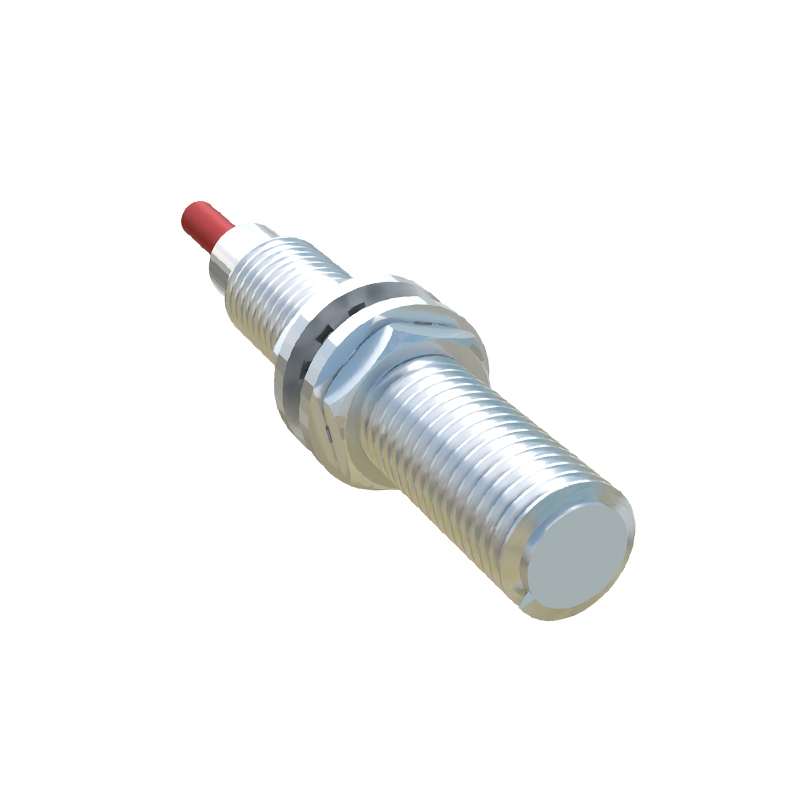
The operational process of a typical magnetic proximity sensor involves several key stages. First, the sensor is powered by a DC supply voltage, commonly 10-30V DC. It remains in a standby state, monitoring its surrounding magnetic flux density. When a ferromagnetic target (like a gear tooth, piston, or a dedicated actuator magnet) enters the sensor's active switching range, it disturbs or intensifies the magnetic field at the sensor's face. This change is detected by the internal sensing element (reed or Hall chip). The sensor's electronics then process this change and trigger a solid-state output switch. This output can be a discrete ON/OFF signal used to control relays, PLC inputs, or indicator lights. For analog sensors, the output current or voltage varies linearly with the distance to the target. Once the target moves out of the sensing range, the magnetic field returns to its baseline, and the sensor output reverts to its original state.
Key performance parameters define a sensor's suitability for an application. Sensing distance, or switch point, is the maximum range at which the sensor can reliably detect a standard target. Hysteresis is a critical feature that prevents output oscillation when the target is at the exact switching point; it creates a small difference between the switch-on and switch-off distances. Response frequency indicates how quickly the sensor can detect successive targets, vital for high-speed counting applications. Additionally, factors like temperature range, housing material (often nickel-plated brass or stainless steel for durability), and protection class (IP67/IP69K for washdown environments) are essential for industrial deployment.
Applications for magnetic proximity sensors are vast across factory automation, automotive, and machinery sectors. They are extensively used for cylinder position feedback in pneumatic and hydraulic systems, where a magnet embedded in the piston actuates a sensor on the cylinder barrel. They facilitate speed monitoring and zero-pulse detection on rotating shafts and gearboxes. In material handling, they detect the presence of metal parts on conveyors. Their immunity to dirt, dust, oil, and moisture makes them ideal for challenging conditions in food processing, packaging, and outdoor equipment.
In summary, magnetic proximity sensors provide a vital, contactless sensing solution by translating magnetic field disturbances into actionable electrical signals. The choice between reed, Hall-effect, or magnetoresistive technologies depends on the specific requirements for precision, speed, cost, and environmental resilience. Their robust design and versatile functionality cement their role as a cornerstone of reliable industrial sensing and control systems.